Sourcing Guides
UK kids sneaker sample review checklist: Scope Crosswalk
Product custom fields and sample-review subjects use different labels. This crosswalk separates identical wording, narrower matches, separate timing and open buyer questions.
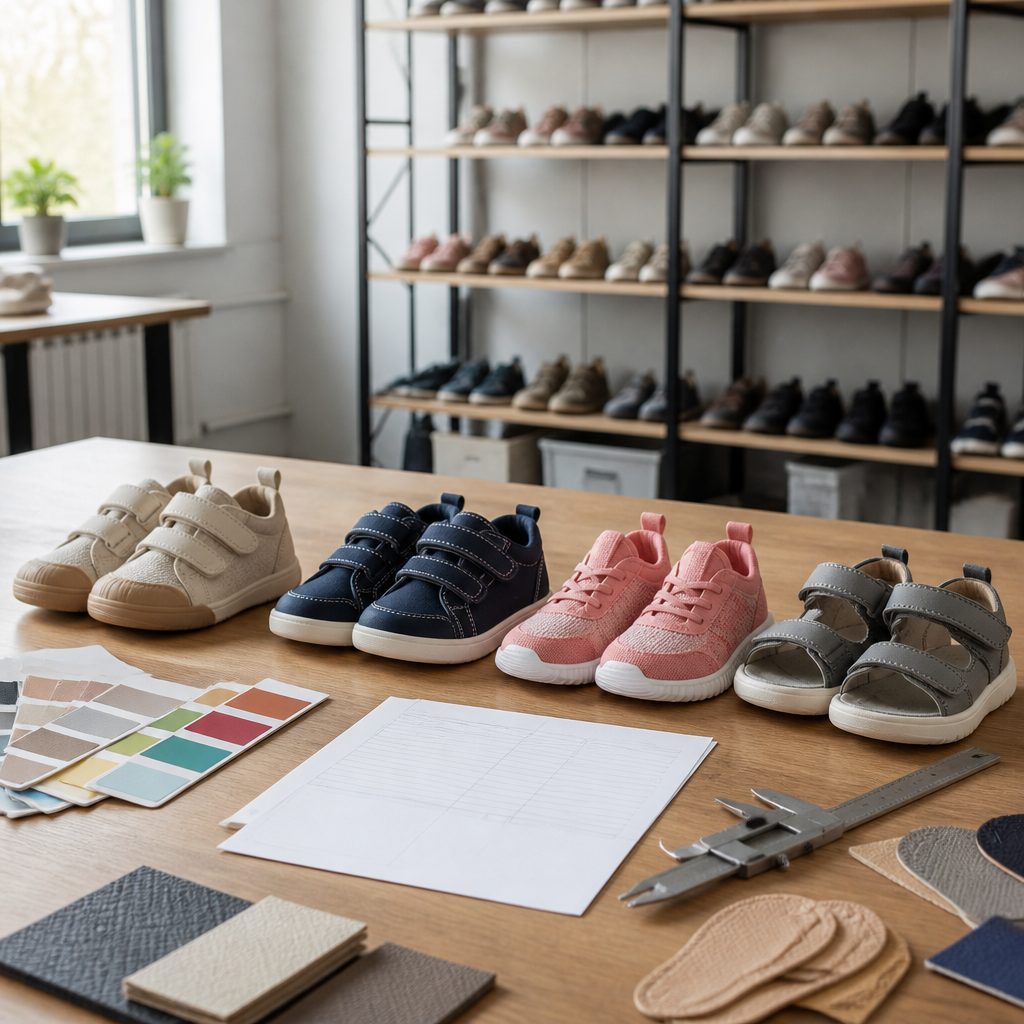
UK buyers often start from two first-party lists that do not share the same wording. The sneaker product entry names colorway, logo, closure and outsole texture as custom fields. Sample review on the quality page names fit, comfort, logo placement, finish and closure. This UK kids sneaker sample review checklist treats any overlap as an editorial crosswalk of those published labels, not as a mapping either excerpt states outright.
Identical labels can be recorded as vocabulary matches. Related-sounding terms cannot stand in for proof that the same attribute is reviewed. Keep the shoe definition, the published review language and remaining buyer questions in separate columns so a private label kids sneaker sample scope stays accurate before sampling or quotation talk begins.
Read the two lists as separate records
The kids' sneaker product entry describes the build as a breathable mesh or PU upper. It also lists four custom fields: colorway, logo, closure and outsole texture.
The quality page sample-review checkpoint names fit, comfort, logo placement, finish and closure. The supplied quality-page excerpt does not state that this list incorporates every custom field from the sneaker entry.
- Product-definition vocabulary
- Breathable mesh or PU appears as the upper build. Colorway, logo, closure and outsole texture appear as custom fields.
- Sample-review vocabulary
- Fit, comfort, logo placement, finish and closure are named sample-review subjects.
The supplied excerpts do not provide a formal crosswalk between these lists. Classifications below are editorial analysis of their wording. Recommendations and inquiry topics are buyer-side guidance, not documentation of additional KidsShoeWorks services.
Classify the overlap before setting criteria
Only one complete field label is identical: closure. The word logo also recurs, but sample review uses the narrower phrase logo placement. The remaining product fields either use different quality language or are absent from the published sample-review list in the supplied excerpt.
| Buyer field | Product-page wording | Quality-page wording | Editorial status |
|---|---|---|---|
| Closure | Named as a custom field. | Named in sample review. | Direct vocabulary match. The supplied excerpts do not identify detailed acceptance criteria. |
| Logo | Named as a custom field. | Logo placement is named in sample review. | Narrower match. Placement should not be expanded to every logo attribute. |
| Colorway | Named as a custom field. | Finish is named in sample review. Colorway is not. | Open inquiry topic. The supplied excerpts do not equate finish with colorway. |
| Outsole texture | Named as a custom field. | Texture is not in the sample-review list. Outsole stability appears in separately timed construction language. | Open inquiry topic. Texture and stability remain distinct terms. |
| Upper | The build names breathable mesh or PU upper. | Upper choices appear in material confirmation before the sample stage. | Separately timed item rather than a named sample-review subject. |
| Fit and comfort | Not named in the four-field custom list. | Both are named in sample review. | Published review subjects for which the supplied evidence gives no UK acceptance method. |
Closure is direct; logo is narrower
Closure is the cleanest language match because the same complete label appears in both lists. That match does not identify a closure type, test method or approval responsibility. For the buyer's brief, record the intended closure separately from the criteria used to assess it, then ask which project-specific review information may apply.
Logo needs a narrower reading. The product entry names the broad field logo; sample review names only logo placement. A placement observation should not become approval of every logo attribute.
As an editorial recommendation, keep artwork version, intended position, dimensions, colours, application method and any buyer acceptance criteria in the product definition. Ask which of those elements, if any, can be considered for the project in addition to the documented placement wording.
Do not merge related-sounding terms
Finish does not fill the colorway gap
Colorway appears in the product page's custom list. Finish appears in the sample-review list. Neither supplied excerpt says that finish review includes, verifies or approves the requested colorway.
Keep colorway as an open scope question. The brief can identify colour references and component assignments. The inquiry can ask whether colorway may be reviewed separately, which reference could be used and what project-specific record may apply. Those are questions for confirmation, not stated factory promises.
Stability does not fill the texture gap
Outsole texture is a custom field on the product page, but it is not named in the sample-review list in the supplied excerpt. Construction review separately checks stitching, bonding, flex point and outsole stability before packing. The in-line checkpoint names assembly, stitching, bonding, flex and stability during production.
- Outsole texture
- A named custom product field whose treatment at sample review remains open in the supplied evidence.
- Outsole stability
- A construction-review term. Its presence does not establish that outsole texture is reviewed.
Ask about the two subjects separately. That keeps the requested outsole definition intact without using a production-stage stability check as evidence for sample-stage texture handling.
Put material questions in the earlier time lane
The product entry limits its upper wording to breathable mesh or PU. Material control confirms upper, lining, outsole and adhesive choices before the sample stage. Those statements support an earlier material-confirmation step; they do not define which material must be chosen for a particular sneaker.
The materials page gives engineered mesh its own description: a light, breathable, knit-style upper, labelled breathable, lightweight and quick-dry. Uses listed there include kids' sneakers, sports runners and sandals.
Those properties belong only to the specifically named engineered-mesh entry. Do not transfer them to every generic mesh or to PU, and do not treat engineered mesh as required for every sneaker project.
- State the current upper direction using the applicable product wording.
- If engineered mesh is under consideration, name it specifically rather than treating all mesh as equivalent.
- Ask what material-definition and confirmation information may apply before sample review.
Related reading: Kids' sneaker material options for wholesale buyers.
Define fit criteria before asking how review applies
Sample review names fit and comfort. Elsewhere on the same quality page, fit review is described with toddler, little kid and big kid sizing. The supplied evidence does not provide UK size conversions, measurement points, tolerances, grading rules or a comfort-review protocol.
For a wholesale children's footwear sample brief, the editorial recommendation is to state the intended size reference, conversion basis, relevant measurements, measurement method, tolerances and fit criteria. Then ask how the published fit and comfort review subjects would relate to those criteria.
A named review subject shows that fit or comfort appears in the workflow. It does not supply a complete UK-market acceptance standard.
Preserve the limit of the production wording
Sample review provides a better chance that the bulk run matches the approved sample. Keep the phrase better chance intact: it does not guarantee a match. The excerpt also does not identify who approves the sample.
Production has its own timing. Assembly, stitching, bonding, flex and stability sit in in-line checks during production. Those subjects should not be used to add colorway, outsole texture or broader logo attributes to the earlier sample-review list.
As a buyer-side recordkeeping recommendation, retain the sample reference, revision, observations and unresolved questions for later comparison. Related reading: Children's shoes wholesale UK construction checks.
Separate known fields from open questions
A two-part inquiry keeps buyer-defined details from being confused with published review scope.
Current sneaker definition
- Intended product and market use.
- Upper direction using the relevant material name.
- Colorway references and component colour assignments.
- Logo artwork, intended placement and other buyer-defined attributes.
- Closure type and buyer acceptance criteria.
- Requested outsole texture or pattern reference.
- Target size basis, measurement method, tolerances and fit criteria.
Questions requiring confirmation
- Which development and sample-review options may apply to the current definition?
- Can colorway be considered separately from the published finish wording, and what reference may apply?
- How may outsole texture be addressed without treating stability as a substitute?
- Which logo elements, if any, may be considered in addition to placement?
- How may fit and comfort review relate to the buyer's UK size and measurement criteria?
- What project-specific sample records, inspection evidence or documents may apply?
- Which sampling or quotation options may apply to the project?
Send the two blocks through the project inquiry form. The first communicates the current children's footwear definition. The second asks which development, sampling or quotation options may apply without assuming every open topic is included.
Sources and verification
- Children's Footwear Products | KidsShoeWorks First-party site source
- Quality Control for Children's Shoes | KidsShoeWorks First-party site source
- Kids' Shoe Materials | Mesh, PU, Canvas, Rubber & EVA | KidsShoeWorks First-party site source
Share the current children's footwear definition and ask which development, sampling or quotation options may apply to the project.
Send your project brief