Sourcing Guides
Kids Sneaker Material Options for Wholesale Buyers
For kids sneaker material options for wholesale buyers, use published mesh or PU language as a quoted starting point, then record buyer requirements, open applicability questions, and requested proof.
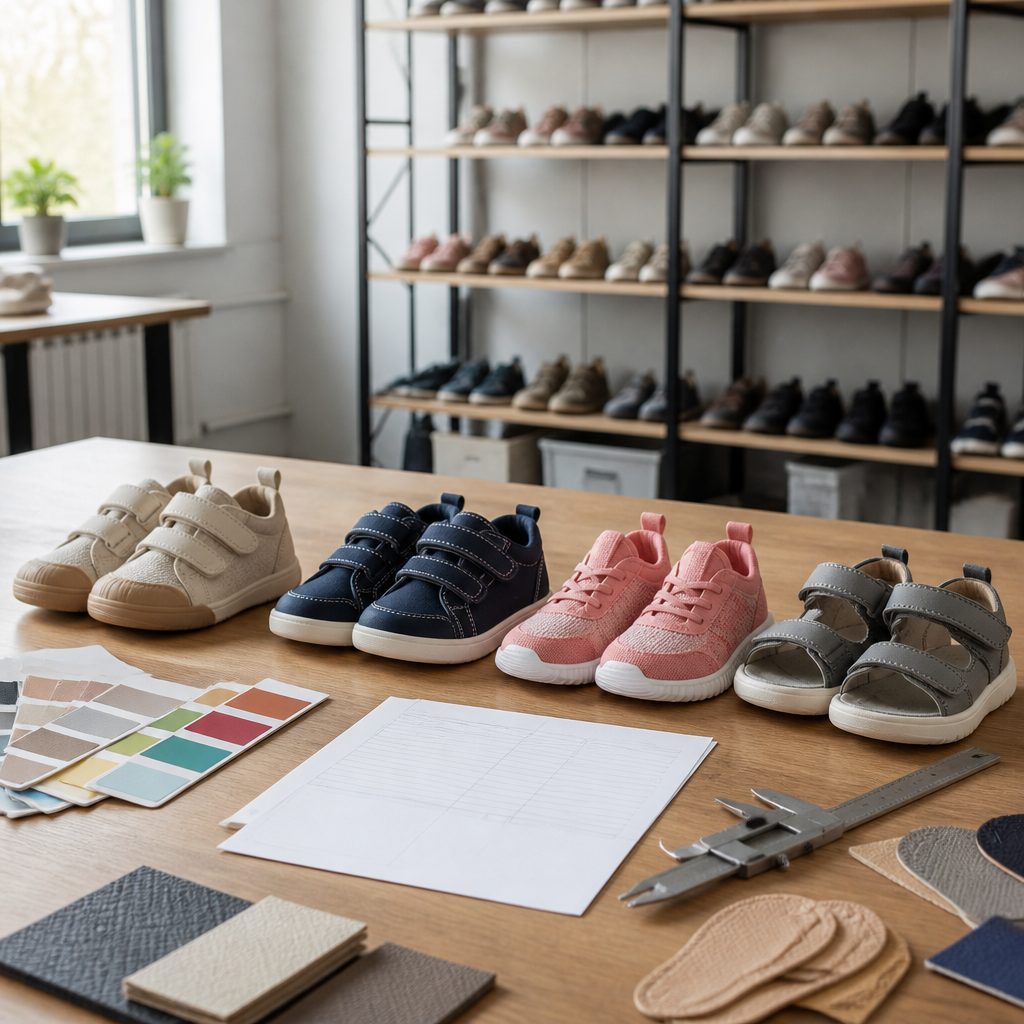
The phrase "breathable mesh or PU upper" belongs in a product brief as a quoted reference. For kids sneaker material options for wholesale buyers, it should not be expanded into unlisted material details. The KidsShoeWorks products page names that upper language for its kids' sneaker product family. A buyer can use it to begin an inquiry while keeping the rest of the shoe definition visible as open work.
Editorial recommendation: separate public product information from the requirements your project must define. That means recording the published upper wording, the material direction you want, the questions that need a project answer, and the proof topics you want to discuss. This structure keeps a short catalog description from carrying more weight than the page gives it.
Build the decision record before the quotation request
A four-part record gives the inquiry a clear boundary. It is a buyer tool, not a statement that every candidate material or construction has been accepted for a particular style.
| Record field | What to record | Careful example |
|---|---|---|
| Published reference | Exact language and its public-page location | Kids' sneakers: breathable mesh or PU upper |
| Buyer requirement | Inputs the brief needs to state | Preferred upper direction, use context, applicable market requirements, and required documents |
| Applicability question | A point that needs an answer for this definition | May the stated upper option apply to this style, colorway, closure, and outsole direction? |
| Requested proof | Evidence topics relevant to the project | Inspection photos, measured samples, or named reports requested for this brief |
Editorial recommendation: use separate rows for the upper, lining, outsole, and adhesive. The quality page says those choices are confirmed before the sample stage. Recording them separately preserves that sequence while leaving the actual choices for the project discussion.
What the published sneaker entry covers
The products page describes kids' sneakers as a strong starting point for private-label and retail orders. It says the family is popular with brands seeking casual wear, school use, and a wide color story. Its stated best-for context is daily wear and school retail.
The same entry lists a breathable mesh or PU upper under Build. Under Custom, it lists colorway, logo, closure, and outsole texture. These are useful public references for private label kids sneaker materials. They are not a substitute for a style-level material record.
Editorial recommendation: copy the terms exactly, then write buyer requirements in a separate field. For example, a brief may identify breathable mesh as a candidate upper while separately asking whether that option may apply to the current closure and outsole direction. A PU candidate should receive its own line rather than inheriting mesh attributes.
Read engineered mesh within the materials-page scope
The materials page describes engineered mesh as light, breathable knit-style uppers for warm-weather and active styles. It lists breathable, lightweight, and quick-dry attributes. The entry also lists kids' sneakers, sports runners, and sandals as uses.
Those descriptions belong to engineered mesh as presented on that page. They are not evidence about PU, an unspecified mesh construction, or a completed sneaker build. Editorial recommendation: when an attribute matters to the product brief, ask whether an engineered-mesh candidate is in scope for the specific style and whether that attribute should be reviewed with the sample.
This is the useful boundary for children's sneaker material options: the public description can guide a question, while the sample discussion determines what the current definition will address.
Turn the candidate into a sample-stage question
The quality page states that upper, lining, outsole, and adhesive choices are confirmed before the sample stage. It also describes sample review as covering fit, comfort, logo placement, finish, and closure together. These are published process points, not advance confirmation of a material choice for an individual inquiry.
For kids sneaker sampling questions, an editorial buyer checklist can be:
- State the candidate upper in the public wording: breathable mesh, PU, or both under review.
- List lining, outsole, and adhesive as separate questions when they affect the brief.
- Ask which stated option may apply to the current sneaker definition.
- Ask which choices would be confirmed before the sample stage.
- Identify which sample-review themes matter to the style, such as fit, closure, finish, comfort, or logo placement.
For example, a buyer might ask whether the breathable-mesh upper reference may apply to the submitted style direction and which material choices would be confirmed before sample. That is a question for the project discussion, not an assumption about availability or approval.
Put UK-market requirements in the buyer brief
For a UK wholesale or retail project, editorial guidance is to attach the applicable market, retailer, and labeling requirements to the buyer brief. Requirements may come from regulation, an importer, a retailer, or another responsible party. Product-page material wording should remain separate from those requirements.
The quality page lists buyer-specific packing labels, market-specific material notes, inspection photo requests, third-party test coordination, and document requests from an importer or retailer as topics it can align around. The cited pages publish no UK legal, retailer, safety, performance, or labeling determination for a mesh or PU upper.
- Attach the applicable requirements and named document requests to the inquiry.
- Identify material notes that the project needs considered.
- Ask whether the listed alignment topics are relevant to the current brief.
- Keep website material descriptions out of the project's compliance evidence.
Request proof by decision, not by assumption
Under its proof section, the quality page says it would rather send inspection photos, measured samples, and the test reports a project actually requires than unrelated certifications. It also lists third-party test coordination among its alignment topics. The page does not promise a universal report package, in-house testing, certification, or a result for every project.
Editorial recommendation: phrase requests around the decision that needs support. Suitable questions include:
- Which inspection-photo points can be discussed for the material or construction details in this brief?
- Is a measured sample needed for the size or fit requirement being reviewed?
- Does the project name a report topic for which third-party test coordination should be discussed?
- Which importer or retailer document requests should be included in the project conversation?
Leave an unknown proof requirement marked as open. A generic request for every possible certificate says less about the project than a named evidence need tied to the current sneaker definition.
Keep public facts and open questions in separate columns
| Topic | Published statement | Buyer-owned brief input | Question for the inquiry |
|---|---|---|---|
| Kids' sneaker upper | The product entry lists a breathable mesh or PU upper. | Preferred upper candidate and style direction. | Which stated upper option may apply to this definition? |
| Engineered mesh | The materials entry describes light, breathable knit-style uppers for warm-weather and active styles, with breathable, lightweight, and quick-dry attributes. | Which attributes matter to the planned product direction. | Is an engineered-mesh candidate in scope for this style? |
| Pre-sample material choices | The quality page says upper, lining, outsole, and adhesive choices are confirmed before the sample stage. | The choices the brief needs addressed. | What would be confirmed before sample for this project? |
| Sample review | The quality page lists fit, comfort, logo placement, finish, and closure as review themes. | The review points relevant to the submitted style. | Which review themes should be considered for the proposed sample? |
| Documentation and proof | The quality page lists alignment topics and expresses a preference for project-required photos, measured samples, and reports. | Named document packs and evidence needs. | Which proof topics can be discussed for this brief? |
Send a material-scoped inquiry
A useful request shares the current kids' sneaker definition and asks which development, sampling, or quotation options may apply. Keep confirmed inputs, unresolved material questions, and requested proof topics in the same submission.
- Use context from the buyer brief, such as daily wear or school retail where applicable.
- The exact candidate-upper wording: breathable mesh, PU, or both under review.
- Separate questions about lining, outsole, adhesive, closure, logo, colorway, and outsole texture when they affect the style.
- Any engineered-mesh attributes being considered, identified as materials-page language.
- Applicable market or retailer requirements and document requests supplied with the brief.
- Proof topics to discuss, including inspection photos, measured samples, or named reports where required.
- A direct question about which development, sampling, or quotation options may apply.
For kids sneaker material options for wholesale buyers, this keeps the public material reference useful without treating it as a finished shoe definition. Submit the current brief through the request a quote page and retain the decision record so the open questions remain part of the discussion.
Sources and verification
- Children's Footwear Products | KidsShoeWorks First-party site source
- Kids' Shoe Materials | Mesh, PU, Canvas, Rubber & EVA | KidsShoeWorks First-party site source
- Quality Control for Children's Shoes | KidsShoeWorks First-party site source
Share the current children's footwear definition and ask which development, sampling or quotation options may apply to the project.
Send your project brief