Materials and Development
Engineered Mesh Children's Sneakers Wholesale Canada: Buyer Brief
Engineered mesh is one published upper option. A pre-sample buyer brief still has to record related sneaker fields, component choices and evidence questions before sampling.
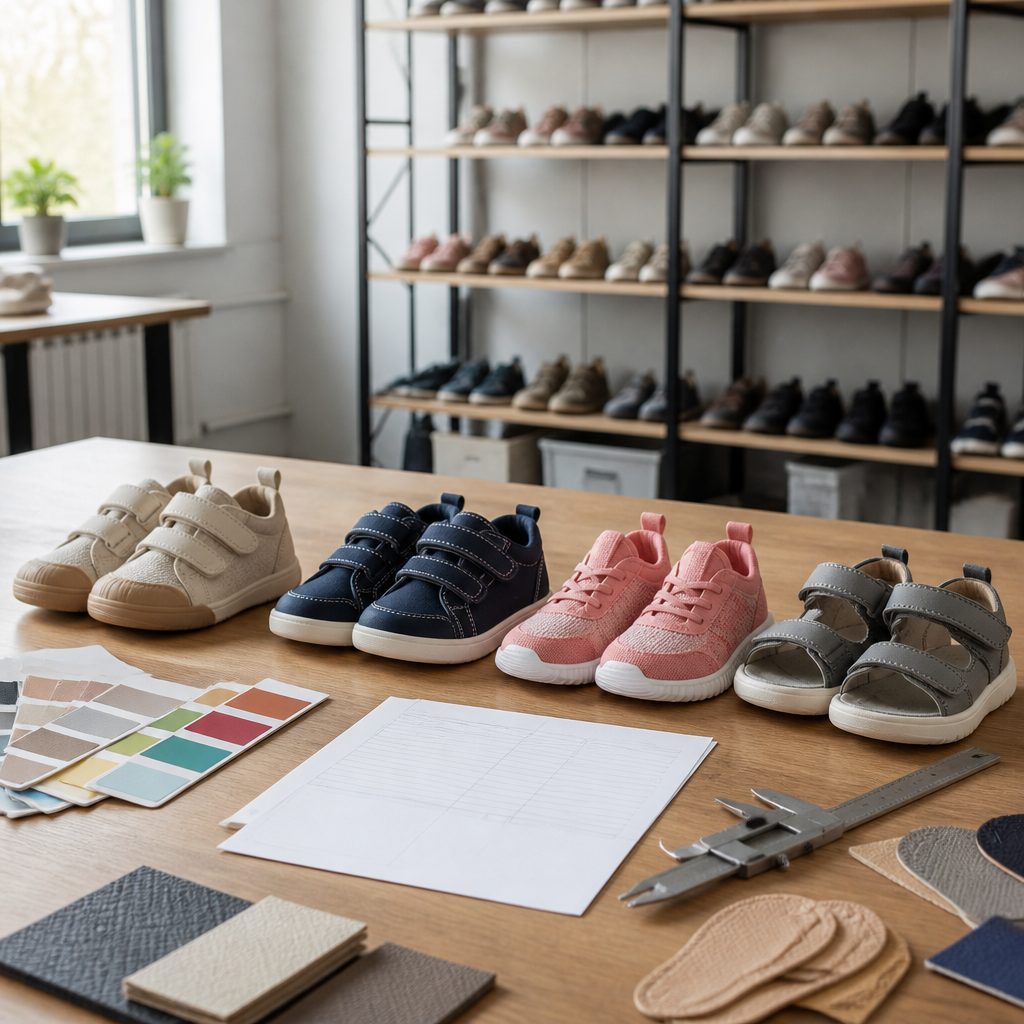
Buyers working through engineered mesh children's sneakers wholesale Canada often start with a materials label that already sounds finished. The published engineered-mesh entry calls the fabric light and breathable, lists quick-dry among its attributes and names kids' sneakers among its uses. Those words still leave lining, outsole, adhesive, fit bracket and the sneaker custom fields outside the material phrase.
The practical risk is reading breathable or quick-dry as completed-shoe performance. The materials excerpt supplies no test method, acceptance threshold or finished-footwear result for those descriptors. A useful pre-sample brief therefore keeps three layers distinct: published material wording, buyer-supplied sneaker fields and questions that need project-specific review before sampling.
Where Does the Engineered Mesh Label Stop?
The materials entry describes engineered mesh as light, breathable knit-style uppers for warm-weather and active styles. It also labels the material breathable, lightweight and quick-dry. Kids' sneakers, sports runners and sandals appear as listed uses. That is the full published scope of the material phrase.
The kids' sneaker entry has a wider product scope. It presents kids' sneakers for daily wear and school retail, names breathable mesh or PU as upper options and lists colorway, logo, closure and outsole texture as custom fields. The quality page then places upper, lining, outsole and adhesive choices in pre-sample material control and names later fit, sample and in-line checkpoints. Those checkpoints are not identified as breathability or drying tests.
| Published wording | Buyer field to supply | Still open for review |
|---|---|---|
| Light, breathable knit-style uppers; breathable, lightweight and quick-dry labels | Intended upper placement and any attribute that will affect approval | Construction detail, measurement thresholds and any proof definition |
| Used in kids' sneakers, sports runners and sandals | Proposed sneaker pattern or style | Whether the published mesh description is relevant to that upper |
| Daily wear and school retail; breathable mesh or PU upper; colorway, logo, closure, outsole texture | Channel context and the custom fields already decided | Whether requested options can apply with the proposed upper |
| Pre-sample material control and named quality checkpoints | Known lining, outsole, adhesive and fit-bracket inputs | Which checkpoints and proof requests matter for this design |
No fabric weight, mesh gauge, knit structure, abrasion result, drying time or finished-shoe performance figure appears in the materials excerpt. Editorial recommendation for the buyer: keep the material description, the product-page options and the quality checkpoints as separate lines in the working brief so one record is not treated as proof of another.
Confirm Components Before the Sample Gate
The quality page places material control before the sample stage. Upper, lining, outsole and adhesive choices are confirmed at that point. Separately, incoming upper, lining, outsole, label and adhesive samples are aligned to the brief.
That timing makes a clear kids sneaker upper material specification useful early. The buyer can name engineered mesh as the requested upper material, mark unresolved construction detail as open and show which related component choices are already known.
State the upper request. Name engineered mesh and, when known, the intended area of the upper.
Record related choices on their own lines. Add current lining, outsole and adhesive requirements, or mark each field open.
Separate descriptors from acceptance points. If breathability, weight or drying behavior will affect approval, identify the requested definition and evidence without assuming a method or result.
Ask about the proposed combination. Request review of the relevant sneaker fields for this design rather than assuming every published option works with engineered mesh.
These steps are an editorial recommendation for preparing the inquiry. They do not assign factory responsibility for technical detail or confirm that a proposed combination is feasible.
A Working Private-Label Kids Sneaker Material Brief
The table below is an editorial worksheet for a private label kids sneaker material brief. The middle column stays inside the published pages. The final column belongs to the buyer's project record.
| Brief field | Published scope | Buyer entry or question |
|---|---|---|
| Product family | Kids' sneakers | Identify the proposed sneaker category or style. |
| Use context | Daily wear and school retail | State intended channel and wearing context without treating the published wording as market approval. |
| Upper options | Breathable mesh or PU upper | Ask whether the engineered-mesh entry is relevant to the proposed upper. |
| Engineered-mesh request | Materials entry describes the material and lists kids' sneakers among its uses | Show intended placement and flag any attribute that needs a project-specific definition. |
| Colorway | Kids' sneaker custom field | Provide the current color request and ask whether it may apply. |
| Logo | Kids' sneaker custom field | Provide the current logo request and intended placement. |
| Closure | Kids' sneaker custom field | State the requested closure for review. |
| Outsole texture | Kids' sneaker custom field | Describe the current request without assuming compatibility with the proposed upper. |
| Related materials | Upper, lining, outsole and adhesive choices named in pre-sample material control | Record known choices and mark unresolved fields. |
| Fit bracket | Toddler, little kid and big kid sizing named for fit review | Identify the relevant bracket and supply the buyer's current size definition. |
The worksheet is not a factory capability list. The evidence does not show that every published colorway, logo, closure or outsole-texture request can be combined with engineered mesh for the current project.
Why Fit Review Cannot Prove Mesh Performance
The quality page assigns different subjects to different checkpoints. Sample review covers fit, comfort, logo placement, finish and closure. In-line checks cover assembly, stitching, bonding, flex and stability.
| Checkpoint | Subjects named | Boundary for the mesh decision |
|---|---|---|
| Before sampling | Upper, lining, outsole and adhesive choices | Record proposed materials and unresolved component questions. |
| Sample review | Fit, comfort, logo placement, finish and closure | These subjects are not a defined breathability or quick-dry test. |
| In-line checks | Assembly, stitching, bonding, flex and stability | Construction checks do not replace an undefined material-performance requirement. |
A sample can pass fit or finish review while a separate material-evidence question remains open. A bonding or flex check likewise does not produce a drying-time result. Editorial recommendation for the buyer: place each requested acceptance point under the checkpoint that can address it, and ask what evidence may be relevant before relying on that point for approval.
Gaps the Canada Modifier Does Not Close
The supplied excerpts do not set a Canada-specific material rule, certification, chemical requirement, labeling requirement, test protocol or pass threshold for this sneaker. That is an evidence boundary, not a conclusion about Canadian requirements.
The quality page names market-specific material notes, third-party test coordination and document requests from an importer or retailer as topics KidsShoeWorks can align around. The wording does not show that a particular document, test, report or approval is automatically included for a Canadian project.
Add any applicable market, importer or retailer request supplied by the responsible buyer or adviser.
State whether each material attribute is descriptive only or intended as an acceptance criterion.
Ask which document-alignment or third-party test-coordination topics can be discussed for the proposed sneaker.
Leave requirements that have not been supplied or reviewed marked as open.
Related reading on the site: Canada inspection-plan guide and Canada sample-field guide.
Scoped Inquiry From the Open Points
A short register keeps the request concrete without presenting open topics as promised services or results.
- Material relevance
- Is the published engineered-mesh description relevant to the proposed kids' sneaker upper, and which project details remain open?
- Upper scope
- Which areas of the proposed upper would use the material, and what construction information is needed for review?
- Related components
- Which upper, lining, outsole and adhesive choices need confirmation before sampling?
- Fit bracket
- Is the relevant bracket toddler, little kid or big kid, and what size definition should accompany the inquiry?
- Custom fields
- Which colorway, logo, closure and outsole-texture requests should be considered for the proposed design?
- Material evidence
- Does the buyer require a project-specific definition or proof for any material descriptor?
- Market and document notes
- Which Canada-market, importer or retailer requests need to be recorded, and what alignment topics can be discussed?
- Proof approach
- The quality page prefers inspection photos, measured samples and the test reports a project actually requires rather than certifications that have nothing to do with the order. Which forms of proof may be relevant and available for this project?
- Option review
- Which development, sampling or quotation options may apply to the current footwear definition?
Share One Current Definition
Prepare one version of the footwear definition that shows the sneaker family, intended use, engineered-mesh request, upper concept, related material choices, fit bracket, relevant custom fields and known market or document notes. Distinguish confirmed buyer requirements from unanswered questions.
Then share the current definition and ask which development, sampling or quotation options may apply. The inquiry requests a project review; it does not by itself confirm feasibility, pricing, testing, timing or production acceptance.
Sources and verification
- Kids' Shoe Materials | Mesh, PU, Canvas, Rubber & EVA | KidsShoeWorks First-party site source
- Children's Footwear Products | KidsShoeWorks First-party site source
- Quality Control for Children's Shoes | KidsShoeWorks First-party site source
Share the current children's footwear definition and ask which development, sampling or quotation options may apply to the project.
Send your project brief