Quality and Inspection
Build a Childrens Shoes Wholesale Canada Inspection Plan
Canadian wholesale buyers who approve a sample photo still need a written inspection plan for materials, fit brackets, construction, packing, and order-specific proof.
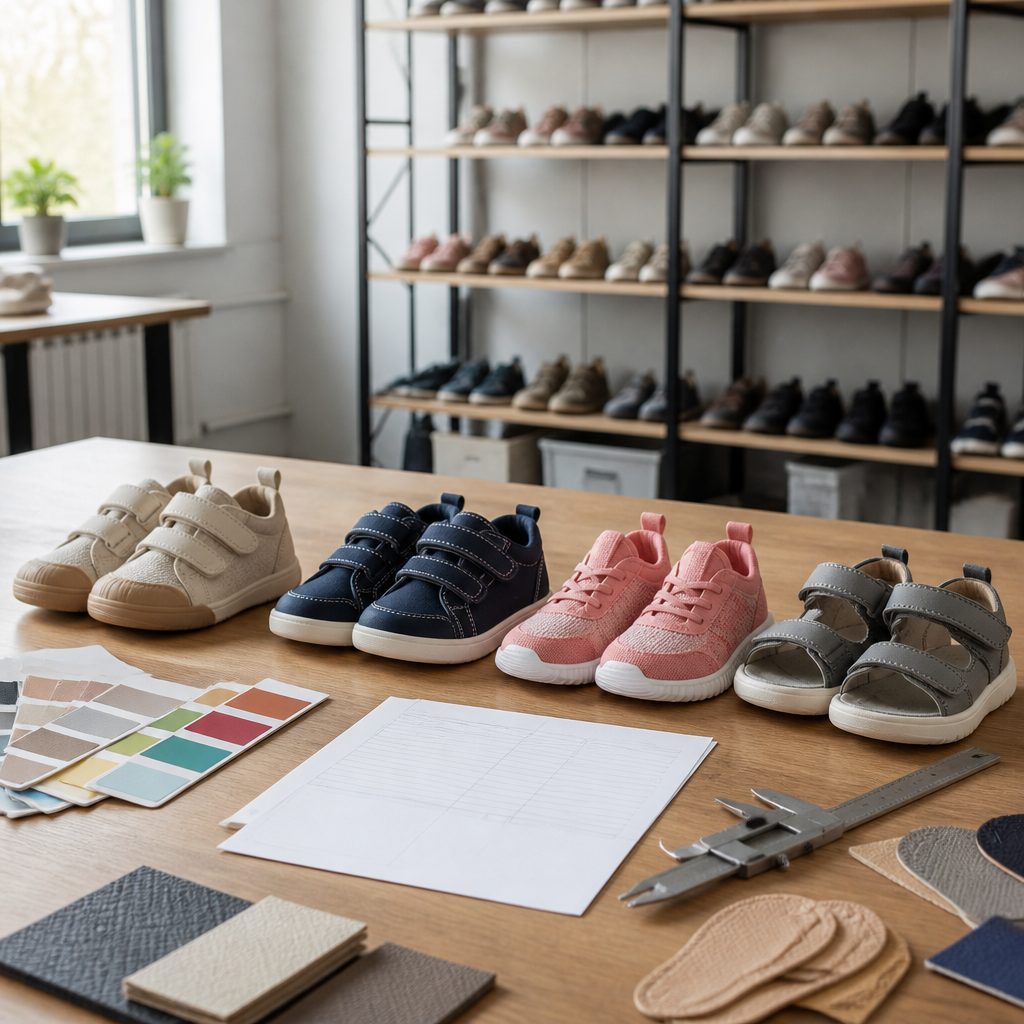
A childrens shoes wholesale Canada inspection plan is the document Canadian importers, school-program buyers, and kids-brand product teams often skip when they open a quotation thread with a style photo, a color board, and a broad quality ask. Appearance may get approved. What still goes unwritten is who confirms upper and lining choices, which fit brackets must be reviewed, which construction points must be checked before packing, and which proof returns with the export run. When those fields stay verbal, the receiving team inherits ad-hoc photos or unrelated badges instead of checkpoints it can use.
KidsShoeWorks frames quality as alignment to a buyer brief and a written inspection plan, not as a wall of generic claims. For a Canada-facing wholesale order, the useful move is to turn that stance into one proof brief you own and attach to the inquiry. The sections below show how to assemble that brief from published checkpoints—materials through packing—keep market notes and third-party tests as scoped requests, and close with a compact attachment you can send when you ask which development, sampling, or quotation options apply.
When a wholesale sample photo is not an inspection plan
A sample photo answers one question: does the shoe look like the intended style. It does not assign responsibility for material confirmation, day-to-day wearability across sizes, bonding and flex durability, or carton and label discipline. Canadian wholesale programs that skip those assignments often discover the gap at receiving, when carton labels do not match the retailer's packing rules, when toddler and big-kid pairs feel inconsistent, or when construction issues appear only after the bulk run is finished.
An inspection plan closes that gap. It lists the product family, the material language you expect, the fit brackets that matter for the channel, the construction rows that decide daily wear, the packing fields logistics needs, and the proof artifacts you want back: inspection photos, measured samples, and any test reports the project actually requires. Without that list, quality conversations drift into badges that have nothing to do with the order.
Define the plan as buyer-brief alignment, not a badge wall
On the quality control page, KidsShoeWorks states that children's shoes need more than a nice photo and that fit, bonding, flex, wear, and packing all need to be checked before the order leaves the factory. Inspection is described as starting before bulk production, with checkpoints aligned to the product brief and written inspection plan. The same page prefers evidence over badges: inspection photos, measured samples, and the test reports a project requires, rather than certifications that do not match the order.
Canadian buyers can treat that published preference as the filter for the RFQ. Ask for checkpoints and proof that map to your brief. Leave unrelated certificates out of the RFQ unless a retailer or importer has named a specific report for this program. Treat every documentation topic as something you specify per project, not as an automatic inclusion.
Proof items that map to published checkpoints
The quality page publishes a practical ladder and a second table of where inspection happens from materials to final carton. Use the map below as a buyer-side ledger when you draft the plan: each checkpoint family, the artifact you can request, and why receiving cares. Nothing here invents labs, pass rates, or Canadian statutory methods.
| Checkpoint family | What gets checked | Artifact to request | Receiving benefit |
|---|---|---|---|
| Material control / incoming materials | Upper, lining, outsole, label, and adhesive choices aligned to the brief | Written material confirmation before sample stage; material sample notes | Fewer surprises after sample approval |
| Fit and comfort / sample review | Toddler, little kid, and big kid sizing; fit, comfort, logo placement, finish, and closure | Measured sample review notes across the size brackets you sell | Better chance of matching the target market and the approved sample |
| Construction review / in-line checks | Stitching, bonding, flex point, assembly, and outsole stability during production | In-line or mid-run construction checklist photos | Problems caught before the bulk run is fully packed |
| Packing discipline / final packing | Carton counts, inner packing, labels, stickers, outer cartons, export presentation | Packing photos plus label and carton count confirmation | Cleaner handoff to logistics and receiving teams |
| Buyer documents | Inspection photos and checklist alignment | Photo set tied to your written rows, not a random gallery | Proof the receiving team can file against the PO |
Write material choices into the plan before sample sign-off
Material control is listed as a pre-sample step: upper, lining, outsole, and adhesive choices are confirmed before the sample stage so fewer surprises arrive after approval. Incoming materials inspection likewise aligns upper, lining, outsole, label, and adhesive samples to the brief. For a wholesale comparison, your inquiry should already carry checkable material language rather than a mood board alone.
When the program is a sneaker line, product and materials pages give bounded examples you can reference without expanding scope. Kids' sneakers are positioned for private-label and retail orders, including casual wear and school use, with builds that may use a breathable mesh or PU upper and custom colorway, logo, closure, and outsole texture. Engineered mesh is described as light, breathable knit-style uppers used in kids' sneakers, sports runners, and sandals. Put those choices into the plan as named options for this order, then ask for confirmation that the incoming materials match the brief before sample sign-off. Do not treat a materials catalog as a guarantee of every combination; keep confirmation as a checkpoint you request.
Buyers who want a fuller view of families and materials can review the product families and materials pages, then paste only the options that belong in this program into the inspection plan.
Separate fit brackets from construction checks in the same brief
Sample review on the quality page groups fit, comfort, logo placement, finish, and closure together. Fit language is published as toddler, little kid, and big kid sizing reviewed for day-to-day wearability. Construction review and in-line checks cover stitching, bonding, flex point, assembly, and outsole stability before packing. Write those jobs as separate rows in the plan so a logo-and-color approval does not silently stand in for wearability or durability.
- List the size brackets you will sell in Canada for this line (toddler, little kid, big kid as applicable) and require fit notes against each bracket you stock.
- Separate logo placement, finish, and closure review from measured fit and comfort comments so appearance sign-off is not mistaken for wearability sign-off.
- Require construction rows for stitching, bonding, flex point, and outsole stability before the order is fully packed.
- Call out kids shoes wholesale inspection photos that document the fit and construction rows above, not only lifestyle shots of the sample.
- State that in-line checks should flag assembly problems while production is still open, not after cartons are sealed.
Specify packing fields and importer document topics last
Final packing is published as carton counts, inner packing, labels, stickers, outer cartons, and presentation reviewed for the export run, with a cleaner handoff to logistics and receiving teams as the buyer benefit. Packing discipline is also summarized as carton counts, labels, and export presentation. When you need wholesale childrens footwear packing labels aligned to a warehouse or retailer rule set, write the fields those teams actually read: carton count method, inner packing rules, sticker placement, and any buyer-specific packing labels required for this program.
Documentation topics listed for alignment include buyer-specific packing labels, market-specific material notes, inspection photo requests, third-party test coordination, and document requests from your importer or retailer. That list is a menu of topics to discuss, not a promise that every item ships with every order. Put only the fields your Canadian receiving team or retailer requires into the plan, and keep the rest as optional inquiry lines.
Keep market notes and third-party tests as scoped requests
The quality page says what can be aligned around, including market-specific material notes, inspection photo requests, third-party test coordination, and importer or retailer document requests. It does not publish Canadian footwear statutes, named lab accreditations, or automatic compliance packages. Preserve that modality in your RFQ language.
If a retailer asks for a particular test report, name the method and the report as a project requirement and ask whether childrens shoes third-party test coordination can be aligned for that order. If an importer needs a market-specific material note, state the market and the note content as a brief item. Do not paste a generic certificate list into the inquiry. Evidence over badges means the proof set should match the written plan: photos, measured samples, and required reports only.
Attach one short inspection plan to the Canada wholesale inquiry
Convert the sections above into a one-page attachment. Keep it buyer-owned. You are not inventing factory promises; you are stating the proof brief you want aligned before bulk production. Then open a quotation conversation and ask which development, sampling, or quotation options apply to the project.
- Product family and use: name the shoe type (for example kids' sneakers for school retail) and the channel.
- Material confirmations: upper, lining, outsole, adhesive, and any label samples to confirm before sample stage.
- Fit brackets: toddler, little kid, and/or big kid sizes in scope, with measured fit and comfort review called out separately from logo and color.
- Construction rows: stitching, bonding, flex point, assembly, outsole stability, with in-line check timing stated.
- Packing and labels: carton counts, inner packing, stickers, outer cartons, buyer-specific packing labels, export presentation.
- Proof set: which inspection photos, measured samples, and project-required test reports you want returned with the order.
- Scoped documents: only the market notes, importer forms, or third-party coordination items this program actually needs.
Send that attachment with your style references when you request a quote. A written childrens shoes wholesale Canada inspection plan does not replace commercial discussion, but it gives the receiving team a checklist instead of a random photo pack. Keep the brief short, keep every row something a person can verify, and keep certifications that do not match the order out of the conversation.
Sources and verification
- Quality Control for Children's Shoes | KidsShoeWorks First-party site source
- Children's Footwear Products | KidsShoeWorks First-party site source
- Kids' Shoe Materials | Mesh, PU, Canvas, Rubber & EVA | KidsShoeWorks First-party site source
Share the current children's footwear definition and ask which development, sampling or quotation options may apply to the project.
Send your project brief