Sourcing Guides
Mesh vs PU Kids Sneakers for Canada Wholesale
A practical brief for Canadian wholesale buyers comparing mesh and PU kids sneaker uppers when only engineered mesh has published performance descriptors.
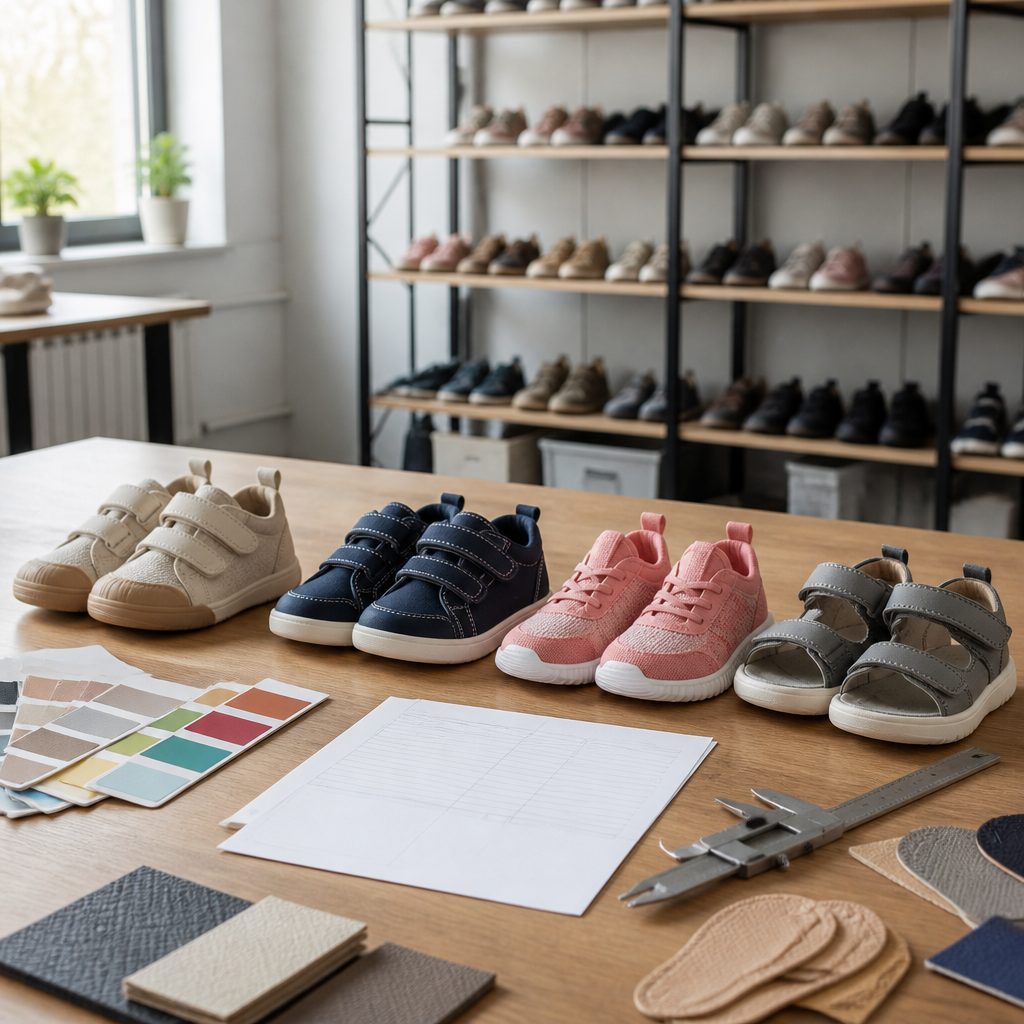
Mesh vs PU kids sneakers for Canada wholesale is often the first material fork a Canadian buyer hits when defining a kids' sneaker program. KidsShoeWorks lists breathable mesh or PU as possible upper builds on its sneaker product family. Its materials page, however, describes only engineered mesh as light, breathable, and quick-dry for warm-weather and active styles. The options are named; the published performance text is not equal. This brief does not pick a winner. It shows how to use what is published, keep unsupported PU attributes off the brief, and route open construction questions to the company's stated material, sample, and in-line review stages.
Two Upper Options, Unequal Evidence
The children's footwear products page presents kids' sneakers as a strong starting point for private-label and retail orders. It notes popularity with brands that want casual wear, school use, and a wide color story. The same card lists the build as a breathable mesh or PU upper. Colorway, logo, closure, and outsole texture appear as custom fields on that card.
Separately, the materials page describes engineered mesh as light, breathable knit-style uppers for warm-weather and active styles. It tags engineered mesh as breathable, lightweight, and quick-dry. Kids' sneakers are listed among the styles where engineered mesh is used.
Those excerpts do not support a full kids' sneaker upper material comparison. One page names two upper options. The other supplies descriptors only for engineered mesh. Nothing in the supplied pages attributes breathability, weight, drying behavior, durability, cleanability, weather resistance, or relative value to PU. Record mesh and PU as candidate uppers on your brief, attach published descriptors only to engineered mesh, and mark every PU performance claim as open until KidsShoeWorks confirms material choices against the project definition.
Name the Wear Context Before Choosing
Upper preference is easier to discuss once the intended range role is written down. KidsShoeWorks positions kids' sneakers as best for daily wear and school retail. Engineered mesh is associated with warm-weather and active styles. Those are published use contexts, not climate guarantees. They do not prove that mesh suits every Canadian season, school-uniform program, wet-commute pattern, or year-round shelf plan.
State whether the line is mainly indoor school wear, warm-season outdoor play, mixed retail casual, or a multi-season core sneaker. If the brief leans toward warm-weather or active styling, the engineered mesh descriptors give a documented reason to shortlist mesh first. If the brief spans colder months, wet sidewalks, or unspecified year-round duty, the open file is larger: PU remains listed as an upper option on the sneaker card, but no performance text is published for it here. In that case, preference is a hypothesis to test in sampling, not a closed material decision.
Canada is the commercial market for this decision only. The evidence does not document Canada-specific suitability, compliance, logistics, or documentation requirements. Market notes that matter to an importer or retailer belong in the inquiry as buyer-owned requirements, not as attributes already proven on the supplier pages.
Build a Known, Open, Verify Matrix
The practical device for an unequal-evidence choice is a three-column matrix: what is published, what the project still needs, and which published checkpoint can absorb the question. Keep engineered mesh's light, breathable, and quick-dry tags separate from project-specific comfort, bonding, flex, and stability questions.
| Decision area | Published information | Still open for the project | Relevant published checkpoint |
|---|---|---|---|
| Upper choice | Sneaker build listed as breathable mesh or PU; engineered mesh described as light, breathable, and quick-dry for warm-weather and active styles | Whether PU is preferred for the wear brief; any mesh or PU construction details beyond the published tags | Material control before sample; incoming materials alignment |
| Lining | Named among material choices confirmed before sample | Lining type, handfeel, and interaction with the chosen upper | Material control before sample |
| Outsole | Named in material control; outsole texture listed as a sneaker custom field; outsole stability checked in construction review before packing | Compound, tread, and stability expectations for the intended use | Material control before sample; construction review before packing |
| Adhesive | Named among material choices confirmed before sample and in incoming materials | Bonding approach for the selected upper and outsole stack | Material control before sample; construction review and in-line bonding checks |
| Fit bracket | Toddler, little kid, and big kid sizing reviewed for wearability; sample review covers fit and comfort | Which size run applies and how the upper drape affects fit | Fit review; sample review |
| Closure and finish | Closure listed as a sneaker custom field; sample review covers logo placement, finish, and closure | Closure type and finish standard for bulk match | Sample review |
| Construction review | Stitching, bonding, flex point, and outsole stability checked before packing | Whether the chosen upper stack meets flex and bond expectations before bulk finishes | Construction review before packing |
| In-line assembly | Assembly, stitching, bonding, flex, and stability checked during production | Whether bulk assembly continues to match the approved build | In-line checks during production |
The matrix is a buyer control tool. It does not invent PU attributes, quantify breathability or wear life, or convert published checkpoints into pass-fail lab results. It simply prevents the team from treating a product-card option list as a finished material specification.
Do Not Let Custom Details Decide the Build
Colorway, logo, closure, and outsole texture are attractive because they are visible and listable. KidsShoeWorks names them as custom sneaker fields. They still do not settle upper material, lining, adhesive, fit bracket, or construction behavior.
Advancing a logo placement, a multi-color story, or a lace-versus-strap preference while the mesh-versus-PU question remains open is a common procurement failure mode: the program looks finished on a mood board while the shoe that must pass bonding, flex, and daily wear is still undefined. Keep design fields secondary. Lock the upper shortlist first, then carry colorway, logo, and closure as optional inquiry inputs. If mesh is under consideration because of the published warm-weather and active context, say so. If PU is under consideration because the product card lists it, say that too, and list the missing PU descriptors as questions rather than as assumed advantages. Logo, colorway, and closure can travel with the inquiry; they should not substitute for it.
Route Open Points to Published Checkpoints
KidsShoeWorks publishes a quality sequence on its quality control page. Material control confirms upper, lining, outsole, and adhesive choices before the sample stage. Incoming materials align upper, lining, outsole, label, and adhesive samples to the brief. Sample review covers fit, comfort, logo placement, finish, and closure together. Construction review checks stitching, bonding, flex point, and outsole stability before packing. In-line checks cover assembly, stitching, bonding, flex, and stability during production. Final packing reviews carton counts, inner packing, labels, and outer cartons before shipment.
Map questions to that ladder without stretching it:
- Upper, lining, outsole, and adhesive unknowns belong before sampling, at material control and incoming materials alignment.
- Fit feel, logo placement, finish quality, and closure function belong at sample review.
- Stitching, bonding, flex point, and outsole stability belong in construction review before packing.
- Assembly, stitching, bonding, flex, and stability belong in in-line checks during production, not as afterthoughts at carton packing.
- Final packing is an export handoff check. It is not a substitute for earlier proof that the upper material, bond stack, or flex behavior matches the brief.
The same page states that documentation topics that can be aligned around include buyer-specific packing labels, market-specific material notes, inspection photo requests, third-party test coordination, and document requests from an importer or retailer. That language supports alignment discussion. It does not document automatic inclusion of third-party testing, quantified lab results, or a guarantee that bulk will match market acceptance. Treat checkpoints as timing and scope cues for kids' sneaker material questions for suppliers, not as certificates of outcome.
Hand Off the Unresolved Upper Decision
When mesh and PU remain open, the useful deliverable is a scoped inquiry, not a forced material award. For a Canadian wholesale program, a concise handoff can include:
- Current sneaker definition: private-label or retail kids' sneaker, daily wear and/or school retail role if that matches the plan.
- Intended wear context in plain language, including any warm-weather or active emphasis that tracks the engineered mesh description.
- Upper option under consideration: engineered mesh, PU, or both still under review, with a note that only mesh has published light, breathable, and quick-dry descriptors in the materials excerpt.
- Applicable sizing bracket among toddler, little kid, and big kid if known.
- Desired colorway, logo, closure, or outsole texture fields, clearly labeled as custom details rather than as material proof.
- Unresolved construction inputs: lining, adhesive, outsole expectations, bonding and flex concerns, and any market-specific material notes the importer or retailer will require.
A related planning aid is the site's wholesale children's sneakers RFQ brief, which can sit beside this upper-focused handoff without replacing it. Then ask which development, sampling, or quotation options may apply to the current definition. That invitation is an inquiry topic for the buyer, not a service promise beyond what the pages already state.
Treat the mesh-versus-PU choice for a Canadian wholesale sneaker program as an evidence-managed decision. Confirm materials before sample where the quality ladder places that work, and leave custom aesthetics behind the build questions that still need answers. Share the definition through the site's request a quote path when the team is ready to move from matrix to supplier dialogue.
Sources and verification
- Children's Footwear Products | KidsShoeWorks First-party site source
- Kids' Shoe Materials | Mesh, PU, Canvas, Rubber & EVA | KidsShoeWorks First-party site source
- Quality Control for Children's Shoes | KidsShoeWorks First-party site source
Share the current children's footwear definition and ask which development, sampling or quotation options may apply to the project.
Send your project brief