Sourcing Guides
Wholesale Children's Sneakers: RFQ Brief for Buyers
A practical buyer brief for wholesale children's sneakers, focused on the decisions that make supplier conversations, sample review and quotation requests more useful.
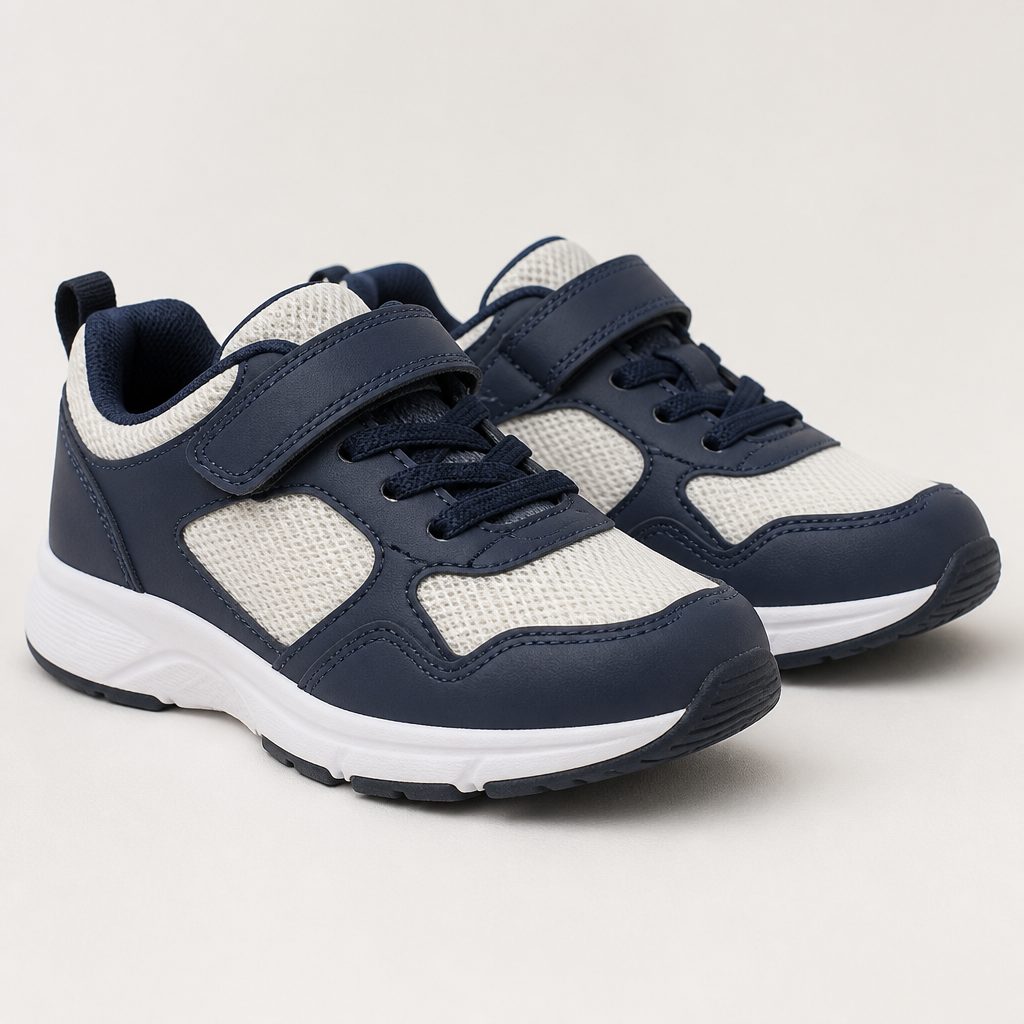
A useful RFQ for wholesale children's sneakers does more than ask for a unit price. It gives the supplier enough product context to understand the intended shoe, then leaves unconfirmed commercial items open for quotation.
KidsShoeWorks presents kids' sneakers as a starting point for private-label and retail orders. The product page connects the category with brands that want casual wear, school use and a wide color story. For a buyer, that source scope supports a practical brief: define the sneaker's role, upper direction, custom topics, fit range and quality questions before asking which development, sampling or quotation options may apply.
Start With The Range Role
Editorial recommendation: before comparing a kids sneaker supplier, write down what the sneaker is meant to contribute to the assortment. A school retail style may need a restrained color direction and a closure choice suited to frequent wear. A seasonal casual style may put more emphasis on color planning, upper direction and outsole texture. A private label kids sneakers program may need logo placement and fit coverage defined before the first sample discussion.
Those are buyer-side scoping choices, not documented service promises. The supported product information is narrower: kids' sneakers are described as a strong starting point for private-label and retail orders, and the page names daily wear and school retail as best-fit contexts. Use that documented category position to frame the RFQ instead of treating wholesale children's sneakers as a generic price-list item.
Separate Appearance From Build
Many RFQs become hard to quote because color, logo, material, closure, packing and timing are written as one mixed request. A clearer children's sneaker RFQ separates appearance decisions from build decisions, so each supplier can answer the same points in the same order.
| RFQ layer | Buyer input | Supported source scope |
|---|---|---|
| Product role | State whether the sneaker is intended for retail, private label, daily wear, school retail or another selling context. | KidsShoeWorks presents kids' sneakers as a starting point for private-label and retail orders. The product page names daily wear and school retail. |
| Upper direction | Ask about breathable mesh or PU upper when either direction fits the concept. | The product page lists breathable mesh upper as a build example for kids' sneakers. It also lists PU upper as a build example for kids' sneakers. |
| Custom topics | List colorway, logo, closure and outsole texture as separate requests. | The product page names colorway, logo, closure and outsole texture as custom topics for kids' sneakers. |
| Sample review | Ask how fit, comfort, logo placement, finish and closure will be reviewed. | The quality page identifies fit, comfort, logo placement, finish and closure as sample-review topics. |
This table is a briefing device for the buyer. It does not imply unlimited ODM design capability, a fixed quotation route or a guaranteed sampling schedule. It helps expose the assumptions that affect price: whether the quote is based on a color change, a different upper direction, a closure change, an outsole texture request or a broader private-label scope.
Use Factory-Ready Material Language
Material wording should be specific without turning catalog descriptions into performance claims. KidsShoeWorks' materials page describes engineered mesh as light, breathable knit-style uppers for warm-weather and active styles. The same page lists breathable, lightweight and quick-dry as attributes for engineered mesh. It lists kids' sneakers, sports runners and sandals as uses for engineered mesh.
A practical RFQ line could read: Upper direction: engineered mesh for a lightweight, breathable sneaker concept; please confirm available mesh options and how sample comfort and finish should be reviewed. That sentence stays within the documented material language. It does not claim verified performance results, chemical compliance or suitability for every activity level.
Keep PU in its own line when it is part of the concept. The product page lists breathable mesh upper and PU upper as build examples for kids' sneakers, but the engineered mesh attributes should not be assigned to PU unless the supplier confirms the actual construction.
Make Fit A Checkpoint
Fit belongs in the brief before a sample arrives. KidsShoeWorks' quality-control page identifies fit review across toddler, little kid and big kid sizing. It also lists fit and comfort as sample-review topics.
The source does not define a sizing standard, last-development process or U.S.-specific compliance path. For a U.S. buyer, the safer RFQ approach is to ask how the proposed sample will be reviewed for the intended range and how fit comments should be captured before the quotation hardens.
- State the intended fit range: toddler, little kid, big kid or the buyer's own target range.
- Describe the selling context, such as daily wear, school retail or a seasonal casual range.
- Ask how fit and comfort will be reviewed at sample stage.
- Identify closure expectations early, because closure is both a documented custom topic and a sample-review topic.
- Keep market standards, labeling and chemical testing questions as order-specific questions until the supplier confirms what applies.
Ask For The Quality Ladder
Quality questions are easier to compare when they follow the order path. KidsShoeWorks describes practical checks around materials, fit and comfort, construction review, inspection checkpoints, final packing and documentation alignment. Treat that as a checkpoint ladder for discussion, not as a certification claim.
| Checkpoint | What the buyer can ask | Documented scope |
|---|---|---|
| Incoming materials | Which upper, lining, outsole, label and adhesive samples should align to the brief? | Incoming materials are described as upper, lining, outsole, label and adhesive samples aligned to the brief. |
| Sample review | How will fit, comfort, logo placement, finish and closure be reviewed together? | The quality page names fit, comfort, logo placement, finish and closure as sample-review topics. |
| Construction review | Which stitching, bonding, flex point and outsole stability checks are relevant before packing? | The quality page lists stitching, bonding, flex point and outsole stability under construction review. |
| In-line checks | Which assembly, stitching, bonding, flex and stability points are checked during production? | The inspection checkpoint section lists assembly, stitching, bonding, flex and stability as in-line check topics. |
| Final packing | What carton counts, inner packing, labels and outer cartons should be checked before shipment? | The quality page lists carton counts, inner packing, labels and outer cartons as final packing topics. |
The useful question is concrete: when are materials aligned, what is reviewed at sample stage, which construction points are checked before packing, and what packing details need to match the order? That keeps the discussion tied to the proposed sneaker rather than to a generic QC claim.
Keep Proof Requests Order-Specific
KidsShoeWorks uses the phrase "Evidence over badges" and says it would rather send inspection photos, measured samples and test reports a project actually requires than show certifications unrelated to the order. That supports a project-tied proof conversation. It does not make every possible test, document or certification a guaranteed deliverable.
The quality page also separates buyer-document language from a broader documentation alignment list. Keep those sets separate in the RFQ so the request matches the source scope.
- Buyer documents
- Inspection photos and checklist alignment are named together in the quality page's buyer-document language.
- Documentation: what can be aligned around
- Buyer-specific packing labels, market-specific material notes, inspection photo requests, third-party test coordination and document requests from an importer or retailer are listed as documentation alignment topics.
For the buyer, these should remain questions until the supplier confirms the applicable path for the current project. MOQ, sampling route, quotation basis, packing options and timing should also be asked at the quotation stage, because the supplied evidence does not establish fixed values for those items.
An Illustrative Private-Label Brief
The following example is hypothetical: a retailer is preparing a private-label children's sneaker for everyday school-adjacent retail and wants a breathable upper direction, a controlled color story, logo placement and a closure suitable for younger wearers.
The RFQ could state the sneaker's selling role, target fit range and preferred upper direction. It could then list colorway, logo, closure and outsole texture requests as separate custom topics. For sample review, it should ask about fit, comfort, logo placement, finish and closure. For order checks, it can ask how construction and packing topics will be handled for the proposed sneaker.
KidsShoeWorks' case-study page supports only an illustrative private-label sneaker program format. It does not provide a buyer name, quantity, timeline, shipment result or verified customer outcome.
RFQ Inputs To Prepare
A concise brief is enough if it answers the decisions that change the sneaker. Before sending a request, prepare the current children's footwear definition in a format that can be checked against product, material and quality-control topics.
- Product type: wholesale children's sneakers, with the intended retail or private-label role.
- Use case: daily wear, school retail, casual seasonal range or another specific selling context.
- Material direction: breathable mesh, PU upper, engineered mesh or a question asking which upper direction fits the concept.
- Customization requests: colorway, logo, closure and outsole texture, kept separate from material requests.
- Fit range: toddler, little kid, big kid or the buyer's target range for review.
- Sample-review questions: fit, comfort, logo placement, finish and closure.
- Construction and in-line questions: stitching, bonding, flex, stability and outsole stability where relevant to the proposed sneaker.
- Packing questions: carton counts, inner packing, labels, outer cartons and export presentation.
- Buyer-document questions: inspection photos and checklist alignment.
- Documentation alignment questions: buyer-specific packing labels, market-specific material notes, inspection photo requests, third-party test coordination questions and importer or retailer document requests where relevant.
- Commercial questions: which MOQ, sampling, quotation and timing information applies to this project.
The strongest RFQ gives the supplier structure without pretending that every commercial term is already known. For buyers comparing private label kids sneakers, that structure makes the conversation more useful: clear product direction, careful evidence boundaries and a direct path into the quotation conversation.
Useful KidsShoeWorks Pages
- Children's footwear products: review the documented sneaker category, use cases, build examples and sneaker custom topics.
- Kids' shoe materials: compare material wording such as engineered mesh before writing the upper direction.
- Quality control for children's shoes: turn fit, construction, packing and documentation topics into RFQ checkpoints.
- Case study format: use the illustrative private-label sneaker program format as a scoping reference, not as proof of a completed customer case.
Sources and verification
- Children's Footwear Products | KidsShoeWorks First-party site source
- Kids' Shoe Materials | Mesh, PU, Canvas, Rubber & EVA | KidsShoeWorks First-party site source
- Quality Control for Children's Shoes | KidsShoeWorks First-party site source
- Kids' Shoe Programs: Case Study Format | KidsShoeWorks First-party site source
Buyer FAQ
-
What should a buyer include in the next RFQ?
Include the product family, destination market, size range, quantity, materials or branding scope, packaging and requested delivery window. Mark open decisions separately so the quotation does not rely on guesses.
-
How should this guide be verified before ordering?
Confirm the proposed route against current samples, a written specification, project-specific testing or inspection and the agreed commercial terms.
Share the current children's footwear definition and ask which development, sampling or quotation options may apply to the project.
Send your project brief