Wholesale Sourcing
Custom closure kids sneakers wholesale UK: define the field
A closure-scoped RFQ guide that separates the buyer's current sneaker definition from the development, sampling and evidence questions that still need project confirmation.
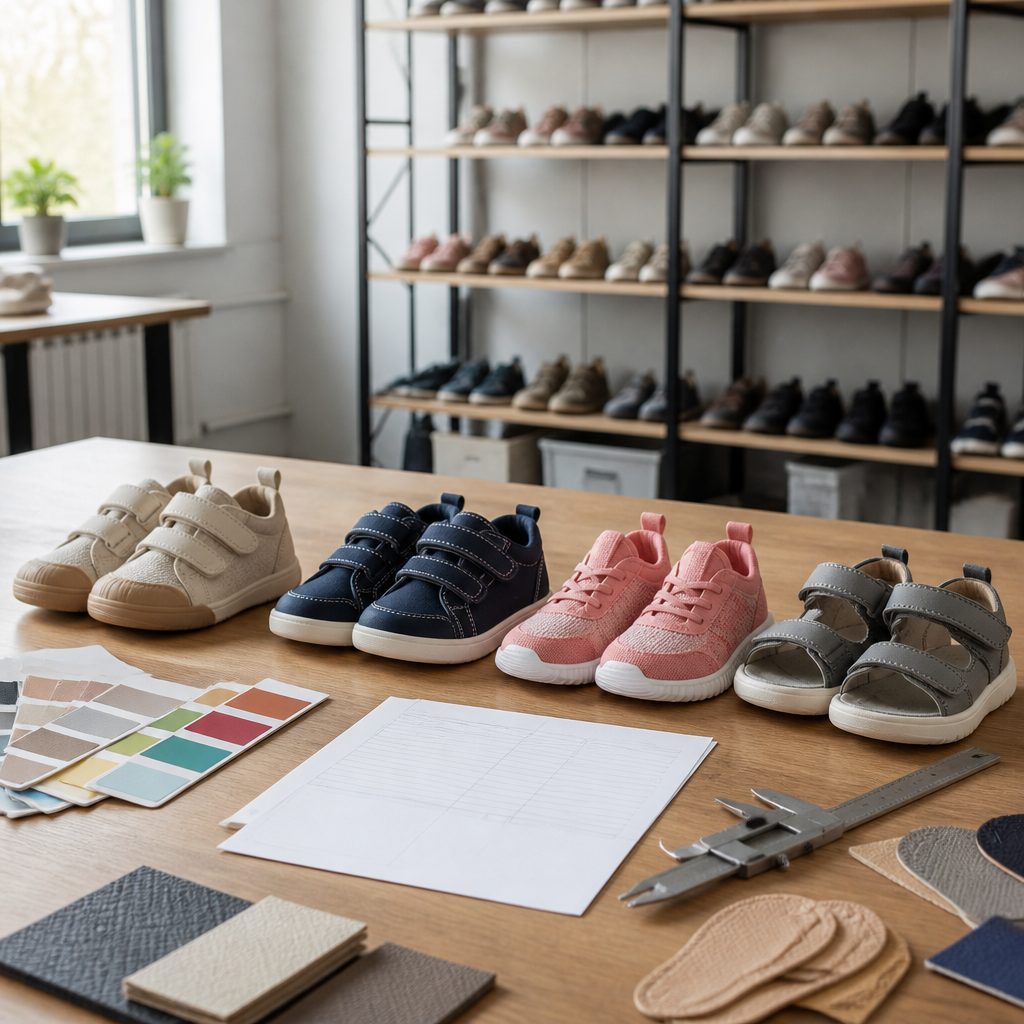
A UK buyer can lock the sneaker upper, colorway and intended role while still leaving one RFQ field unresolved: closure. On a custom closure kids sneakers wholesale UK inquiry, that gap matters because the product page names closure as a customizable field, yet the published scope does not list available constructions or confirm that every requested design can be developed. The word custom is not itself a closure definition.
Treat the inquiry as two linked records. One holds the buyer's current product definition. The other holds project questions that still need a supplier answer. Keeping those records separate makes the sample request and any quotation discussion easier to interpret.
Why leave the closure field open on a custom sneaker RFQ?
The KidsShoeWorks product entry lists closure among the custom fields for kids' sneakers, alongside colorway, logo and outsole texture. That published line is enough to justify a closure-specific question. It is not enough to treat any fastening idea as already agreed.
Incomplete inquiries often mix a fixed preference with an open option. Editorial recommendation for the buyer: give closure its own status—fixed, under revision or unresolved—before asking which development, sampling or quotation options may apply. That habit keeps a private label kids sneaker closure brief usable when the rest of the definition changes.
Published product boundary for kids' sneakers
Within the kids' sneaker entry, the product is presented for daily wear and school retail. The listed build is a breathable mesh or PU upper. The listed custom fields are colorway, logo, closure and outsole texture. Those points set the published sneaker context for the RFQ; they do not fill in the technical detail behind the closure field.
The separate materials page describes engineered mesh as lightweight, breathable and quick-dry, and names kids' sneakers among its uses. Keep that statement on its own. It does not assign those attributes to PU, to every mesh construction or to the finished sneaker as a whole.
When the upper is still under consideration, record it as selected or unresolved. Buyers who need more material context can consult the kids' sneaker material options guide while still treating closure as its own decision field.
Documented scope versus open project questions
Use one decision record to separate published scope, buyer-owned inputs and supplier applicability questions. The open questions below are editorial prompts for an inquiry. They are not evidence that a particular closure construction, development path or quotation arrangement is available.
Closure decision record for a kids' sneaker RFQ
| Record area | Published fact | Buyer input | Project question |
|---|---|---|---|
| Product role | The sneaker entry presents daily wear and school retail as intended uses. | State the intended retail or wearing context for this project. Mark any role outside those published examples as a buyer requirement. | Does the current definition give enough product context to discuss applicable development or quotation information? |
| Upper | The listed build is breathable mesh or PU upper. | Select the current upper, or mark the decision unresolved. Do not describe PU as breathable based on the mesh wording. | What additional material or construction information is needed to assess the requested closure with the selected upper? |
| Closure and adjacent custom fields | The custom line lists colorway, logo, closure and outsole texture. | Give closure its own status: fixed, under revision or unresolved. Record colorway, logo and outsole-texture requirements separately. | Which closure options, if any, may apply to this project, and what information is needed to evaluate the exact request? |
| Sizing bracket | The quality page describes fit review across toddler, little kid and big kid sizing. | Name the target bracket and the buyer's size-system reference. If the range is not settled, identify that as an open input. | Which sizing and fit information should accompany the sampling inquiry for the stated bracket? |
This split stops an unanswered supplier question from being read as an approved requirement, and it stops a buyer preference from being read as a published KidsShoeWorks capability.
Keep dependencies in one current product record
The quality-control page confirms upper, lining, outsole and adhesive choices before the sample stage. The same page separately describes fit review across toddler, little kid and big kid sizing. For the buyer, that sequence is a practical reason to maintain one current product record rather than discussing closure in isolation.
- Set the product context. Record the sneaker's intended role and target sizing bracket in the buyer's current terminology.
- Fix the material status. Identify the upper as breathable mesh, PU or unresolved within the published sneaker boundary. Keep lining, outsole and adhesive decisions visible where they are already defined.
- Give closure a clear status. State the current requirement, revision reference or unresolved decision without substituting an assumed closure type.
- Carry adjacent fields forward. Keep colorway, logo and outsole-texture notes in the same revision so the closure request is judged against the current definition.
Editorial recommendation for the buyer: treat any closure revision as a reason to re-check the rest of that record. That is a document-control choice, not a claim that KidsShoeWorks selects the upper, sizing bracket or other inputs on the buyer's behalf.
Place closure inside the documented sample review
At the sample stage, the documented review covers fit, comfort, logo placement, finish and closure together. Within the supplied evidence, that is the checkpoint that includes closure. The page does not set out closure test methods, pass criteria, approval authority, sample timing or guaranteed outcomes.
Before a kids sneaker sample review UK discussion, state what must be resolved at that checkpoint. The note can identify the current closure revision, the aspects that must be compared with the submitted definition and any questions that need an answer before the buyer updates its record. Keep observations about fit, comfort, logo placement and finish distinct, even though they are considered at the same stage.
Used this way, the closure brief becomes the controlled reference during review instead of a loose description that drifts between the first inquiry and the sample conversation.
What evidence questions belong in the RFQ?
The quality page groups documentation topics carefully. Under buyer documents, it names inspection photos and checklist alignment. Separately, its list of topics the company can align around includes inspection photo requests and third-party test coordination. The page also discusses measured samples when explaining how proof is handled. Those statements support project questions; they do not establish an automatic closure-specific proof package, factory testing service or certification claim.
- Photo scope: Ask whether an inspection photo request can include agreed views of the closure area and how those views should be identified.
- Checklist wording: Ask whether the buyer's closure requirement and revision reference can be reflected in project-specific checklist alignment under the buyer-documents topics.
- Measured-sample information: Ask whether any measurements are relevant to the requested closure review and which information, if any, can be aligned to the project.
- Third-party testing: If the buyer or retailer has a project-specific test request, ask what third-party test coordination may apply. Do not treat coordination as factory testing, certification or an automatic test package.
Write these items as open RFQ questions. They should become committed requirements only after the applicable scope and responsibilities are confirmed for the project.
Closure-scoped definition to submit
Send one current record, with unresolved decisions marked plainly. Avoid competing versions in separate messages, and do not invent commercial details merely to make a custom kids sneaker quotation UK request look complete.
- Current sneaker role
- Fill in the intended context: daily wear / school retail / other buyer-defined use: ______
- Target sizing bracket
- Fill in toddler / little kid / big kid (as applicable) and the size-system reference: ______
- Upper status
- Fill in breathable mesh / PU / unresolved: ______
- Closure field
- Fill in the current requirement, or write “unresolved,” plus any buyer revision or reference code: ______
- Adjacent custom fields
- Fill in colorway, logo and outsole-texture notes without folding them into the closure description: ______
- Requested sample-review focus
- Fill in what must be resolved when closure is reviewed alongside fit, comfort, logo placement and finish: ______
- Open evidence questions
- List any project questions on inspection photos, checklist alignment, measured-sample information or third-party test coordination: ______
- Commercial inquiry
- Ask which development, sampling or quotation information may apply to the submitted definition.
Share this current children's footwear definition through the quotation request page. The goal is a closure-scoped discussion in which fixed requirements, unresolved buyer decisions and supplier applicability questions stay visibly separate.
Sources and verification
- Children's Footwear Products | KidsShoeWorks First-party site source
- Quality Control for Children's Shoes | KidsShoeWorks First-party site source
- Kids' Shoe Materials | Mesh, PU, Canvas, Rubber & EVA | KidsShoeWorks First-party site source
Share the current children's footwear definition and ask which development, sampling or quotation options may apply to the project.
Send your project brief