Product Development
Fit Is Only One Line: Children's Sneaker Sample Approval Checklist
A buyer-owned record that identifies the exact sneaker sample, separates five review decisions, and carries unresolved questions into the next inquiry.
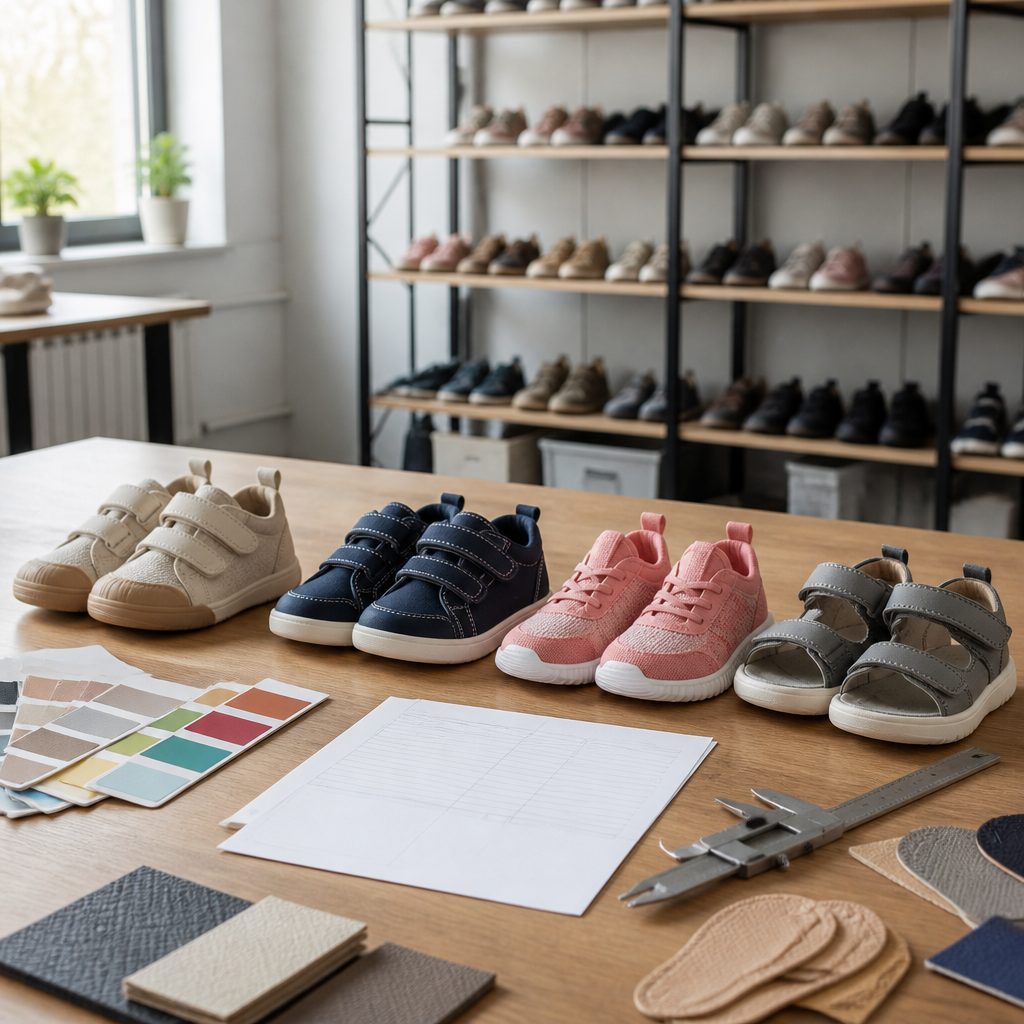
Approval notes can become misleading when one comment is allowed to stand for a decision about an entire physical sample. A logo-placement observation may be ready to close while fit or closure remains unresolved. A buyer can use a children's sneaker sample approval checklist to tie one version to separate decisions instead of allowing an overall approval note to carry more meaning than the record supports.
At sample review, KidsShoeWorks identifies fit, comfort, logo placement, finish and closure as topics reviewed together. Keeping those topics in one record while giving each its own disposition is an editorial recommendation for the buyer.
This is a buyer-side working record, not a claimed KidsShoeWorks form or approval protocol. The published material identifies review topics and checkpoints, but it does not specify a project's size coverage, assessment method, acceptance criteria, reviewer, sample quantity or proof package. The buyer needs to define those points for the footwear project at hand.
The record starts with the version
Before a team comments on a sample, the record needs enough detail to show exactly what is being discussed. A version header keeps a later artwork file, color reference or revised sample from being confused with the item that received the original note.
Editorial identity header
| Header field | What the buyer records | When it remains open |
|---|---|---|
| Sample version | Style reference, version marker and review date. | State that the version cannot yet be matched to the comments. |
| Review pack | The brief, artwork file, color reference or annotated image used for the review. | Name the missing or conflicting reference. |
| Footwear definition | The buyer's current sneaker description and intended-use reference. | Leave the intended use unresolved rather than borrowing it from a product listing. |
| Upper | The upper reference associated with this sample. | Identify the material point that still needs a project definition. |
| Colorway | The color reference attached to the reviewed version. | Record the absent or competing color reference. |
| Logo | The artwork version and requested logo location. | Point to the artwork or placement issue that is still undecided. |
| Closure | The closure definition used for this review. | Describe the closure question that prevents a decision. |
| Outsole texture | The outsole-texture reference, when relevant to the style. | Keep it open until the buyer supplies a reference. |
On its products page, KidsShoeWorks calls kids' sneakers a strong starting point for private-label and retail orders. The page identifies daily wear and school retail under its Best for entry. In a separate Build entry, it refers to a breathable mesh or PU upper. Its Custom entry names colorway, logo, closure and outsole texture. These are published product references, not a definition of the current sample unless the buyer connects them to the project record.
The approval call
Once the sample version is clear, give every reviewed field a plain working status. A team may use its own language, but the record benefits from labels that distinguish a decision from an unresolved comment.
- Move forward: the field has a recorded decision for the identified version.
- Revision needed: the record names the field, reference and issue that require another decision.
- Pending: an absent definition, reference, criterion or decision owner prevents closure.
These are editorial status labels. They help the buyer keep a field-specific decision from being replaced by a broad approval statement.
Five fields, five dispositions
KidsShoeWorks places fit, comfort, logo placement, finish and closure together at the sample-review stage. In a kids sneaker sample review, the ledger below keeps that shared discussion visible while preventing one favorable observation from closing another field.
Editorial five-field decision ledger
| Review field | Definition needed before review | Decision note for this version | What stays open | Handoff |
|---|---|---|---|---|
| Fit | Size scope and buyer-selected assessment basis. | Record the fit outcome for the identified sample. | Any missing size, method or criterion. | The person who closes the item and its next action. |
| Comfort | The comfort question the buyer intends to decide. | Keep the comfort conclusion separate from the fit outcome. | The point that still needs assessment. | The decision owner and follow-up record. |
| Logo placement | Artwork version, requested location and comparison reference. | Link the placement decision to the relevant file or image. | The artwork or location detail still undecided. | The owner of the next artwork or placement decision. |
| Finish | The surfaces and visual references included in the review. | Describe the current conclusion without inventing an unagreed tolerance. | The area that needs another reference or decision. | The person responsible for the next review. |
| Closure | The closure definition and buyer-selected review question. | Give closure its own conclusion and supporting reference. | The remaining definition or operation question. | The owner and next project action. |
A decision about logo placement or finish should not be read as a decision about fit, comfort or closure. The record remains useful when a field is pending, provided it identifies why the decision cannot yet be made.
Fit is a scope question
The quality page refers to toddler, little kid and big kid sizing as reviewed for day-to-day wearability. It does not name the segment for a particular project, which physical sizes a sample represents, how fit is assessed, who records the result or which criteria close the item.
Children's shoe fit review questions
- Which published size segment, if any, applies to this style?
- Which physical size or sizes does the current sample represent?
- What assessment approach and project criteria will support the fit decision?
- Who records the result, and who can close a pending fit item?
- Which file, note or comparison reference belongs with the fit row?
Until those points are defined, a prudent buyer can leave fit pending rather than treating the presence of a sample as proof of broader size coverage.
What sample approval leaves open
The Quality page describes checkpoints on either side of sample review. Keeping those stages in separate records helps a buyer avoid treating a sample-stage decision as a decision about materials, production construction or final packing.
| Published checkpoint | Scope described by KidsShoeWorks | Buyer record treatment |
|---|---|---|
| Before the sample stage | Upper, lining, outsole and adhesive choices are confirmed before the sample stage. | Keep the applicable material definition as a separate reference. |
| Sample review | Fit, comfort, logo placement, finish and closure are reviewed together. | Use the five-field ledger for the identified sample version. |
| In-line checks | Assembly, stitching, bonding, flex and stability are checked during production. | Record later construction questions outside the sample decision. |
| Final packing | Carton counts, inner packing, labels and outer cartons are checked before shipment. | Reserve packing and shipment status for a later record. |
A sample approval record should therefore state only what was decided at sample review. It is not a substitute for later construction or packing records. For a separate later-stage planning topic, see the wholesale children's sneaker inspection plan.
Proof questions tied to the open item
The Quality page's Buyer documents line pairs inspection photos with checklist alignment. Its Documentation list names buyer-specific packing labels and market-specific material notes. It also names inspection photo requests, third-party test coordination and document requests from an importer or retailer.
Under Evidence over badges, the page says it would rather send inspection photos, measured samples and test reports a project actually requires than certifications unrelated to the order. For the buyer's record, that language is a reason to ask project-specific questions, not to list a default evidence package.
- Does an unresolved field call for an inspection photo request, and what view or stage should it address?
- Which checklist, if any, needs to align with the current ledger?
- Is third-party test coordination relevant to the pending decision, and what requirement would define it?
- Has the importer or retailer identified a document request for this project?
- Would a measured sample or test report address the open question, and what information would the buyer need from it?
The final handoff
The completed children's sneaker sample approval checklist should travel with the sample reference rather than exist as an unconnected comment list. An editorial handoff can include:
- The identified sample version and the files used to review it.
- The five separate dispositions, including the reference supporting each decision.
- Any pending field, its unanswered question and the person carrying the next action.
- Material, production and packing matters that belong to a later checkpoint.
Share the current children's footwear definition through the project inquiry. Identify the unresolved sample-review fields, then ask which development, sampling or quotation options may apply to the project. Keep those options as questions until KidsShoeWorks responds to the specific inquiry.
Sources and verification
- Quality Control for Children's Shoes | KidsShoeWorks First-party site source
- Children's Footwear Products | KidsShoeWorks First-party site source
Share the current children's footwear definition and ask which development, sampling or quotation options may apply to the project.
Send your project brief