Quality and Sampling
Why Photo Approval Misses Infant Shoes Wholesale Fit Review
Procurement brief on sample-stage multi-bracket wearability: use published toddler, little kid, and big kid fit language with construction checks so size runs are not released on a photo-only gate.
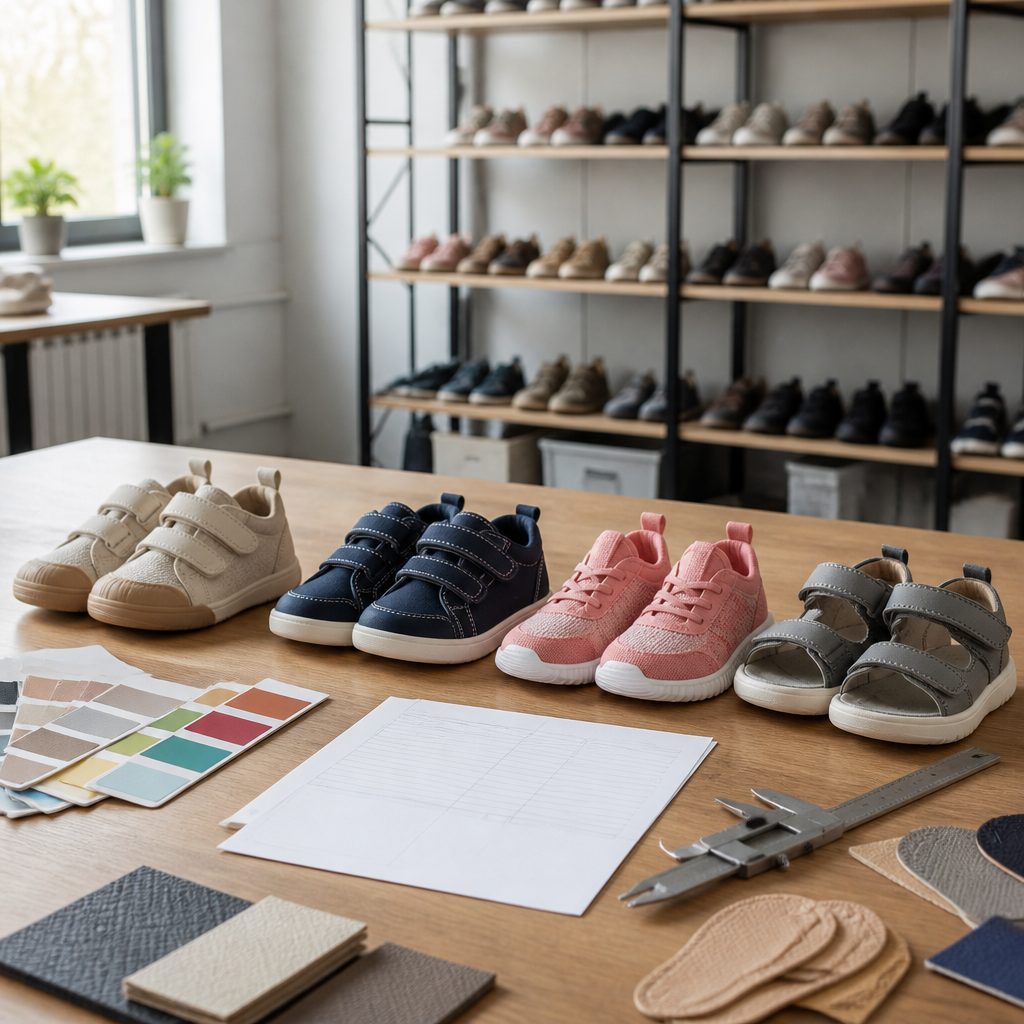
Cartons look fine. Color matches. Logo sits where the mock-up promised. Then children wear the shoes and heel slip, tight toe room, or a flex point in the wrong place shows up. That sequence is the bulk-risk pattern an infant shoes wholesale fit review is meant to interrupt at sample stage, not after the size run has already left the factory.
Public language on the KidsShoeWorks quality page is blunt: children’s shoes need more than a nice photo. Fit, bonding, flex, wear, and packing all need to be checked before the order leaves the factory. Fit itself is reviewed as toddler, little kid, and big kid sizing for day-to-day wearability. That three-bracket set is the working ceiling for this brief. Age cutoffs, infant lasts, and an infant-only product line are not published there, so they remain buyer-owned rows rather than assumed factory facts.
When a single sample leaves the size run unprotected
Wholesale trouble often starts at infant shoes wholesale sample approval when appearance is treated as the full gate.
A clean upper, a correct colorway, and a logo that lands on the sample do not prove that the same last and construction will wear across every size you plan to ship. Once bulk cartons leave, correcting heel slip, toe room, flex location, or outsole stability becomes a reclaim and reship problem instead of a sample note. Retail and school programs that planned one size ladder can discover that one approved sample never represented the brackets they actually ordered.
Do not treat a photo or a single-size look-check as the wearability gate. Use the multi-bracket fit language that is published, then pair it with construction review before you release the size run.
Which published fit brackets can you actually use?
On the quality page, fit and comfort are a review of toddler, little kid, and big kid sizing for day-to-day wearability. That is the full published set. There is no infant last table, no age chart, and no separate infant size ladder.
| Published fit language | What the source states | Buyer use at sample stage |
|---|---|---|
| Toddler sizing | Included in fit and comfort review for day-to-day wearability | Confirm whether the sample size represents the toddler portion of the run you intend to order |
| Little kid sizing | Included in the same multi-bracket fit review | Check that little-kid samples are not approved only by visual match to a toddler sample |
| Big kid sizing | Included in the same multi-bracket fit review | Decide whether big-kid coverage is in scope for this wholesale program at all |
| Unstated infant chart | Not published as a separate fit table or last system | Keep project age definition and market notes as open inquiry fields |
Toddler little kid sizing wholesale planning still belongs to the buyer. The factory language gives three review brackets and a wearability purpose. It does not convert those brackets into a guarantee that every market’s infant or early-walker definition will map cleanly without your own notes. Map project ages onto the published set, or mark the gap as open.
Fit pass versus logo-and-color pass
Sample review on the quality page groups fit, comfort, logo placement, finish, and closure together so the bulk run has a better chance of matching the approved sample. Those items share one checkpoint. They are not interchangeable proofs of each other.
Separately, the kids’ sneakers product family is described as a starting point for private-label and retail orders. It is popular for casual wear, school use, and a wide color story, and framed as best for daily wear and school retail. Build language there points to breathable mesh or PU upper. Custom language points to colorway, logo, closure, and outsole texture. That set is useful when scoping a sneaker program. It is not evidence that a colorway or logo decision completed an infant shoes wholesale fit review.
| Field type | Documented items | What it does not prove alone |
|---|---|---|
| Sample review (quality page) | Fit, comfort, logo placement, finish, closure reviewed together | That logo or finish approval can stand in for multi-bracket wearability |
| Kids’ sneaker customization (products page) | Colorway, logo, closure, outsole texture | That a private-label sneaker color story is an infant manufacturing program |
| Kids’ sneaker use context (products page) | Daily wear and school retail as a best-for framing | That the same framing defines infant wholesale scope or age coverage |
Keep logo, colorway, and closure on the sample form, and still force an explicit pass or fail on fit and comfort across the brackets you intend to buy. If only one size was worn or measured, record that limit in the approval notes so the size run is not released on an incomplete gate.
Construction checks that travel with the fit decision
The same quality ladder lists construction review next to fit, not as optional later work. Stitching, bonding, flex point, and outsole stability are checked before packing so problems are caught before the bulk run is finished.
For infant shoes construction review at sample stage, that pairing matters. A soft upper that looks correct can still fail if the flex point sits in the wrong place or the outsole is unstable under a short stride.
- Stitching: Confirm seam quality and stress points on the sizes you will actually run, not only on the hero sample.
- Bonding: Treat adhesive and bond lines as part of sample approval. Material control on the quality page also confirms upper, lining, outsole, and adhesive choices before the sample stage, with the stated buyer benefit of fewer surprises after sample approval.
- Flex point: Check where the shoe bends in wear, especially if the program spans more than one of the published fit brackets.
- Outsole stability: Review base stability as a wear gate, not only as a cosmetic sole finish.
That material-control timing statement is about when choices are confirmed. It is not a license to assume infant-specific performance claims the materials page does not make for this use case.
Where sneaker and mesh language stops
Scope discipline protects the fit decision. The materials page describes engineered mesh as light, breathable knit-style uppers for warm-weather and active styles, used in kids’ sneakers, sports runners, and sandals. That is a material and product-family statement. It does not redefine mesh as an infant wholesale performance claim, and it does not expand kids’ sneaker daily-wear or school-retail language into an infant manufacturing promise.
Use product and material pages to keep upper options and program families clear. Use the quality page for fit brackets and construction co-requisites. Keep each claim next to its own source boundary. Do not union those excerpts into a single broader capability. Let any missing infant detail remain visible on the inquiry.
Which infant fit details stay on the buyer brief?
Because the published fit language stops at toddler, little kid, and big kid review for wearability, several project facts belong to the buyer until they are written into a brief and aligned. Leaving them blank invites the factory and the buyer to assume different things about the same size run.
- Project age definition: How your brand or retailer defines infant, early walker, or the first size ladder for this order.
- Size-run coverage: Which of the published toddler, little kid, and big kid brackets are actually in the wholesale order, and which sample sizes represent them.
- Market wear context: Indoor, outdoor, school, or mixed use notes that change how comfort and flex should be judged.
- Importer or retailer fit notes: Any receiving checklist language that must sit next to sample photos and measured samples.
- Documentation topics to align: The quality page lists buyer-specific packing labels, market-specific material notes, inspection photo requests, third-party test coordination, and document requests from an importer or retailer as items that can be aligned around. Treat those as topics to discuss, not as automatic inclusions for every order.
If a hypothetical buyer is building a first infant-facing size ladder for a family brand, the useful move is not to invent a factory age chart. Attach their own age and market notes to the published multi-bracket fit review, and require construction checks on the same sample set before bulk release.
Converting open fit rows into a scoped inquiry
Once open fit and construction rows are visible, convert them into a scoped ask rather than a photo-only approval. The quality page invites a quote request in the context of quality control that matches a buyer brief, and it stresses inspection photos, measured samples, and the test reports a project actually requires. The case study page shows an example private-label sneaker program as a format for how a program can be scoped, sampled, and run. Use that only as a structure reference, not as an infant customer case or bulk result.
- State which of the published toddler, little kid, and big kid brackets the wholesale size run will cover, and which sample sizes will stand for each bracket in the infant shoes wholesale fit review.
- List co-requisite construction checks (stitching, bonding, flex point, outsole stability) that must pass with fit and comfort before sample approval is written.
- Separate logo placement, finish, colorway, and closure notes so they cannot be read as a substitute for wearability.
- Record infant-specific unknowns (age definition, market wear context, importer or retailer fit notes) as open rows the factory must not fill with unstated capability.
- Ask which development, sampling, or quotation options may apply to the project, including which sampling path, packing or documentation topics, and quotation detail you need to compare before bulk. Do not treat those topics as a fixed service promise beyond what a given project aligns.
Write the brief so fit brackets, construction co-requisites, and open infant rows are all visible without guesswork. From there, use the request a quote path to share the current children’s footwear definition for the program and to ask which development, sampling, or quotation options may apply. That keeps sample approval as a wear gate instead of a styling gate, and it keeps size-run risk in front of the factory gate rather than after carton receipt.
Sources and verification
- Quality Control for Children's Shoes | KidsShoeWorks First-party site source
- Children's Footwear Products | KidsShoeWorks First-party site source
- Kids' Shoe Materials | Mesh, PU, Canvas, Rubber & EVA | KidsShoeWorks First-party site source
- Kids' Shoe Programs: Case Study Format | KidsShoeWorks First-party site source
Share the current children's footwear definition and ask which development, sampling or quotation options may apply to the project.
Send your project brief