Quality and Inspection
Treat Infant Shoes Wholesale Construction Review as a Ladder Rung
Logo-and-color sample pass is not a construction gate. Name stitching, bonding, flex, and outsole stability as production acceptance rows so bulk infant runs are not judged only at packing.
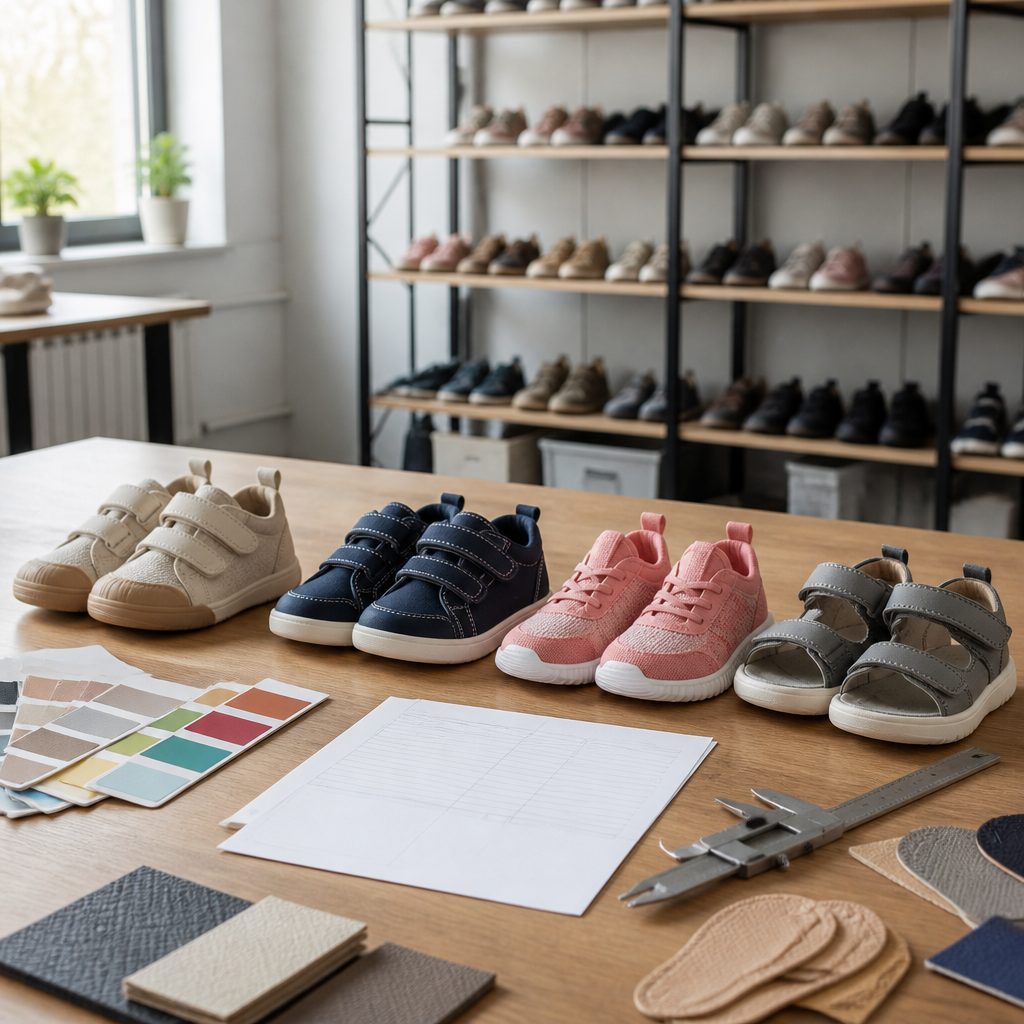
A brand team can approve an infant or early-kids sample on color, logo, and finish, then watch bulk fail on open seams, weak bonding, an awkward flex point, or an unstable outsole. That sign-off locked appearance, not assembly. An infant shoes wholesale construction review that never appears as its own acceptance rung leaves those defects to surface after volume is already built. For infant and early-kids programs, that gap is a procurement risk, not a cosmetic afterthought.
Treating construction as a vague synonym for general quality control leaves the brief incomplete. Name construction as a distinct ladder rung, time it against production, and keep unstated infant standards as open questions rather than assumed factory defaults.
When an appearance sample leaves construction open
Sample review on the published quality ladder covers fit, comfort, logo placement, finish, and closure together. That bundle improves the chance that bulk matches the approved sample, but it is not a substitute for assembly, stitching, bonding, flex, and stability checks during production. Logo-and-color sign-off can still leave infant wholesale bulk production inspection rows blank.
A procurement-minded brief therefore separates two decisions. First, does the sample look and close as intended. Second, which construction attributes must pass before cartons are closed. When only the first decision is documented, rejects often surface after volume is already built.
Where construction sits on the published quality ladder
KidsShoeWorks frames kids footwear quality as a practical ladder rather than a single inspection event. On the quality page, construction review sits after material control and fit review, and before packing discipline. The construction row names stitching, bonding, flex point, and outsole stability, with the stated buyer benefit that problems are caught before the bulk run is finished.
| Checkpoint | What is checked | Buyer benefit as published |
|---|---|---|
| Material control | Upper, lining, outsole, and adhesive choices confirmed before the sample stage | Fewer surprises after sample approval |
| Fit and comfort | Toddler, little kid, and big kid sizing reviewed for day-to-day wearability | Better chance of matching the target market |
| Construction review | Stitching, bonding, flex point, and outsole stability checked before packing | Problems caught before the bulk run is finished |
| Packing discipline | Carton counts, labels, stickers, and presentation reviewed for the export run | Cleaner handoff to logistics and receiving |
Reading construction as its own rung helps buyers write acceptance language without inventing infant-only test methods. It also stops teams from treating packing presentation as proof that seams and bonds already passed.
Material adhesive choice is not production bonding
Material control and construction are easy to conflate because both mention adhesive systems. They are not the same gate.
Material control confirms upper, lining, outsole, and adhesive choices before the sample stage. That is a pre-sample alignment step: which materials and adhesive family are on the brief. Construction review checks bonding during production, alongside stitching, flex point, and outsole stability, before packing. One decision selects the system; the other verifies how that system holds after assembly.
Editorial recommendation for the buyer: record adhesive selection with materials, and record bonding acceptance as an in-production construction row. If bonding is only discussed at sample photo time, the brief has no timed production check for children's shoe bonding and flex review outcomes that appear only after volume starts.
In-line construction timing versus final packing
The same quality page publishes inspection checkpoints from incoming materials through final carton. Timing matters as much as topic labels.
- Incoming materials. Upper, lining, outsole, label, and adhesive samples are aligned to the brief. This reduces post-sample surprises but does not inspect finished assembly.
- Sample review. Fit, comfort, logo placement, finish, and closure are reviewed together. Useful for appearance and wearability intent; still not a bulk construction gate.
- In-line checks. Assembly, stitching, bonding, flex, and stability are checked during production. This is the kids footwear in-line construction checks window where bulk defects can still be stopped before full packing.
- Final packing. Carton counts, inner packing, labels, and outer cartons are checked before shipment. The published benefit is a cleaner export handover, not a re-test of flex or outsole stability.
Buyers who wait until packing to ask about construction are inspecting the wrong stage for the wrong failure mode. Packing discipline protects logistics clarity. In-line construction protects product integrity while work-in-process can still be corrected.
Sneaker and mesh language that stops at source scope
Product and material pages describe adjacent families that must not silently expand into infant construction claims. On the products page, kids' sneakers are positioned for private-label and retail programs, with build notes for breathable mesh or PU upper and custom options listed as colorway, logo, closure, and outsole texture. Those attributes define design and finish scope for that product family. They do not, by themselves, authorize infant construction standards or prove an infant program capability.
On the materials page, engineered mesh is described as light, breathable knit-style uppers for warm-weather and active styles, with usage notes for kids' sneakers, sports runners, and sandals. That is a material-family usage note. It is not an infant-only construction specification and should not be rewritten as one on a wholesale brief.
Keep these references as boundary fences. If an infant or early-kids line borrows sneaker styling or mesh uppers, still write separate construction acceptance rows for stitching, bonding, flex, and stability rather than assuming the sneaker option list covers them.
Fit brackets that remain written as published
Fit language on the quality ladder is limited to toddler, little kid, and big kid sizing reviewed for day-to-day wearability. That wording is a fit-and-comfort rung, not an infant construction standard and not an infant-specific fit protocol.
There is a clear evidence gap: infant-only fit or construction methods are not published on that ladder. Buyers should leave that gap visible on the brief instead of stretching toddler language to cover younger size bands. Construction review can still proceed on the published attributes (stitching, bonding, flex point, outsole stability) while infant-specific fit or test expectations stay as open alignment questions.
Construction fields to leave open on the wholesale brief
Use the published construction and in-line wording as checklist rows, then mark what your program still needs documented. The following fields are editorial prompts for the buyer brief; they are not automatic factory commitments unless a project agreement says so.
- Stitching acceptance: which seams, stress points, or appearance rules must pass in-line
- Bonding acceptance: when bonding is checked during production, and against which sample or measured reference
- Flex point: where flex should occur for the intended size band and activity, recorded as a review item rather than an invented lab method
- Outsole stability: what stability means for your last, heel, or contact pattern, reviewed before packing
- In-line evidence requests: whether inspection photos or measured samples are needed during production, not only at final packing
- Separation from packing: carton counts, labels, and presentation remain packing rows, not proxies for construction pass
If a field is blank, bulk production can still proceed under appearance-only assumptions. Leaving the row open is safer than implying a standard the brief never stated.
Program-format notes without inventing a case result
The case-study page presents an example of how a private-label sneaker program can be scoped, sampled, and run. Treat that page as a program-format illustration, not as proof of an infant construction outcome, volume result, or completed customer case. Scope, sampling path, and run format still need project-specific construction rows even when the commercial format resembles a private-label sneaker program.
What to ask after construction rows are visible
Once stitching, bonding, flex, and outsole stability are written as timed gates rather than sample aesthetics, the inquiry can stay narrow and commercial. Share the current product definition, the open construction rows, and ask which development, sampling, or quotation options may apply to the project. That invitation is a buyer question, not a documented service menu by itself.
Documentation topics published for alignment include buyer-specific packing labels, market-specific material notes, inspection photo requests, third-party test coordination, and document requests from an importer or retailer. Ask which of those topics the project needs coordinated. Do not treat them as standing guarantees until the project path is confirmed.
A practical next step is to send the appearance-approved sample references together with the construction checklist, note where infant-specific methods remain unpublished, and use the quote request form to ask which path fits the brief. Construction timing then becomes part of the commercial conversation instead of a post-shipment dispute.
Sources and verification
- Quality Control for Children's Shoes | KidsShoeWorks First-party site source
- Children's Footwear Products | KidsShoeWorks First-party site source
- Kids' Shoe Materials | Mesh, PU, Canvas, Rubber & EVA | KidsShoeWorks First-party site source
- Kids' Shoe Programs: Case Study Format | KidsShoeWorks First-party site source
Share the current children's footwear definition and ask which development, sampling or quotation options may apply to the project.
Send your project brief