Product Development
Private Label Kids Sneaker Customization Checklist: Define First
Turn the four published sneaker customization fields into a clear buyer definition while keeping material, review and documentation questions separate.
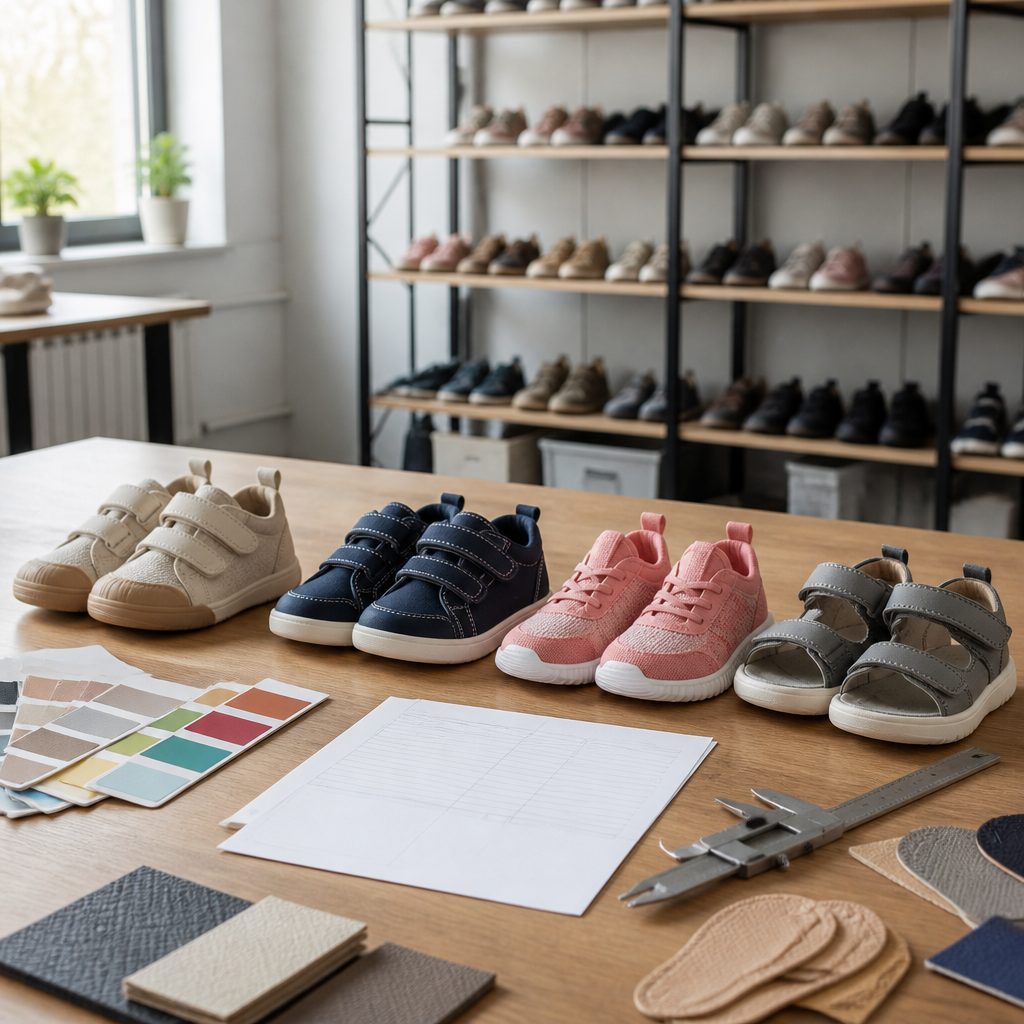
A colorway reference, a logo instruction, a closure request, and a textured-outsole idea can fit in one message, yet they do not describe one decision. They are separate parts of a sneaker definition. A private label kids sneaker customization checklist helps a buyer keep those parts apart before asking what development, sampling, or quotation options may apply. It also shows which details are selected and which remain questions for the project.
KidsShoeWorks calls kids' sneakers a strong starting point for private-label and retail orders. Its product reference lists colorway, logo, closure, and outsole texture under custom. Those are published categories, not a definition of a buyer's particular color, logo method, closure type, texture, material selection, or approval result.
All directions for organizing a brief below are editorial recommendations for the buyer. They do not state that a particular specification, sampling step, document, or commercial outcome is available for every project.
Classify Each Brief Entry First
Before adding more detail, assign every entry one status. This small distinction prevents a visual reference from being mistaken for a settled construction or material choice.
- Defined input
- A detail the buyer has chosen and can record in the current product definition.
- Requested direction
- A preference the buyer wants to present for project discussion.
- Open question
- An unresolved item that should stay visible instead of being implied by another line in the brief.
Use the same status labels throughout the document. A logo-placement request, for example, can be a requested direction even when the logo artwork is a defined input. Keeping that distinction visible gives the project team a more accurate starting point than one compressed description.
Record the Four Published Fields Separately
The product reference identifies four customization fields. Give each field its own buyer-side record so a change to one does not silently redefine another.
Buyer-side record for the published kids' sneaker customization fields
| Published field | Editorial brief entry | Question to leave open when needed |
|---|---|---|
| Colorway | Attach the visual reference and note the shoe areas it is intended to guide. | Which color details have not yet been selected? |
| Logo | Provide the available artwork and the requested placement. | Which realization details still need project discussion? |
| Closure | State the requested closure direction and the use context behind it. | What remains undecided about the closure request? |
| Outsole texture | Add a texture reference as a distinct visual entry. | Which construction or performance questions need their own line? |
Colorway should remain a colorway instruction. Logo should remain a logo instruction. Closure and outsole texture should likewise stand on their own. This does not make the fields less connected in the finished concept; it makes their individual assumptions easier to identify before an inquiry.
Keep Material Direction Out of the Visual Fields
The product page describes the kids' sneaker build as a breathable mesh or PU upper. The materials page separately describes engineered mesh as light, breathable knit-style uppers for warm-weather and active styles. It lists engineered mesh for kids' sneakers, sports runners, and sandals.
These are related references, but they should not be collapsed into one buyer claim. The product-page build description does not make a colorway or logo request a material choice. The engineered-mesh description is a material reference with a stated warm-weather and active-style scope; it does not establish that engineered mesh is the right direction for every sneaker project.
Write one material line beside the four customization fields. It can state the known upper direction, identify a material reference under consideration, or ask which material information may apply to the defined style. The quality page states that upper, lining, outsole, and adhesive choices are confirmed before the sample stage. That published checkpoint is a reason to keep those choices visible, not evidence that a visual request resolves them.
Use Sample Review for Its Published Topics
The quality page says fit, comfort, logo placement, finish, and closure are reviewed together at sample review. A kids sneaker sample review checklist can use those five headings to organize the buyer's current notes.
For each heading, record the relevant reference and the question that needs an answer. A fit note can identify the target the buyer wants to discuss. A logo-placement note can point back to the logo entry. A closure note can carry the requested direction without absorbing the separate outsole-texture or material question.
The listed review topics establish a documented review scope. They do not by themselves show that a proposed sample will be approved, that it meets a criterion not written into the project, or that later bulk output will achieve an unstated result.
Outsole Texture and Construction Checks Are Different Lines
Outsole texture is a published customization field on the sneaker product reference. The quality page separately describes a construction review before packing that covers stitching, bonding, flex point, and outsole stability. It also identifies assembly, stitching, bonding, flex, and stability as in-line checks during production.
A buyer brief should therefore hold a texture reference and a construction-review question on separate lines. The first describes the requested customization direction. The second refers to documented quality checkpoints. Neither statement turns a proposed texture into a performance promise or a project-specific test result.
Leave Packing and Documentation as Inquiry Topics
Under documentation, the quality page lists buyer-specific packing labels, market-specific material notes, inspection photo requests, third-party test coordination, and document requests from an importer or retailer. Its packing-discipline section identifies carton counts, labels, stickers, and presentation for the export run.
These headings are useful prompts at the end of a product definition. Record a required label, material note, photo request, coordination question, or document request individually. Treat each as a project question until it is addressed for the defined style; do not present it as an automatic inclusion.
Send a Definition With Visible Unknowns
For private label children's sneaker development, a useful inquiry separates the current definition from the unresolved work. The following buyer-side list keeps the request bounded without implying a confirmed service or outcome.
- Intended use and size-group scope, when known.
- Colorway reference and the areas it is intended to guide.
- Logo artwork and requested placement.
- Closure direction and any open closure question.
- Outsole-texture reference, separate from construction questions.
- Known material direction or the material information still needed.
- Sample-review notes for fit, comfort, logo placement, finish, and closure.
- Packing and documentation requirements written as individual inquiry topics.
- Open development, sampling, and quotation questions.
Share the current children's footwear definition through the project inquiry page, then ask which development, sampling, or quotation options may apply to that project. The products page identifies the sneaker customization fields, the materials page provides the published engineered-mesh scope, and the quality page describes the review and documentation checkpoints.
Sources and verification
- Children's Footwear Products | KidsShoeWorks First-party site source
- Kids' Shoe Materials | Mesh, PU, Canvas, Rubber & EVA | KidsShoeWorks First-party site source
- Quality Control for Children's Shoes | KidsShoeWorks First-party site source
Share the current children's footwear definition and ask which development, sampling or quotation options may apply to the project.
Send your project brief