Product Development
Private-Label Kids Mesh Sneakers: Material Scope
Engineered mesh can start a kids' sneaker brief, but the published material note is not a full footwear specification. Separate what the source supports from the decisions that still need project review.
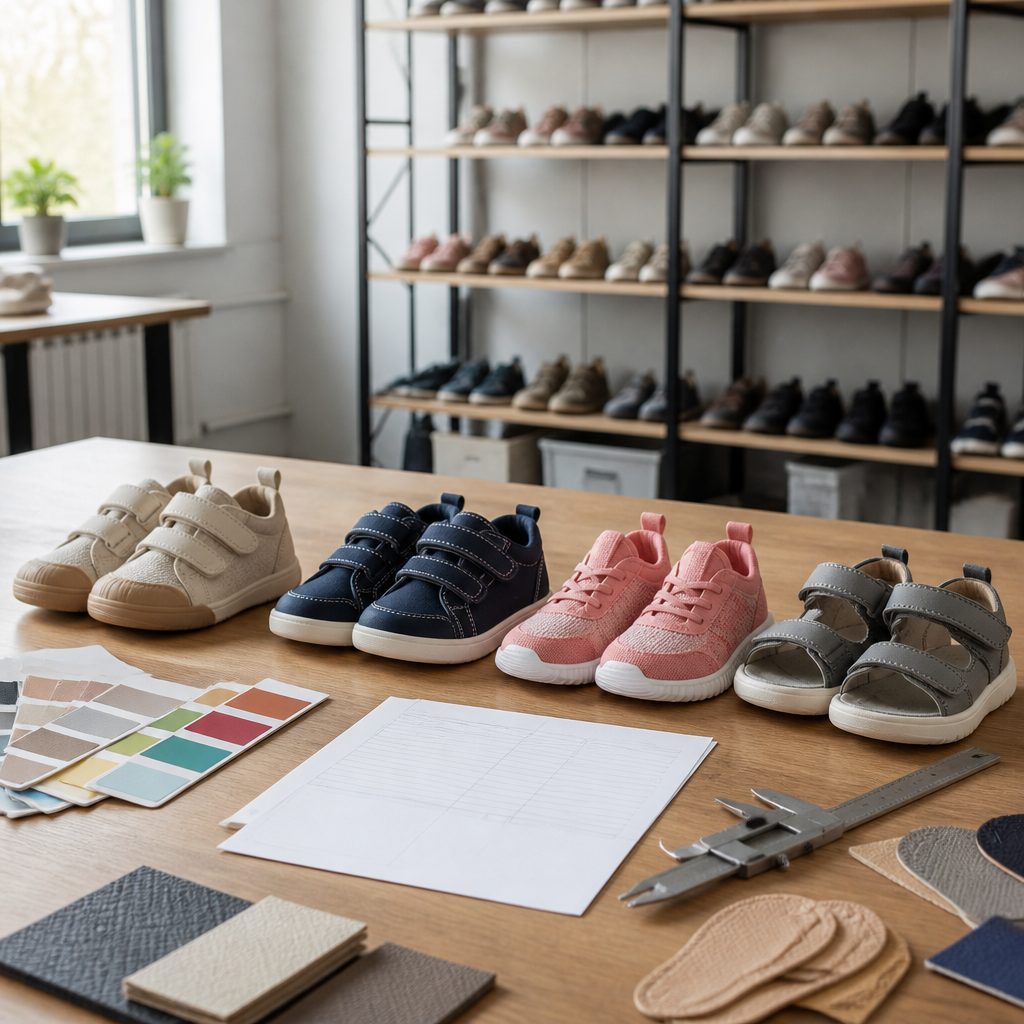
A brief for private label kids mesh sneakers works better when the upper is written as a proposal, not as a finished shoe. KidsShoeWorks lists engineered mesh among materials used in kids' sneakers. The sneaker family is described as a strong starting point for private-label and retail orders, and the build field names breathable mesh or PU as upper options.
That is enough to open a material direction. It is not enough to close the technical package. Lining, outsole, adhesive, label, packing, fit criteria, market documents, and any performance outcome still sit outside the public material note. Product, sourcing, and quality teams stay aligned when that gap is written down early.
What the Published Engineered-Mesh Description Supports
The materials page describes engineered mesh as light, breathable, knit-style uppers for warm-weather and active styles. It lists kids' sneakers, sports runners, and sandals as uses. When you compare kids sneaker material options, treat that wording as the claim boundary, not as a finished-product guarantee.
| Published material point | What it helps define | What remains open in the brief |
|---|---|---|
| Light, breathable, knit-style upper | An upper category and the visible material direction. | Project-specific upper construction detail and any material questions the team still needs answered. |
| Warm-weather and active styles | The stated style context attached to the material description. | Season intent, activity expectations, and conditions for the planned range. |
| Listed use in kids' sneakers, sports runners, and sandals | Product categories named in the materials overview. | The sneaker pattern, fit target, closure, outsole, and finish required for this program. |
Ask only for the information the project needs, and name each request. The word “mesh” alone does not settle care, durability, regulatory, or finished-product conclusions.
The Decision Is an Upper Choice, Not a Finished-Shoe Claim
The kids' sneaker product page positions the category as a starting point for private-label and retail orders. It says the style is popular with brands that want casual wear, school use, and a wide color story. Separately, the page lists daily wear and school retail under “Best for.” The build field is limited to a breathable mesh or PU upper. Colorway, logo, closure, and outsole texture appear as custom fields of their own.
As an editorial recommendation for the buyer, write the upper line as a proposed direction (for example, “engineered mesh upper under review”). Keep school-uniform rules, climate, activity, retailer standards, and market requirements as open acceptance criteria until the team defines them. That wording lets product, sourcing, and quality discuss the same upper without treating an early preference as a complete technical package.
Separate the Upper From the Other Material Decisions
The quality page material-control checkpoint confirms upper, lining, outsole, and adhesive choices before the sample stage. Its incoming-materials checkpoint separately aligns upper, lining, outsole, label, and adhesive samples to the buyer brief. Those lists keep the upper from standing in for the whole shoe.
- Upper: State the proposed engineered-mesh direction and the questions still open for that field.
- Lining: Record a separate lining decision; do not infer it from the upper name.
- Outsole: Define outsole requirements on their own line, including any texture question tied to the design.
- Adhesive: Keep adhesive inside the material-control discussion rather than leaving it unspecified.
- Label: Capture label requirements independently. Incoming-material review includes label samples with the other material samples.
- Packing: Handle packing as an export field. The published packing checkpoint covers carton counts, inner packing, labels, and outer cartons before shipment.
A mesh reference can set visual intent. Receiving, review, and documentation teams still need the remaining fields written in a form they can evaluate.
Translate Intended Use Into Questions, Not Assumptions
The sneaker page’s brand-interest language (casual wear and school use) and its “Best for” line (daily wear and school retail) are useful inquiry prompts. The custom fields (colorway, logo, closure, and outsole texture) give another set of prompts. Fit review on the quality page covers toddler, little kid, and big kid sizing. None of those references proves that a given definition meets a specific school, retailer, climate, or end-use rule.
Before sampling, convert the prompts into a short decision record:
- Intended use
- State whether the concept targets casual wear, school use, daily wear, school retail, or another defined purpose. Add the project’s own criteria next to the category label.
- Size group
- Name the intended toddler, little kid, or big kid group, or supply the sizing framework the team wants reviewed.
- Design variables
- List proposed colorway, logo treatment, closure, and outsole-texture direction as separate fields.
- Open material questions
- List what still needs confirmation for the proposed upper and for lining, outsole, adhesive, label, and packing.
The useful question is not whether mesh is “right” in the abstract. It is whether a defined mesh-upper concept can be reviewed against the product, size, visual, and evidence requirements of the planned program.
Use Sample Review to Resolve the Material Brief
On the quality page, sample review covers fit, comfort, logo placement, finish, and closure together. Material control confirms upper, lining, outsole, and adhesive choices before that stage. That sequence is a practical reason to settle the material brief before treating the sample as the review object.
A children's footwear sample material review can use the written brief as its reference: does the sample reflect the stated upper direction and the other recorded decisions, and how do the listed review fields look together? KidsShoeWorks says this sample-review process offers a better chance that the bulk run matches the approved sample. That claim stops there. Sample review is not proof of bulk consistency, finished-product performance, or compliance with a requirement the project has not defined and evaluated.
Keep review notes specific enough to settle later disagreement: current product definition, point under review, requested change or confirmation, and evidence still needed before the next step. That record-keeping practice is an editorial recommendation for the buyer, not a published factory procedure.
Request Project Evidence at Published Scope
The quality page lists documentation topics KidsShoeWorks says it can align around: buyer-specific packing labels, market-specific material notes, inspection-photo requests, third-party test coordination, and document requests from an importer or retailer. Treat each item as a project-specific request topic, not as a default deliverable or as evidence of an outcome.
| Topic | Published scope | Useful inquiry question |
|---|---|---|
| Material information | Market-specific material notes | Which material notes may apply to the target market and proposed footwear definition? |
| Inspection visibility | Inspection-photo requests | What inspection-photo requests can be considered for the project, and at which review point? |
| Testing | Third-party test coordination | May third-party test coordination apply based on the tests or documents requested for this project? |
| Downstream documentation | Requests from an importer or retailer | Which importer or retailer document requests should be supplied for review? |
| Packing identity | Buyer-specific packing labels | Which packing-label details belong in the current definition? |
Naming the market, retailer, material question, or inspection purpose gives both sides a defined basis for discussing what may apply. A generic request for “all documents” does not.
A Focused Inquiry for a Mesh-Sneaker Project
Public product and quality pages supply vocabulary. The current footwear definition must carry the project-specific decisions. A concise inquiry can include the target product family, a proposed engineered-mesh upper, intended use, target size group, colorway, logo, closure, outsole-texture direction, and the material questions that remain open.
Add the sample-review focus the team wants and any request for material notes, inspection photos, third-party test coordination, packing-label alignment, or importer and retailer documents. Keep commercial questions equally direct: ask which development, sampling, documentation, and quotation information may apply to the project, without assuming terms that have not been provided.
If you are evaluating a private label mesh sneaker supplier, share the current footwear definition and ask which development, sampling, documentation, and quotation options may apply. That keeps the discussion tied to the proposed mesh upper while leaving room for the unresolved decisions that shape the finished sneaker.
Sources and verification
- Children's Footwear Products | KidsShoeWorks First-party site source
- Kids' Shoe Materials | Mesh, PU, Canvas, Rubber & EVA | KidsShoeWorks First-party site source
- Quality Control for Children's Shoes | KidsShoeWorks First-party site source
Share the current children's footwear definition and ask which development, sampling or quotation options may apply to the project.
Send your project brief