Product Development
Kids Sneaker Sample Approval Checklist: What Does 'Approved' Cover?
A buyer-side record that defines the sample, records five review decisions separately and carries unresolved questions into the next project discussion.
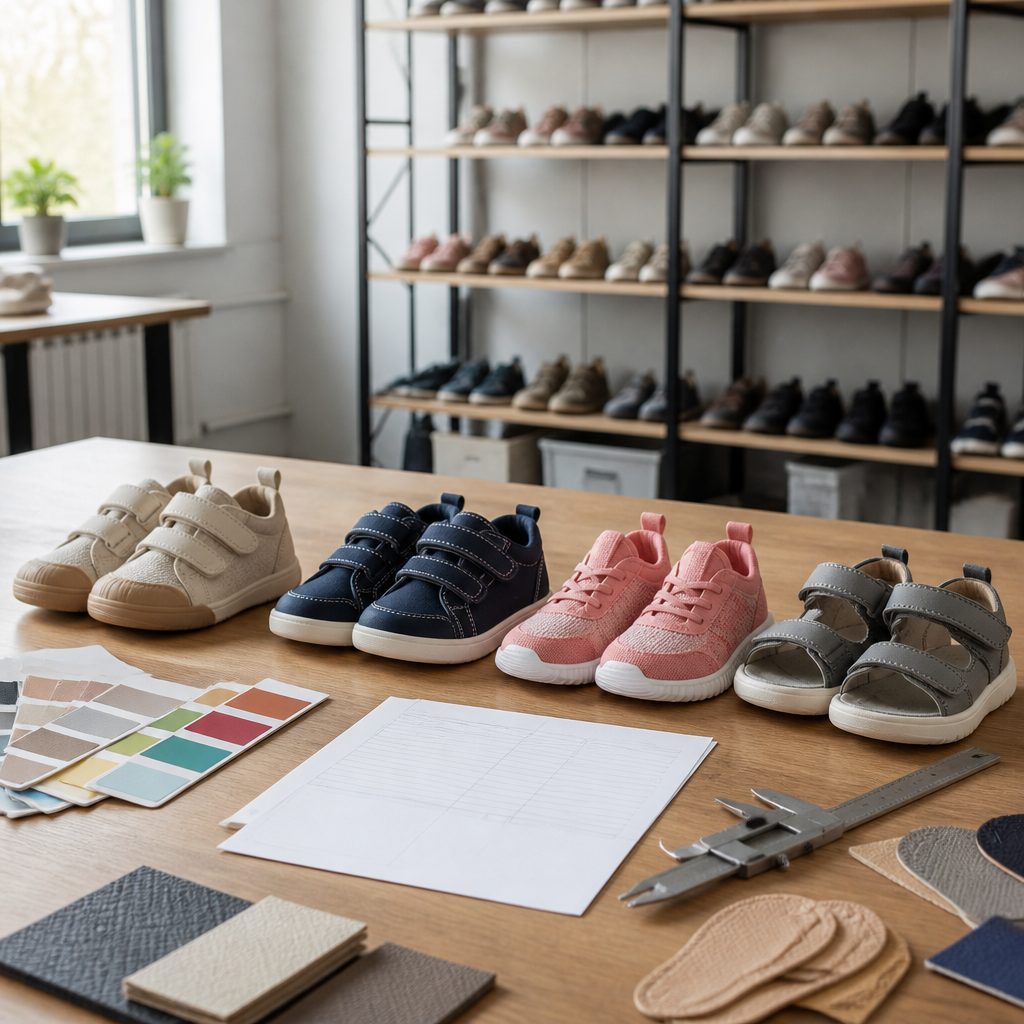
A kids sneaker sample approval checklist is useful only when the word approved points to something specific. For this record, that means one identified sample, the current sneaker definition and separate decisions for fit, comfort, logo placement, finish and closure. Those are the five subjects KidsShoeWorks places together at sample review on its quality page.
The working method in this guide is an editorial recommendation for buyers. Its status terms, record fields and suggested wording are not KidsShoeWorks pass criteria. The record covers only the sample and rows named in it. Material confirmation, production results, packing results and separate evidence requests retain their own status.
The result is a kids sneaker sample review checklist that distinguishes four things: what the buyer requested, what the reviewer observed, what the buyer decided and what remains unresolved.
What does the sample decision cover?
A field-level decision needs more detail than a general verdict. The recommended record uses the following four entries for each review subject:
- Current request
Copy the relevant wording from the current brief or product definition.
- Review note
Describe what the reviewer observed on the identified sample without adding an unstated tolerance or test method.
- Buyer decision
Give the individual field a status. Accepted, revision requested and open are suggested buyer-side terms.
- Unresolved question
State the answer, revision or evidence still needed for that field.
Recommended scope line: Acceptance in this record applies only to the identified sample and the individual rows marked accepted. Rows marked revision requested or open remain unresolved.
This wording makes the object of the decision visible. It does not predict the status of a later production run or shipment.
The definition at the top of the record
The KidsShoeWorks products page identifies daily wear and school retail under the best-for entry for kids' sneakers. It gives a breathable mesh or PU upper as the build reference. The page separately presents colorway, logo, closure and outsole texture as custom fields.
Use those published entries as prompts rather than confirmed project specifications. A buyer's header should contain only the details in the current discussion and should leave an undecided item visibly open.
- Record identity: Add the project reference, style reference, sample version and review date used by the buyer.
- Stated use: Copy the intended use from the current brief. Daily wear or school retail can be used when either description applies to the discussion.
- Upper description: Preserve the current wording instead of silently changing a broad mesh reference into a more specific material term.
- Requested directions: Record any current colorway, logo, closure or outsole-texture direction as a separate entry.
- Decision scope: Identify the sample and state that the rows below hold the actual field-level decisions.
When the product definition changes, revise the header or create a linked version. This keeps notes from different samples from being placed under the same unrestricted approval.
Five fields, five decisions
KidsShoeWorks documents fit, comfort, logo placement, finish and closure at the sample-review checkpoint. The following table turns those subjects into a buyer-side decision record without supplying tolerances, test procedures or pass thresholds that do not appear in the source.
| Review field | Current request | Review note | Buyer decision | Unresolved question |
|---|---|---|---|---|
| Fit | Copy the fit wording and sizing context already in the brief. | Write the observation made on this sample without inventing a tolerance. | Mark accepted, revision requested or open. | Name the fit point that still needs an answer. |
| Comfort | Copy any comfort requirement already included in the brief. | Describe the reviewer's observation without presenting it as a test result. | Give comfort its own field-level status. | Record the information or evidence still requested. |
| Logo placement | Reference the current artwork and requested position. | Describe the placement visible on the identified sample. | Limit the decision to logo placement. | Keep any artwork or position question open. |
| Finish | Use the finish wording from the current request. | Record the visible point reviewed in neutral terms. | Limit the status to the finish on this sample. | State the finish detail awaiting clarification or revision. |
| Closure | Preserve the requested closure wording without adding an unspecified mechanism. | Describe what was observed on the sample. | Give closure a separate status. | Ask for clarification when the closure definition is incomplete. |
The four columns serve different purposes. The request records the brief, while the review note records the observation. The decision belongs to the buyer. The final column prevents a pending question from disappearing inside a general approval statement.
Material wording without assumptions
The product page's breathable mesh or PU upper wording is a broad build reference for kids' sneakers. Separately, the KidsShoeWorks materials page describes engineered mesh as light, breathable knit-style uppers for warm-weather and active styles. The materials page also lists breathable, lightweight and quick-dry as descriptors for engineered mesh.
| Published wording | Scope in the source | Recommended record use |
|---|---|---|
| Breathable mesh or PU upper | A kids' sneaker build reference on the products page. | Retain the selected wording from the current brief. |
| Engineered mesh | Light, breathable knit-style uppers described for warm-weather and active styles. | Use this specific term only when it is part of the current definition. |
| Breathable, lightweight and quick-dry | Descriptors listed for engineered mesh on the materials page. | Keep them as published material descriptions rather than entering them as results for the reviewed shoe. |
If the current request says engineered mesh, the record should preserve that term. If it says only mesh, replacing it with engineered mesh would change the definition. Any project requirement concerning breathability, weight, drying time, comfort or durability should be written as a separate question about the evidence and decision scope required.
How should open questions move forward?
For children's footwear sample approval, an open item should remain attached to its review field. The recommended workflow is:
- Keep the existing field status as open or revision requested.
- Write the required answer, change or evidence in the unresolved-question column.
- When a response or revised sample arrives, add its reference and review date.
- Record the later decision without deleting the earlier version of the question.
An overall decision can summarize the rows, but it should not replace them. A concise summary can state which fields were accepted and identify the fields still awaiting a revision or answer.
Approval boundaries by checkpoint
The published quality process assigns different subjects to different points in the project. That timing sets the boundary for the sample record.
| Published checkpoint | Published subject | What the sample record leaves separate |
|---|---|---|
| Before the sample stage | Upper, lining, outsole and adhesive choices are confirmed. | Material confirmation remains linked to the project but separate from the five sample-review rows. |
| Sample review | Fit, comfort, logo placement, finish and closure are reviewed together. | These are the field-level decisions recorded for the identified sample. |
| During production | Assembly, stitching, bonding, flex and stability are checked. | Production-stage construction status remains outside the sample decision. |
| Before shipment | Carton counts, inner packing, labels and outer cartons are checked. | Packing and shipment-stage status remain outside the sample decision. |
The quality page describes the benefit of sample review as a better chance that the bulk run matches the approved sample. It does not describe that match as guaranteed. The checkpoint list also supplies no test result for the reviewed shoe, so a testing requirement belongs in a separate evidence question.
Evidence requests are separate project questions
The documentation section of the quality page includes inspection photo requests among the topics KidsShoeWorks says it can align around. It separately includes third-party test coordination. Another listed topic is document requests from an importer or retailer.
- Inspection photo request: State what the buyer wants shown and ask which project checkpoint may apply.
- Third-party test coordination: Describe the current requirement and ask what coordination may apply. Keep the status separate from any decision about whether a test has been selected, completed or passed.
- Importer or retailer document request: Identify the requested document and ask whether it can be addressed for the current project.
These entries are inquiry topics. They should not appear in the produced-evidence or accepted-results column of a buyer's record unless the relevant project evidence actually exists and has been reviewed.
A clean handoff for the project inquiry
A completed kids sneaker sample approval checklist can carry the current decision into the next discussion without broadening its scope. The recommended handoff contains:
- The record header with the identified sample and current sneaker definition.
- The five review rows with a separate decision for each field.
- Every open question and revision request still attached to its field.
- Any inspection-photo, third-party coordination or document questions that need project-specific scoping.
Share that record through the project inquiry. Ask which development, sampling, documentation or quotation options may apply to the current definition. The inquiry does not need to assume quantities, prices, timing, completed testing or approval of later quality checkpoints.
Sources and verification
- Quality Control for Children's Shoes | KidsShoeWorks First-party site source
- Children's Footwear Products | KidsShoeWorks First-party site source
- Kids' Shoe Materials | Mesh, PU, Canvas, Rubber & EVA | KidsShoeWorks First-party site source
Share the current children's footwear definition and ask which development, sampling or quotation options may apply to the project.
Send your project brief