Sourcing Guides
Infant Shoes Wholesale Material Review: Buyer Record
An infant shoes wholesale material review keeps a published mesh description in scope while giving the buyer a practical way to document material, sample, construction, packing, and category questions.
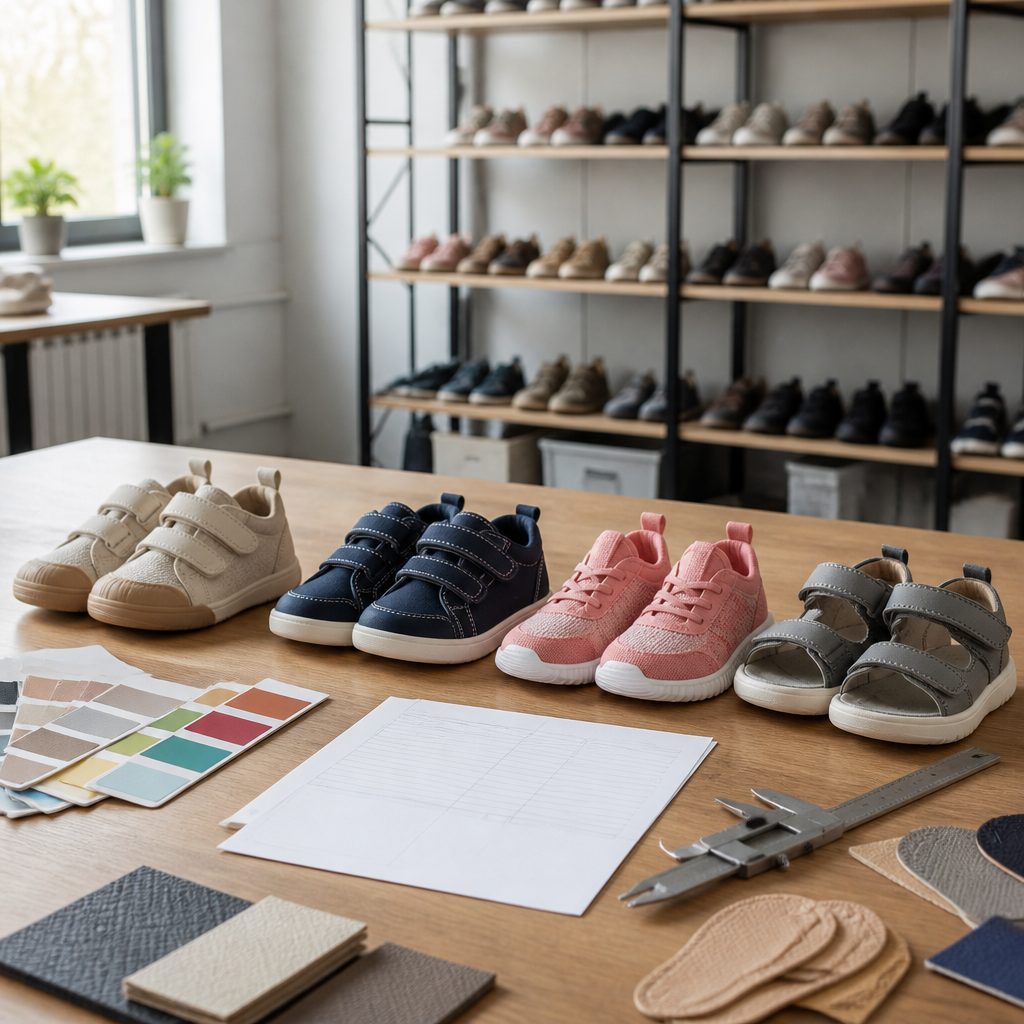
A material phrase can gain too much authority when it moves from a web page into a buying brief. An infant shoes wholesale material review should preserve the phrase as published, then place the unanswered product questions beside it. The engineered-mesh reference can describe an upper material. It does not define an infant category, state infant applicability, or approve a finished specification.
That limit is important because the buyer may use the word infant differently from the product labels in the available references. The materials entry names certain kids' uses for engineered mesh. The quality entry describes checkpoints for children's footwear. Neither statement replaces the buyer's own category definition. In this article, the review record is an editorial recommendation for organizing an inquiry, not a claim of project approval or a documented infant-footwear program.
Read the Mesh Reference Literally
The materials page describes engineered mesh as light, breathable knit-style uppers for warm-weather and active styles. It labels the material breathable, lightweight, and quick-dry. Its listed uses are kids' sneakers, sports runners, and sandals. A buyer can quote those details in a proposed-upper note without extending them into a broader conclusion.
| Item in the mesh entry | Editorial use in a buyer record | What the entry does not state |
|---|---|---|
| Engineered mesh | Identify it as the named upper-material reference. | A project-approved material construction. |
| Light, breathable knit-style upper for warm-weather and active styles | Keep the description with the source wording. | Fit, bonding, flex, stability, or packing requirements. |
| Breathable, lightweight, and quick-dry | Note the published callouts that matter to the buyer's brief. | Infant suitability or a final product-performance conclusion. |
| Kids' sneakers, sports runners, and sandals | Record the stated product-use context. | An infant definition or infant applicability. |
The practical distinction is simple: the source can support a material reference, while the buyer brief still has to state the intended category and the requirements for the finished shoe. Keeping that boundary visible prevents a descriptive adjective from becoming an implied approval.
Make the Buyer Brief Do the Missing Work
The quality page says its material-control checkpoint covers upper, lining, outsole, and adhesive choices before the sample stage. Those four headings provide a useful starting structure for a children's footwear material specification. They do not supply the buyer's requirements by themselves.
- Upper
- Quote the proposed material reference and any published attributes. Add the buyer's own requirement and mark anything still undecided as a question.
- Lining
- Write the lining requirement independently. Do not infer it from an upper-material description.
- Outsole
- State the intended outsole requirement and the points the buyer wants to review later.
- Adhesive
- Keep adhesive as its own brief item so a material description is not made to answer a bonding question.
As an editorial practice, give every line a clear status: source reference, buyer requirement, or open question. A blank or open item is preferable to an assumption hidden inside the material wording. That status does not predict whether an option will be accepted, produced, or applicable to a particular project.
Use the Sample to Compare the Whole Brief
The quality page says sample review covers fit, comfort, logo placement, finish, and closure together. Those items appear in the sample-review checkpoint, not in the engineered-mesh entry. A shoe sample material checklist can therefore include the upper reference while still reserving space for the other comparisons.
| Published sample-review point | Editorial prompt for the buyer |
|---|---|
| Fit and comfort | State the size and fit expectations that the sample should be compared against. |
| Logo placement | Identify the placement to review on the sample. |
| Finish | Describe the finish detail that needs a buyer decision. |
| Closure | Write the closure requirement rather than leaving it implied by the upper. |
The cited quality reference also discusses toddler, little kid, and big kid sizing for day-to-day wearability. The provided reference does not define an infant category. For an inquiry described as infant footwear, the buyer's own definition and fit expectations should remain written questions rather than borrowed labels.
Keep Construction Questions Off the Material Claim
Construction review on the quality page names stitching, bonding, flex point, and outsole stability before packing. The same page says in-line checks cover assembly, stitching, bonding, flex, and stability during production. These are product-check topics in the quality reference; they are not attributes supplied by the mesh description.
| Construction topic | Editorial question for the brief |
|---|---|
| Stitching | Which stitching appearance or construction point needs review? |
| Bonding | What bonding question should remain visible beside the adhesive item? |
| Flex point | What comparison does the buyer want recorded for the intended product? |
| Outsole stability | What stability expectation needs to be stated with the outsole requirement? |
A kids sneaker material review may refer to mesh, but it should not treat breathable or lightweight as answers to construction questions. The relevant source statements remain distinct, so the buyer record should remain distinct as well.
Put Receiving Requirements in Their Own Section
The quality page describes packing discipline in terms of carton counts, labels, stickers, and presentation for the export run. It separately says final packing checks include carton counts, inner packing, labels, and outer cartons before shipment. These details belong in a receiving section of the buyer brief, not in the description of the shoe upper.
Its documentation heading lists buyer-specific packing labels as an alignment topic. It also lists market-specific material notes. Inspection photo requests are listed separately. Third-party test coordination is another listed topic, as are document requests from an importer or retailer.
For the buyer, the editorial recommendation is to name only the packing and documentation subjects that need discussion for the inquiry. Listing a subject does not mean it is automatically included, available for every project, or sufficient to meet a buyer's own requirements.
Do Not Expand Kids' Sneaker Copy Into Infant Scope
The products page calls kids' sneakers a starting point for private-label and retail orders. It identifies casual wear and school use. Its build field names a breathable mesh or PU upper. Its custom field mentions colorway, logo, closure, and outsole texture.
Those statements are useful context for the kids' sneaker listing. They do not change the stated mesh uses into an infant product family, and they do not resolve the buyer's definition of infant footwear. Keep the product-page language attached to the kids' sneaker reference instead of combining it with the materials entry to create a broader claim.
Leave Infant-Specific Items Open in the Inquiry
Before requesting development, sampling, or a quotation, a buyer can send a concise question list. This is an editorial inquiry format, not a claim that any requested option has been confirmed.
- The buyer's current definition of infant footwear and the intended product family.
- Whether engineered mesh is only a source reference or a proposed upper for discussion.
- Requirements and open questions for the upper, lining, outsole, and adhesive.
- Size, fit, comfort, logo-placement, finish, and closure comparisons wanted for a sample.
- Construction questions concerning stitching, bonding, flex point, and outsole stability.
- Receiving details for inner packing, labels, stickers, carton counts, and outer cartons.
- Any documentation topics to discuss, such as material notes, inspection-photo requests, third-party test coordination, or importer and retailer document requests.
This format keeps the evidence gap clear. The published mesh description remains useful, but infant relevance remains an open buyer question rather than a promised process or outcome.
Ask Which Project Path May Apply
Use the record to share the current children's footwear definition, intended product family, material preferences, sample comparison points, and receiving requirements. Send the brief through the request a quote page and ask which development, sampling, or quotation options may apply to the project.
The useful outcome is a better-scoped conversation: the source-backed mesh description stays intact, and the decisions that the source does not answer are made visible for discussion.
Sources and verification
- Kids' Shoe Materials | Mesh, PU, Canvas, Rubber & EVA | KidsShoeWorks First-party site source
- Quality Control for Children's Shoes | KidsShoeWorks First-party site source
- Children's Footwear Products | KidsShoeWorks First-party site source
Share the current children's footwear definition and ask which development, sampling or quotation options may apply to the project.
Send your project brief