Sourcing
Infant Shoes Wholesale and the Limits of Kids' Categories
A procurement method for separating published children's footwear details from the infant-specific questions that remain unanswered.
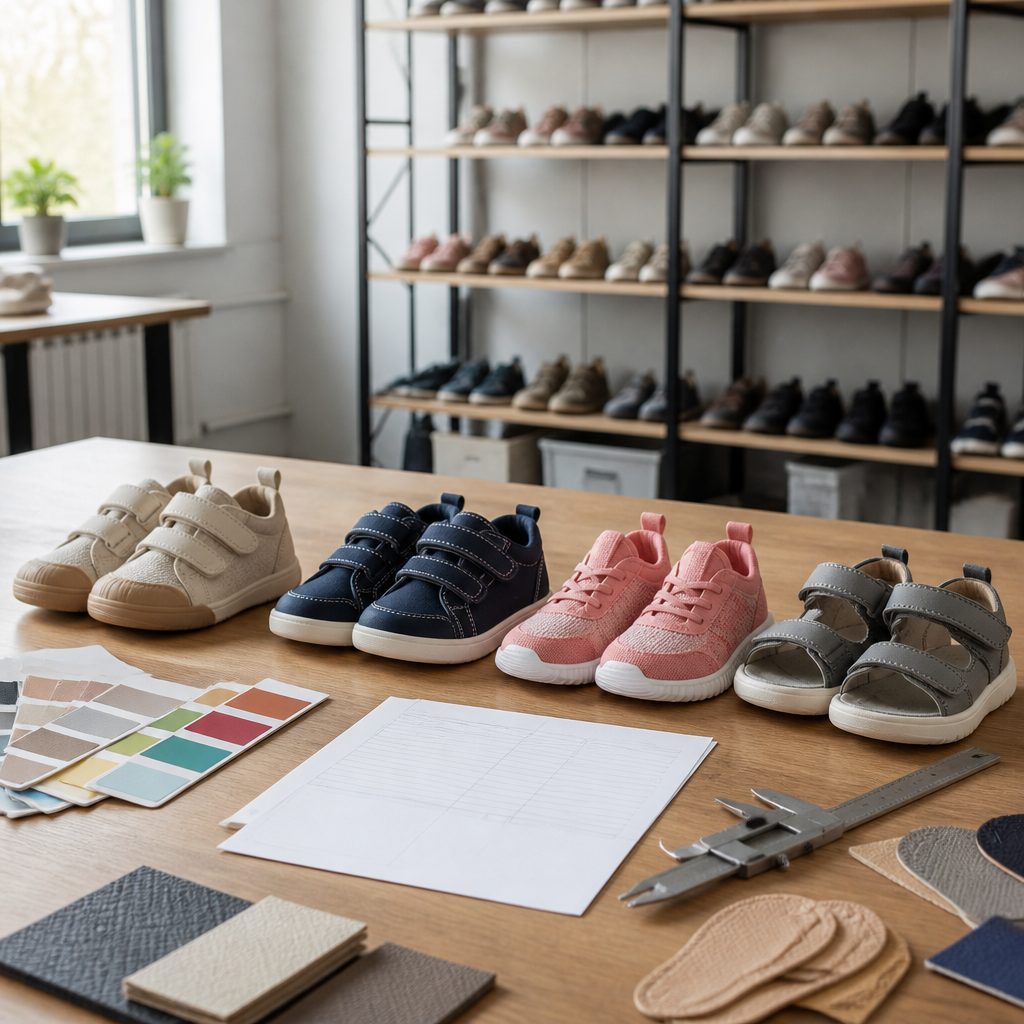
A buyer preparing an infant range may copy a kids' sneaker reference into the product brief. The reference can remain there, but its scope label must remain unchanged: it describes kids' sneakers, not a confirmed infant product. Before the style enters an infant shoes wholesale plan, the buyer needs a separate record of what is published and what still requires an answer.
The sources reviewed here document a kids' sneaker category, engineered mesh attributes and children's footwear quality checkpoints. They do not document an infant product category, infant sizes, infant construction specifications, wholesale infant availability or a completed infant program. This article therefore treats the published information as source material for an inquiry, not as evidence that an infant range is available.
Start with the unanswered infant scope
The editorial recommendation is to create an open-items register before selecting styles. That register prevents a kids' category description from being copied into the infant column as though the two scopes were interchangeable.
| Item to confirm | Status in the reviewed sources | Buyer action |
|---|---|---|
| Infant product availability | Not documented | Ask whether the proposed product can be reviewed as an infant project |
| Infant size or age definition | Not documented | Provide the intended range and request project-specific clarification |
| Infant construction specifications | Not documented | List the construction questions that remain open in the brief |
| Market compliance and testing requirements | No infant-specific package is documented | State the destination market and ask what can be discussed for the project |
| Pricing, minimum order quantity and production timing | Not stated in the reviewed excerpts | Request the applicable commercial information without assuming terms |
| Previous infant program results | Not documented | Do not present the published sneaker example as an infant case |
These gaps do not establish whether a proposed infant project is possible or impossible. They show only that the reviewed pages do not answer those questions.
Read the sneaker reference at its published scope
The children's footwear products page describes kids' sneakers as a strong starting point for private-label and retail orders. It frames them for casual wear and school use, with a wide color story, and identifies daily wear and school retail under its use description.
| Published field | Detail stated for kids' sneakers |
|---|---|
| Order positioning | A strong starting point for private-label and retail orders |
| Category framing | Casual wear, school use and a wide color story |
| Stated use | Daily wear and school retail |
| Upper build | Breathable mesh or PU upper |
| Custom fields | Colorway, logo, closure and outsole texture |
The page does not attach infant sizes, an infant age classification or infant-specific construction requirements to this reference. In a children's shoe product brief, the buyer should preserve that distinction by recording the table as kids' sneaker information only.
Make two decisions, not one
For range planning, the editorial recommendation is to separate visual relevance from infant product viability. A positive decision in the first column does not answer the questions in the second.
| Decision | Question for the buyer | Evidence status |
|---|---|---|
| Category relevance | Is the published kids' sneaker reference useful for describing the intended look or product direction? | The products page supplies kids' sneaker positioning, upper-build language and custom fields |
| Infant viability | Have the intended sizing, fit, closure, materials, construction, market requirements, packing and documentation been defined for this infant project? | Not established by the kids' sneaker reference |
This separation is especially important when a custom field appears relevant. The products page names closure as a customizable field for kids' sneakers, but it does not identify a closure for infant footwear. The same limitation applies to the published upper choices and outsole-texture customization.
Keep material language bounded
The materials page describes engineered mesh as a light, breathable knit-style upper for warm-weather and active styles. It lists breathable, lightweight and quick-dry attributes. The named uses are kids' sneakers, sports runners and sandals.
Those statements do not establish that engineered mesh is suitable for infant footwear. For procurement purposes, a buyer can cite the material page and ask whether that option may be discussed for the proposed project. The infant brief should continue to show material suitability as open until it is addressed for that product and market.
Turn quality content into review questions
The quality page presents quality control as matching a buyer brief. It says fit, bonding, flex, wear and packing need to be checked before an order leaves the factory. It also describes checkpoints aligned to a product brief and written inspection plan.
The page provides several documented topics that a buyer can reference in an inquiry:
- Material control covers upper, lining, outsole and adhesive choices confirmed before the sample stage.
- Fit review is described for toddler, little kid and big kid sizing.
- Construction review covers stitching, bonding, flex point and outsole stability before packing.
- Sample review covers fit, comfort, logo placement, finish and closure together.
- Packing discipline covers carton counts, labels, stickers and export presentation.
The stated fit frame does not define infant sizing. A buyer should therefore ask how fit and size questions would be handled for the proposed infant brief rather than relabeling the published toddler, little kid and big kid scope.
Separate documentation topics from commitments
The quality page also lists buyer-specific packing labels, market-specific material notes, inspection photo requests, third-party test coordination and document requests from an importer or retailer. These are documented alignment topics. The page does not confirm that every request will apply to or be completed for an infant project.
Its proof statement names inspection photos, measured samples and the test reports a project actually requires. This supports asking what proof may apply to a defined project. It does not establish an infant test standard, an included test package or in-house third-party testing.
The case-study page identifies a private-label sneaker program as an example of how a program can be scoped, sampled and run. It does not identify that example as an infant program, so it should not be used as evidence of previous infant customer work.
Prepare a category-fit inquiry
The following sequence is editorial guidance for wholesale infant shoe sourcing. Each question is conditional and should remain distinct from a claim about available services.
- Define the proposed infant product, destination market and known requirements in the brief.
- Identify any kids' sneaker reference being used for visual direction, while retaining its published category label.
- List infant sizing, fit, closure, material and construction questions that the reviewed pages do not answer.
- Ask whether the named quality-review topics can be discussed for this project, including materials, fit, construction, sample review and packing.
- State any questions about inspection photos, measured samples, test-report needs or importer documents without assuming that a particular request will be accepted.
- Ask which development, sampling or quotation options may apply and request the commercial terms that have not yet been defined.
For a single hypothetical example, consider a buyer placing an infant concept beside an existing school-age sneaker range. The school-age reference may describe the intended appearance, but its size, closure, construction and packing details should not be transferred to the infant brief without a project-specific answer.
Classify the style only after scope review
Do not classify a published kids' style as an infant wholesale option until the infant-specific scope has been answered for the project. Until then, keep the kids' sneaker details in the published-information column and the infant requirements in the open-items column.
To begin that review, share the current children's footwear definition and ask which development, sampling or quotation options may apply through the request a quote page.
Sources and verification
- Children's Footwear Products | KidsShoeWorks First-party site source
- Kids' Shoe Materials | Mesh, PU, Canvas, Rubber & EVA | KidsShoeWorks First-party site source
- Quality Control for Children's Shoes | KidsShoeWorks First-party site source
- Kids' Shoe Programs: Case Study Format | KidsShoeWorks First-party site source
Share the current children's footwear definition and ask which development, sampling or quotation options may apply to the project.
Send your project brief