Buyer Guides
Custom Infant Shoes Fit Review: Size-Band Scope
A PO age label is not a published fit method. Map your size range to toddler, little kid, and big kid review language before samples and reorders disagree.
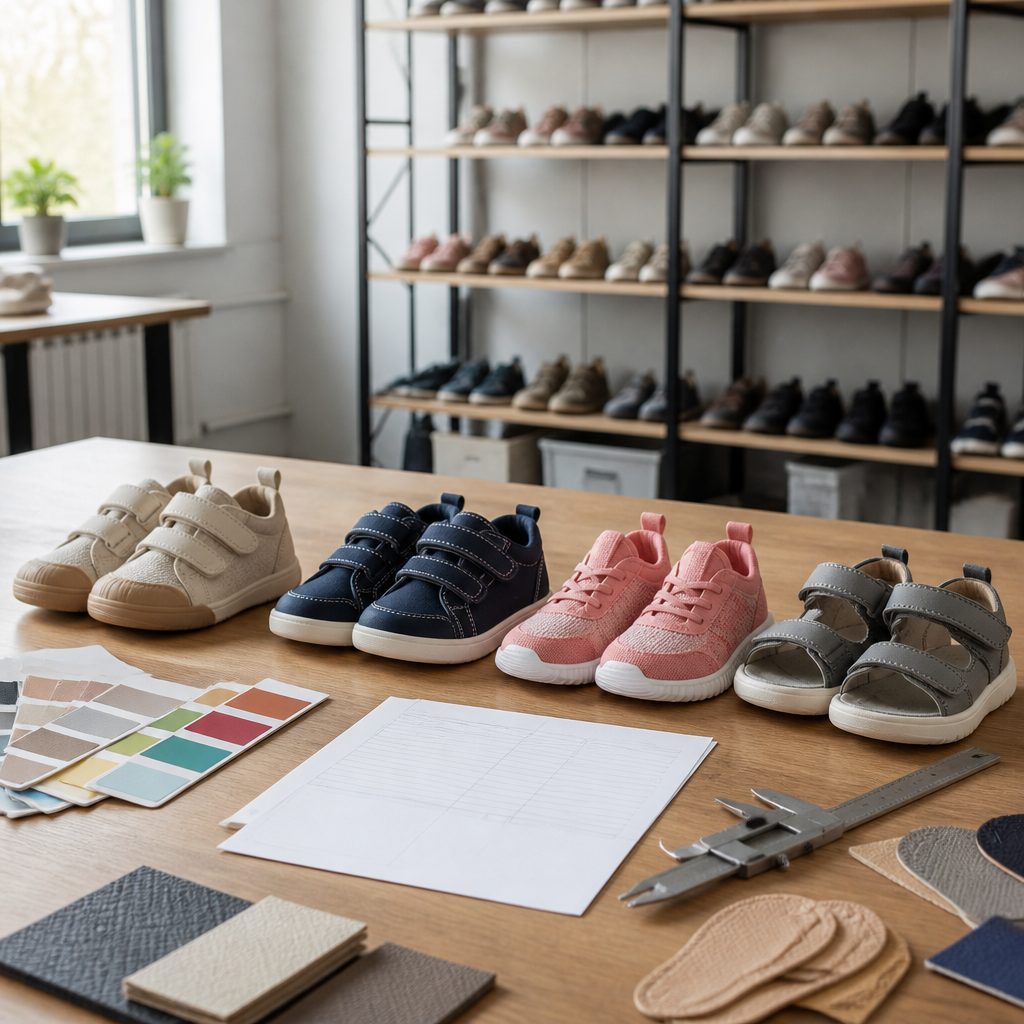
A custom infant shoes fit review often starts with a merchandising label on the purchase order. KidsShoeWorks quality materials do not treat that label as a fit method. Fit review and fit-and-comfort checks are written against toddler, little kid, and big kid sizing for day-to-day wearability. If the brief still says “infant” and never states a size range that can sit under one of those bands, sample approval and bulk inspection can follow different rules.
Published fit language stops at named size bands
You can keep “infant” as a retail name your channel owns. Sampling and inspection still need a narrower rule. The quality page documents toddler little kid sizing review together with big kid sizing so the shoe has a better chance of matching the target market. That wording is the published ceiling. It does not expand into age-in-months grades, first-walker criteria, or an infant-only chart.
For the youngest wearers, map the sizes you will actually buy onto those named bands wherever the mapping is honest. Where it is not, leave the gap written down. Approving a sample under one size narrative and releasing bulk under another is a procurement failure mode, not a styling preference. Editorial recommendation for the buyer: do not ask a supplier to “fit review infant” without stating which size run governs the check. The documented language does not stretch itself to cover that label.
Write size range before anyone argues about fit wording
The about page describes the first handoff as a buyer-sent brief covering style, size range, target market, quantity, logo, and packing notes. Size range is not a packing afterthought. It is the field that later lets fit language mean something concrete when samples and cartons move. An infant shoe size range brief should name sizes before anyone debates fit wording in a sample report.
- Style family: the product direction you are developing (for example a daily-wear sneaker concept), without treating every kids’ style as an infant last.
- Size range: the sizes that will appear on samples and, later, on the order. If you still think in age labels, convert them into the size list your retail channel actually sells.
- Target market: where the shoe will be worn and sold. Quality materials already give that market context as the reason for reviewing fit and comfort.
- Quantity, logo, packing notes: keep them in the same brief so later packing and logo checks do not rewrite the size list by accident.
Nothing in that field list is a promise of a particular sample turnaround or minimum order. It is the information the site asks you to send first. For a custom infant shoe sample fit check, size range is the line that either enables or blocks a fair comparison of how fit will be judged.
Fit and comfort are not a color photo check
The quality page lays out a practical ladder: material control, fit and comfort, construction review, and packing discipline. Sample review sits on that ladder as a joint check of fit, comfort, logo placement, finish, and closure. Treating a photo of color or a logo placement as “fit approved” collapses several checkpoints into one cosmetic glance.
| Checkpoint | What the quality page scopes | What the buyer should lock early |
|---|---|---|
| Material control | Upper, lining, outsole, and adhesive choices confirmed before the sample stage | Which materials are in scope for this style family, without expanding them into infant medical claims |
| Fit and comfort | Toddler, little kid, and big kid sizing reviewed for day-to-day wearability | Which of those bands (if any) your size range maps to, and which sizes sit on the sample |
| Construction review | Stitching, bonding, flex point, and outsole stability before packing | That a construction pass does not replace a governing size-range decision |
| Sample review | Fit, comfort, logo placement, finish, and closure reviewed together | One approval record that covers all of those fields, not logo alone |
| Packing discipline | Carton counts, labels, stickers, and presentation for the export run | That carton labels match the sizes on the approved sample |
Inspection is described as starting before bulk production, with checkpoints aligned to the product brief and a written inspection plan. That only helps if the brief already owns size range. A clean carton count cannot repair a size mismatch that was never written down.
Kids’ sneaker options stop short of infant geometry
The products page presents kids’ sneakers as a starting point for private-label and retail orders, positioned for daily wear and school retail. Build language covers a breathable mesh or PU upper. Customization language covers colorway, logo, closure, and outsole texture. That is the option set supported for that family. It is not an infant product-family definition, and it does not publish last geometry, age-in-months grading, or a first-walker versus pre-walker standard.
- Settled for that sneaker family
- Use framing for daily wear and school retail; upper build options of mesh or PU; custom fields for colorway, logo, closure, and outsole texture; interest from private-label and retail orders.
- Not settled by that same reference
- Whether an infant program belongs on that last or size run; infant-only material performance claims; an infant-specific fit method or CM chart; automatic equivalence between “infant” merchandising and toddler, little kid, or big kid review.
If you develop something commercially called custom infant shoes on top of a kids’ sneaker direction, keep the layers separate in writing: style customization on one side, who owns the size map on the other. Merging them in conversation is how teams later argue that a sample “felt fine” while bulk carton size labels tell a different story.
Repeat supply and a moving size narrative
Retail and private-label brands are described as branded ranges with controlled look, packaging, and repeat supply. Control breaks when the first season’s approved sample sits under one size narrative and the reorder brief quietly shifts age labels or size endpoints. Fit review language on the quality page still points at toddler, little kid, and big kid sizing. It does not re-baseline itself to whatever marketing renamed the line between seasons.
Who owns the size map is a cost issue even before unit price. Reorders that re-open fit because the brief never mapped size range force another sample cycle, another inspection-plan alignment, and another chance for labels and cartons to disagree with what retail already photographed. Controlled look and packaging only hold if the size list is as controlled as the logo.
Hypothetical only: a buyer who lists “infant 3–6 month look” on season one and “toddler entry sizes” on season two without renaming the governing size range has created two fit targets under one style code. The quality materials do not resolve that contradiction for you.
Infant questions the current excerpts do not close
These gaps are buyer-owned unknowns on the materials available here. They are not documented KidsShoeWorks capabilities, charts, or guarantees.
- No infant-only size chart, age-in-months grading table, or CM run appears in the product or quality excerpts.
- No first-walker versus pre-walker fit criteria are defined.
- Toddler, little kid, and big kid review language is not the same statement as a dedicated infant fit program.
- Kids’ sneaker customization fields (colorway, logo, closure, outsole texture) do not define infant last geometry.
- Documentation topics such as third-party test coordination or market-specific material notes can be aligned around a project. They are not automatic inclusions in every order, and they do not replace size-range ownership.
Leaving those rows blank keeps size risk with the buyer. It does not create a published infant fit method to measure samples against, because that method is not what the quality page documents.
What to put in the first inquiry
Keep the inquiry short, factual, and owned by your team. Use the brief fields the about page already names, then add only the open infant rows you still hold.
- State the style family in plain terms (for example a daily-wear kids’ sneaker direction) and link any reference photo you control.
- Write size range as sizes, then note how you believe those sizes map to toddler, little kid, or big kid review language where the mapping is real. If part of the run does not map cleanly, say so in the same paragraph.
- Name target market so fit and comfort review has a market context rather than a vague age word.
- List open infant fit rows you are not asking the factory to invent on your behalf (age-month claims, first-walker criteria, charts you do not have).
- Ask which development, sampling, or quotation options may apply to this project. That invitation is a buyer question, not a claim that every option is pre-documented for infant programs.
Quality ladder and sample-review fields: quality control. Sneaker build and custom limits: children’s footwear products. Channel wording for controlled look, packaging, and repeat supply: industries and channels. Brief field list: about KidsShoeWorks. When size range and open rows are written, send them through request a quote.
Until size range sits under a published review band, or is marked as unmapped, sample approval and bulk inspection are working from different rules. Own that mapping before you ask which development, sampling, or quotation options may apply to the program as defined.
Sources and verification
- Quality Control for Children's Shoes | KidsShoeWorks First-party site source
- About KidsShoeWorks | Kids' Shoe Manufacturing Partner First-party site source
- Children's Footwear Products | KidsShoeWorks First-party site source
- Kids' Footwear by Industry & Channel | KidsShoeWorks First-party site source
Share the current children's footwear definition and ask which development, sampling or quotation options may apply to the project.
Send your project brief