Quality and Construction
Custom Infant Shoes: Construction Review Before Bulk
Appearance-led sample approval does not own stitching, bonding, flex point, or outsole stability. Use a construction review before packing so bulk risk is assigned early.
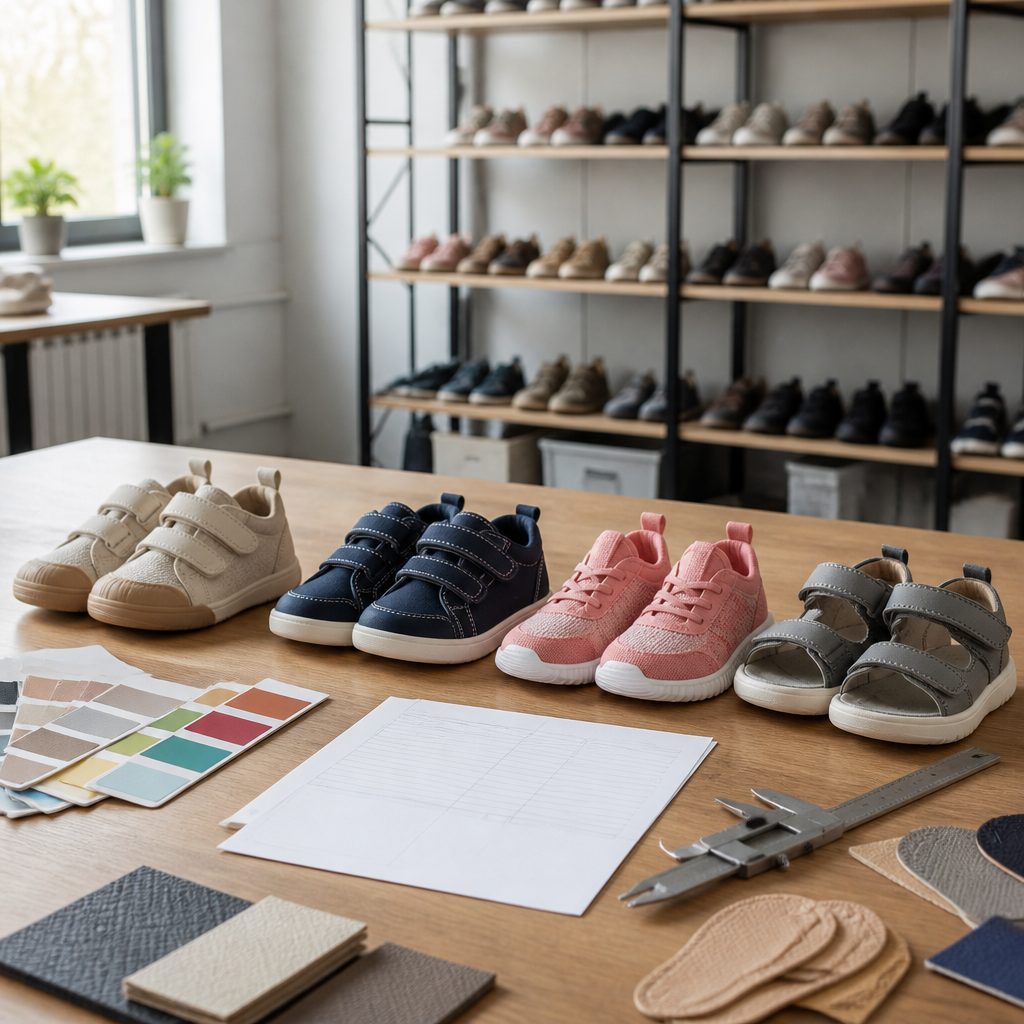
Product teams often sign off custom infant shoes on look, logo placement, and finish, then find that stitching, bonding, flex point, or outsole stability never became pass/fail items until the bulk run is already moving. Once packing is underway, construction fixes are limited and bulk exposure is higher.
A custom infant shoes construction review works best as a durability gate before packing, not as another pass on appearance. The published quality language for children's shoes names four construction fields. Those fields belong apart from sample-review attributes, packing discipline, and documentation topics that do not by themselves set construction criteria.
When a good-looking sample still fails daily wear
Daily wear stress does not care how clean a photo sample looked. Open seams, weak bonding at the sole edge, a flex point that does not match how a small foot bends, or an unstable outsole can still appear after appearance approval if nobody owned those items as construction checks.
On the quality control page, children's shoes are framed as needing more than a nice photo: fit, bonding, flex, wear, and packing all need attention before an order leaves the factory. The same page sets out a practical quality ladder—material control, fit and comfort, construction review, and packing discipline—as the checks that decide whether a children's shoe holds up in daily wear. Construction review is one rung on that ladder: the four named fields checked before packing. For a buyer developing custom infant shoes, the failure mode is straightforward. Sample sign-off covers look and comfort language, while construction risk stays unowned until late production.
Construction fields the quality page actually names
The published construction-review checkpoint lists four items only: stitching, bonding, flex point, and outsole stability. Those items are checked before packing. The page states the buyer benefit once for that checkpoint: problems are caught before the bulk run is finished. No infant-only numeric criteria, adhesive systems, or stitch counts appear in that language.
| Construction field | Checkpoint timing |
|---|---|
| Stitching | Before packing |
| Bonding | Before packing |
| Flex point | Before packing |
| Outsole stability | Before packing |
Buyer benefit stated for construction review on the quality page: problems are caught before the bulk run is finished.
A related in-line checkpoint names assembly, stitching, bonding, flex, and stability during production so issues can be caught before the order is fully packed. Read that as a production-timing cue, not as a wider construction catalog. Buyers who want infant shoe construction before packing should hold that gate to the four named fields rather than folding it into material selection or carton presentation.
Sample appearance checks are not a substitute for construction review
Sample review and construction review sit on different rungs of the same quality ladder. Mixing them is how a clean sample still ships with construction risk.
| Review type | Attributes named on the quality page | What it does not replace |
|---|---|---|
| Sample review | Fit, comfort, logo placement, finish, and closure reviewed together | Does not replace pre-packing checks on the four construction fields |
| Construction review | The four named fields before packing | Does not replace logo placement, finish, or closure appearance decisions |
| In-line checks | Assembly, stitching, bonding, flex, and stability during production | Does not replace final packing carton, label, and presentation checks |
Material control confirms upper, lining, outsole, and adhesive choices before the sample stage. Packing discipline reviews carton counts, labels, stickers, and presentation for the export run. Both checkpoints sit outside construction review. A kids shoe stitching outsole stability discussion belongs with construction and in-line language, not with finish photos alone. If your team only archives sample photos of logo and upper color, you have not yet documented a construction review.
How far the published sneaker reference can bound construction questions
The products page presents kids' sneakers as a starting point for private-label and retail orders, popular with brands that want casual wear, school use, and a wide color story. Published build language names a breathable mesh or PU upper. Custom options named there are colorway, logo, closure, and outsole texture. The use framing is daily wear and school retail.
That sneaker reference bounds construction questions for a style that matches it. It is not proof of an infant construction catalog. You can ask how a mesh or PU upper, a chosen closure, and a named outsole texture should be checked against the four construction fields under a daily-wear brief. You cannot infer from that excerpt alone that infant-specific flex angles, sole compounds, or a dedicated infant product family are already defined. Anchor construction questions to the published sneaker attributes when that is the reference style, and leave infant-only durability rules as open rows until a project brief and inspection plan fill them.
Brief inputs that make construction reviewable
The about page describes a buyer brief as style, size range, target market, quantity, logo, and packing notes. Those fields do not themselves equal a construction standard. They do give the factory enough context to align quality checkpoints to a product brief and a written inspection plan. Map each brief field to the construction questions you still need to ask.
- Style: Name the reference (for example, a kids' sneaker with mesh or PU upper) so stitching paths and bonding zones can be discussed against a real silhouette, not a vague "infant shoe."
- Size range: Fit review language on the quality page covers toddler, little kid, and big kid sizing for day-to-day wearability. State which size band the program uses so flex-point conversation has a body-size context, without inventing an infant size chart the site does not publish.
- Target market: Daily wear, school retail, or another channel changes how hard outsole stability and flex will be stressed. Write the market so construction review can match the brief rather than a generic photo sample.
- Quantity: Quantity is a commercial input for planning, not a construction method. Still include it so any sampling or quotation discussion can stay tied to the same program definition.
- Logo: Logo placement is a sample-review attribute. Keep it listed, then add a separate construction note if logo application could affect stitching or bonding near the upper.
- Packing notes: Packing discipline is a different checkpoint from construction. Record packing needs, then hold infant shoe construction before packing as its own pre-packing gate for the four named fields.
Attach a short construction row to the brief (the four named fields, plus any open questions) so appearance approval and construction ownership cannot collapse into one signature.
Documentation topics that stay separate from construction commitments
The quality page lists documentation topics the company can align around: buyer-specific packing labels, market-specific material notes, inspection photo requests, third-party test coordination, and document requests from an importer or retailer. Proof language prefers inspection photos, measured samples, and the test reports a project actually requires over unrelated certification badges.
Those documentation topics support evidence and handoff. They do not, by themselves, fix infant construction standards. Market-specific material notes may inform upper, lining, outsole, or adhesive discussion under material control. Inspection photos can support construction review if the photo request names the four construction fields. Third-party test coordination and importer or retailer document requests remain coordination topics until the project defines which tests and which construction criteria apply.
A request for photos or lab coordination is not proof that numeric flex criteria or adhesive chemistry already exist for custom infant shoes. Put documentation requests in a parallel list so they clarify evidence without overstating construction commitments.
Infant-specific construction gaps the evidence does not close
Honest sourcing means leaving blank what the public pages do not close. The following gaps stay open until a project brief and inspection plan fill them.
- No published infant-only construction standard separate from the general children's footwear checkpoints.
- No numeric flex criteria, flex angles, or pass/fail measurements for flex point.
- No named adhesive chemistry or bonding process beyond adhesive choices under material control and bonding under construction review.
- No stitch counts, seam maps, or outsole compound specifications in the published construction language.
- No dedicated infant product family or infant size chart on the products excerpt used here; kids' sneakers are framed for daily wear and school retail with toddler, little kid, and big kid fit language elsewhere on the quality page.
- No claim that construction review alone covers packing, logo placement, or market-access documents.
When a custom infant shoe bonding flex check is required for a program, treat the need as a buyer-defined open row: state the wear context, reference the four construction fields, and ask how those fields will be checked before packing for the named style and size band. Do not invent infant durability rules to fill the silence.
A construction-aware inquiry for development, sampling, or quotation
Retail and private-label buyers who need branded ranges with controlled look, packaging, and repeat supply can still start with a construction-aware note rather than an appearance-only sample request. The industries page frames that channel at a high level; the construction detail still has to come from the brief and the quality checkpoints.
- Share the current children's footwear definition: style reference (for example, kids' sneaker with mesh or PU upper), intended daily-wear or school-retail use, size range, target market, logo intent, and packing notes.
- Name the construction rows that remain open: the four named fields, plus any infant-specific unknowns the public pages do not close.
- Separate sample-review attributes (fit, comfort, logo placement, finish, closure) from pre-packing construction checks so approval language cannot mix the two.
- List documentation topics you may need later (inspection photos, market-specific material notes, third-party test coordination, importer or retailer documents) without calling them a fixed construction standard.
- Ask which development, sampling, or quotation options may apply to the project, rather than assuming a published service menu for every open row.
That inquiry pattern keeps construction review as a buyer-owned durability decision before bulk packing. It uses only the checkpoint language the quality page publishes, bounds product questions with the kids' sneaker reference where that is the starting style, and leaves infant-only criteria as explicit gaps. When you are ready to move from definition to next-step options, request a quote with the footwear definition and the open construction rows attached so the conversation can stay tied to the same brief.
Sources and verification
- Quality Control for Children's Shoes | KidsShoeWorks First-party site source
- Children's Footwear Products | KidsShoeWorks First-party site source
- About KidsShoeWorks | Kids' Shoe Manufacturing Partner First-party site source
- Kids' Footwear by Industry & Channel | KidsShoeWorks First-party site source
Share the current children's footwear definition and ask which development, sampling or quotation options may apply to the project.
Send your project brief