OEM Footwear Sourcing
Custom Infant Shoe Size Range for OEM Quotes
A buyer-side method for defining an infant footwear size inquiry without assuming a conversion, sizing standard or confirmed manufacturer capability.
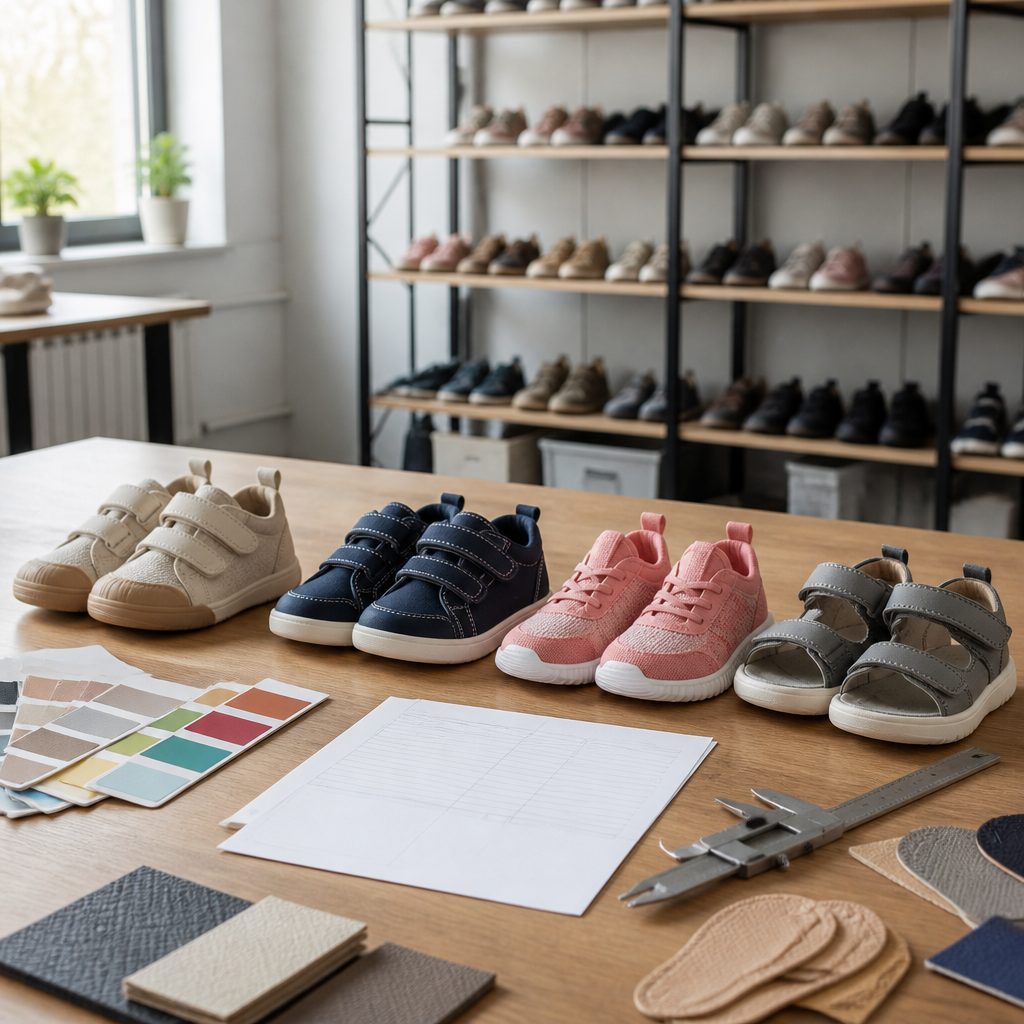
If a draft size field says only infant, it is not yet a custom infant shoe size range for OEM quotes. The category word does not identify the first and last size labels or the reference behind them. KidsShoeWorks' about-page statement lists style, size range, target market, quantity, logo and packing notes as information the buyer sends in a brief. That statement does not publish an infant range or a conversion chart.
The buyer therefore needs to present the intended market, proposed size labels and sizing basis as separate entries. The method below is an editorial recommendation for preparing that inquiry. It does not replace project-specific sizing confirmation or establish that a particular infant range is available.
Start With Three Separate Entries
For a U.S. project, write the market and the size notation on different lines. United States identifies the intended sales market; it does not identify which size labels or conversion should be used. The range should show the buyer's current proposal, while the sizing basis should name the reference behind that proposal or state that the reference remains unresolved.
- Intended sales market
- United States.
- Proposed size range
- [first size label] through [last size label]. If the endpoints have not been selected, enter unresolved instead of supplying assumed values.
- Sizing basis
- [buyer, brand or retailer reference], or unresolved if no reference has been chosen.
These entries answer different procurement questions. The market says where the product is intended to be sold. The range says which labels the buyer wants considered. The basis explains where those labels came from. For an infant shoe OEM size range, combining the three into a line such as "U.S. infant sizes" would hide the missing notation rather than resolve it.
Where the basis is unresolved, ask what sizing reference, if any, may apply to the proposed endpoints. Do not insert an age mapping, international conversion or outside chart merely to complete the field.
Read the Sizing References at Their Exact Scope
The cited company pages provide two limited reference points. One identifies fields for the buyer's brief. The other names three sizing categories in fit-review language. Neither cited statement defines infant sizing.
| Page | What it states | What remains unanswered |
|---|---|---|
| About KidsShoeWorks | The buyer sends style, size range, target market, quantity, logo and packing notes. | The statement gives no infant range or conversion chart. |
| Quality control | The fit-review language names toddler, little kid and big kid sizing. | That language does not include infant or map infant to any named category. |
Read toddler, little kid and big kid as the terms used in that fit-review statement, not as substitutes for the buyer's infant label. As an editorial procurement rule, leave the relationship open until it receives a project-specific answer. The cited quality language cannot be expanded into an infant chart, a confirmed infant capability or a guarantee of fit for the U.S. market.
Use the Full Brief Without Hiding the Gap
Once the three size entries are clear, place them alongside the other information identified on the about page. The first six rows below correspond to the fields in that statement. The sizing-basis and open-question rows are editorial additions intended to show what has not yet been confirmed.
| Field | Entry to prepare |
|---|---|
| Style | [footwear style or concept reference] |
| Size range | [first size label] through [last size label], or unresolved |
| Target market | United States |
| Quantity | [quantity currently under consideration] |
| Logo | [known requirement, not required or undecided] |
| Packing notes | [known requirements or unresolved] |
| Sizing basis | [named buyer reference or unresolved] |
| Size question | What sizing reference, if any, may apply to the proposed range? |
The quantity row should contain the buyer's current figure without turning it into an assumed minimum order or pricing threshold. Logo and packing entries should describe the buyer's request, not an agreed production result. The style field can identify the intended product family while leaving unconfirmed materials and construction details open.
This produces a children's footwear size brief in which a reviewer can see both the requested coverage and the unresolved sizing issue. It does not predict whether the range can be developed, sampled or quoted. Those are questions for the project inquiry.
Keep the Sneaker Reference Within Its Product Scope
The products page describes a kids' sneaker with a breathable mesh or PU upper. In a separate customization line for that sneaker entry, it names colorway, logo, closure and outsole texture.
Those statements apply to the cited kids' sneaker entry. They do not establish that its upper references, customization fields or other details are available for an infant footwear program. They also do not answer which infant size labels may be applicable.
If the intended style is a sneaker, the buyer may identify that page as a product-family reference and ask whether it is relevant to the current definition. If the project concerns another footwear style, omit the sneaker details rather than transferring them to a different product scope.
Prepare a Bounded Project Question
Before contact, review the brief in the order a sizing question needs to be understood:
- State United States as the intended sales market.
- Identify infant as the buyer's working category label.
- Enter the exact first and last size labels, or mark those endpoints unresolved.
- Name the buyer, brand or retailer sizing reference when one exists.
- Complete the style, quantity, logo and packing-note fields with currently known information.
- Ask which sizing reference and project step may apply without assuming either has been confirmed.
The resulting inquiry should distinguish the buyer's requested range from the answer being requested. It should also avoid treating the sneaker page or the quality page as proof of an infant size definition.
Suggested inquiry wording
We are preparing [style] for the U.S. sales market. We use infant as our working buyer category, and our proposed range is [first size label] through [last size label]. The sizing basis is [named buyer reference or unresolved]. The quantity under consideration is [quantity], with [logo information] and [packing notes]. Please advise what sizing reference, if any, may apply to this definition and which development, sampling or quotation options may be relevant to the project.
Send the current definition through the project inquiry page. The wording asks about possible next steps; it does not assume that an option, timeline, commercial threshold or quotation outcome is available before the project is reviewed.
Sources and verification
- About KidsShoeWorks | Kids' Shoe Manufacturing Partner First-party site source
- Quality Control for Children's Shoes | KidsShoeWorks First-party site source
- Children's Footwear Products | KidsShoeWorks First-party site source
Share the current children's footwear definition and ask which development, sampling or quotation options may apply to the project.
Send your project brief