Product Development
First Ask: Custom Infant Shoe Development Brief Requirements
Use a buyer-owned project sheet to define the known fields, keep infant-specific matters as questions, and request only the options that may apply.
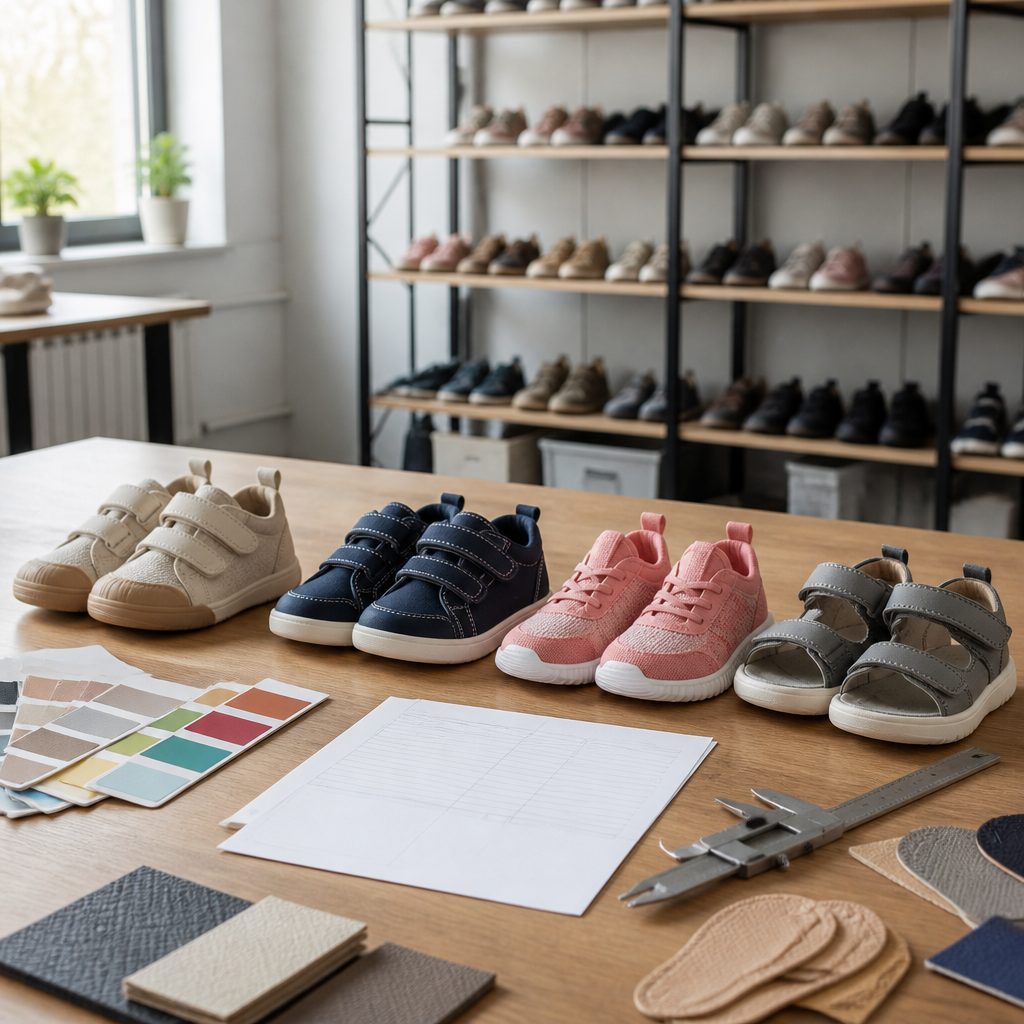
A proposed infant footwear project needs more than a category label before a supplier can assess the next conversation. In custom infant shoe development brief requirements, the buyer owns the current definition: what the product is intended to be, which details are decided, and which details still need a reply. On its about page, KidsShoeWorks says a buyer sends a brief covering style, size range, target market, quantity, logo, and packing notes. Those are useful headings for a project document. They are not a statement that a particular infant product, feature, commercial term, or review outcome is available.
The practical task is to create a short record that separates facts from questions. That lets a product team request information without turning a visual reference or a general quality topic into an assumed specification.
What Needs an Answer Before an Inquiry?
An inquiry can be concise when its inputs are clear. The published brief fields give the buyer a starting structure, while the buyer decides the status of each field. An editorial recommendation is to mark every entry as defined, provisional, or requiring discussion. That status is often more useful than adding unsupported detail.
For example, a team can state an intended style and a proposed size range while leaving material, closure, and construction as questions. It can identify a target market without suggesting that market requirements have already been reviewed. It can give a preliminary quantity without treating that figure as a price, minimum, production commitment, or quotation approval.
This approach turns a broad request into a custom infant shoe project brief that a supplier can read against the project actually being proposed.
The Project Sheet
The following working sheet is editorial guidance for the buyer. Its six headings follow the brief inputs published by KidsShoeWorks, but the notes under each heading describe how to make the buyer's own information easier to discuss.
- Style
State the intended product type and attach a visual reference when one is available. Identify which visible features are essential and which are only directional. A reference can communicate design intent without being treated as a confirmed construction or product-family match.
- Size range
Record the proposed range and the sizing convention the team expects to use. Where the range remains unsettled, label it as provisional. Age positioning alone leaves too much room for interpretation in an infant footwear discussion.
- Target market
Provide the intended selling market as part of the project context. The buyer should keep any market-specific material, labeling, documentation, or compliance questions separate until they receive a project-specific response.
- Quantity
Give the expected quantity when it is ready for discussion, and distinguish an estimate from a confirmed requirement. The field describes the buyer's project input; it does not establish a price, production schedule, or commercial eligibility.
- Logo
Attach current artwork or say that logo treatment remains open. This keeps the brand requirement visible without presuming a decoration method, placement approval, or finished result.
- Packing notes
Describe the intended retail, warehouse, or logistics presentation. Flag labels, inserts, carton information, and other packing details that are still under review so they can be addressed as questions rather than assumptions.
For private label infant shoe requirements, the value of this sheet is not that every field is complete. Its value is that the buyer can distinguish an approved direction from an unresolved decision.
Reading the Sneaker Listing Precisely
The products page contains a published reference for kids' sneakers. It is useful for understanding the scope of that listing, including the fields it names. For an infant footwear development inquiry, those fields should remain attached to the kids' sneaker reference until the proposed project is discussed directly.
How to use the published kids' sneaker reference
| Published detail | Buyer use |
|---|---|
| The listing calls the product kids' sneakers and describes it as a starting point for private-label and retail orders. | Use this as the stated scope of the listing, not as an infant product classification. |
| The build field identifies a breathable mesh or PU upper. | Keep the upper description as a sneaker-reference detail and ask separately what information is needed for the proposed project. |
| The listing names custom colorway. | Describe the project's color direction in the brief, then ask whether it is relevant to the proposed style. |
| The listing names logo. | Include artwork status in the buyer brief without assuming an applicable logo treatment. |
| The listing names closure. | Present any preferred closure as a project question unless it is already defined by the buyer. |
| The listing names outsole texture. | Keep outsole texture on the project's question list rather than transferring the sneaker field into an infant specification. |
The important distinction is between a published field and a project decision. The sneaker page can help a buyer frame a question, but this guide does not use it to characterize an infant product.
Infant Fields That Need a Reply
A buyer label such as infant does not resolve the product decisions that sit behind it. The editorial recommendation is to retain these matters as direct questions in the inquiry, particularly when the available product reference is limited to kids' sneakers.
- Can the proposed style be considered for discussion within the product families relevant to the project?
- What size and fit information would be needed to discuss the stated proposed range?
- Which material, construction, closure, and outsole details need to be defined before the project can be assessed?
- Which packing or documentation topics should the buyer raise for the proposed target market?
Question form matters here. It records a real product requirement without presenting the answer as a factory capability, approval, or commitment. It also gives the buyer a clear list of issues to resolve after an initial response.
Review Topics for the Next Conversation
The quality page describes review subjects for children's shoes. Those subjects can help the buyer prepare focused questions after the project sheet is assembled. They are not a pre-agreed inspection plan or a promised result for the proposed infant project.
Children's-shoe review subjects translated into project questions
| Published quality subject | Question for the buyer to ask |
|---|---|
| Material checks identify upper, lining, outsole, and adhesive choices. | Which material information should be specified or discussed for this proposed project? |
| Fit review refers to toddler, little kid, and big kid sizing. | What sizing and fit information would be needed for the proposed range? |
| Construction review identifies stitching, bonding, flex point, and outsole stability. | Which construction points should be defined or reviewed for the intended style? |
| Packing discipline refers to carton counts, labels, stickers, and presentation. | Which packing notes should be supplied now, and which details need project-specific discussion? |
| The documentation section names inspection-photo requests, checklist alignment, buyer-specific packing labels, market-specific material notes, third-party test coordination, and importer or retailer document requests. | Which of these documentation topics, if any, are relevant to the project, and what inputs would be needed to discuss them? |
This question list preserves the source's children's-shoe scope while giving procurement and product teams concrete subjects to include in a request. It avoids treating photos, test coordination, labels, or documents as settled deliverables.
The Request
Once the project sheet identifies both the known fields and the open fields, the buyer can make a bounded request for next-step information. The purpose is to ask which development, sampling, or quotation options may apply to the described project.
We are preparing a proposed infant footwear project. Our current brief states the intended style, proposed size range, target market, preliminary quantity, logo status, and packing notes. Product-family relevance, construction, material, closure, size and fit information, and documentation questions are still open. Please advise which development, sampling, or quotation options may apply to this project and which additional details would be needed to assess the open fields.
This wording makes the unknowns visible instead of hiding them inside a generic request. The buyer can submit the current definition through the project request page and ask for a response tied to the stated brief.
Source Map
What each published source supports in this guide
| Source | Use in this guide |
|---|---|
| About page | Supports the buyer brief headings: style, size range, target market, quantity, logo, and packing notes. |
| Products page | Supports the stated kids' sneaker scope and the sneaker fields discussed in the reference table. |
| Quality page | Supports the children's-shoe review and documentation subjects turned into project questions above. |
This guide makes no claim that these excerpts confirm an infant product family, specific commercial terms, test outcome, regulatory position, or document availability. Those matters remain questions for a response to the buyer's defined project.
Sources and verification
- About KidsShoeWorks | Kids' Shoe Manufacturing Partner First-party site source
- Children's Footwear Products | KidsShoeWorks First-party site source
- Quality Control for Children's Shoes | KidsShoeWorks First-party site source
Share the current children's footwear definition and ask which development, sampling or quotation options may apply to the project.
Send your project brief