Quality and Inspection
Custom Children's Shoes Packing Inspection Before Bulk
Style and sample approval do not close export handoff. Map packing discipline, brief timing, and documentation asks so carton, label, and presentation checks are locked before bulk.
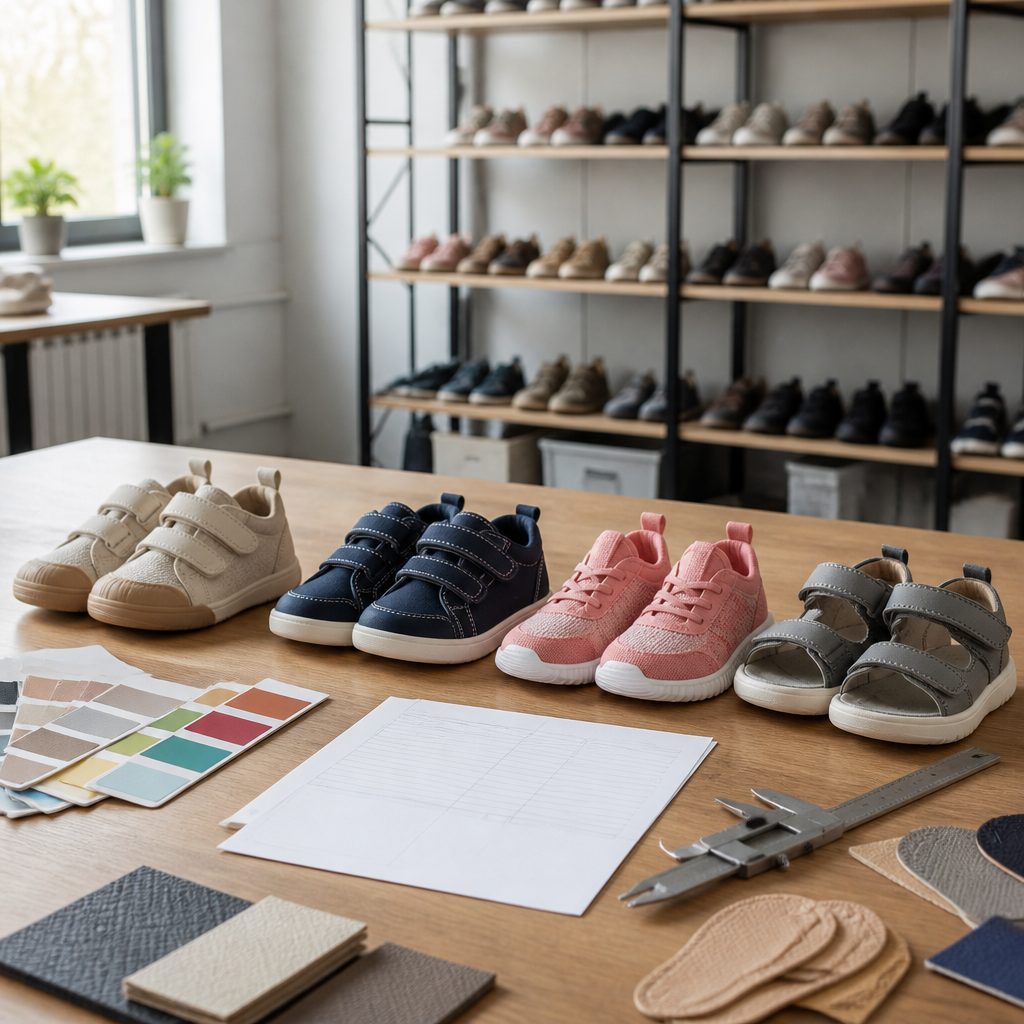
Custom children's shoes packing inspection is often still unwritten when the sample is already signed. Fit notes may be closed and materials confirmed, yet carton counts, labels, stickers, and presentation remain open rows. That gap is a logistics risk, not a style problem.
KidsShoeWorks places packing on the same quality ladder as materials and construction. Procurement teams get a cleaner children's shoes export packing handoff when packing language sits in the brief and the written inspection plan before bulk, not when the container is almost ready.
This article stays inside the factory packing and documentation fields. It separates packing from fit and construction review, then turns open packing rows into one scoped inquiry without inventing services, quantities, or packing codes.
Why export handoff stays open after the sample looks done
Sample review is necessary. It is not enough for export.
On the quality page, children's shoes need more than a nice photo: fit, bonding, flex, wear, and packing all need to be checked before the order leaves the factory. Packing sits beside wear performance on that list, not as a warehouse afterthought once bulk is finished.
Buyers often lock style, size range, logo, and appearance while packing notes stay vague. The about page lists packing notes among brief fields a buyer can send, together with style, size range, target market, quantity, and logo. When packing notes never enter that brief, carton labels and presentation decisions tend to surface only when logistics and receiving teams need them. A shoe that matches the approved sample can still create friction if carton counts, inner packing, labels, or outer cartons do not match what the importer or retailer expects. Naming packing early reduces that late-stage risk without expanding site scope.
What packing already covers on the quality ladder
The quality page frames packing discipline as a checkpoint with a defined check set and a buyer-facing benefit. Final packing appears later on the materials-to-carton ladder. Use those rows as the ceiling for what you brief and inspect.
| Checkpoint | What is checked | Stated buyer benefit |
|---|---|---|
| Packing discipline | Carton counts, labels, stickers, and presentation for the export run | A cleaner handoff to logistics and receiving teams |
| Final packing | Carton counts, inner packing, labels, and outer cartons before shipment | A cleaner export handover for the buyer |
Elsewhere on the same page, packing discipline is also summarized as carton counts, labels, and export presentation. Keep those phrases intact when you write the brief. Channel-specific mark-ups, custom kids shoes carton labels layouts, or market packing codes that the page does not state should be documented as buyer requirements you ask about, not as factory standards already promised on the site.
Construction and sample desks are not packing desks
Mixing packing comments into construction or sample threads is a common way rows get missed. The quality ladder keeps the work separate.
- Construction review checks stitching, bonding, flex point, and outsole stability before packing.
- Sample review covers fit, comfort, logo placement, finish, and closure together.
- Packing discipline reviews carton counts, labels, stickers, and presentation for the export run.
- Final packing checks carton counts, inner packing, labels, and outer cartons before shipment.
Material control confirms upper, lining, outsole, and adhesive choices before the sample stage. Fit and comfort review covers toddler, little kid, and big kid sizing for day-to-day wearability. Those rungs matter for product integrity, but they do not replace packing fields.
Construction is explicitly checked before packing. That sequence helps buyers catch build problems before the bulk run is finished, then treat packing as its own gate. Sample language about logo placement and finish is not a substitute for packing labels or carton presentation notes.
Editorial recommendation for buyers: keep packing in a dedicated section of the brief and inspection plan. Reference appearance only when a sticker or label placement depends on a visual rule you own, and still name the packing field separately so it survives sample sign-off.
When packing language belongs in the brief
Inspection starts before bulk production on the quality page, with checkpoints aligned to the product brief and written inspection plan. Packing notes for children's footwear belong in that brief early enough to shape the plan, not only as a last-minute shipping instruction.
- Capture packing notes with the first brief. The about page already includes packing notes beside style, size range, target market, quantity, and logo. Write what you know about carton counts, labels, stickers, presentation, and any inner-packing expectations.
- Align the inspection plan to those rows. Ask that packing discipline and final packing appear as named checkpoints, not as informal warehouse habits.
- Leave construction and sample decisions on their own rungs. Approve fit and construction without declaring packing complete unless carton and label language is also closed.
- Reconfirm packing before shipment pressure rises. Final packing on the ladder is a before-shipment check of carton counts, inner packing, labels, and outer cartons.
None of those steps invents a quantity, lead time, or guaranteed document pack. They only sequence the listed fields so export presentation is not an afterthought.
Documentation asks that touch packing and receiving
The quality page lists documentation topics the factory can align around. Packing-relevant items on that list include buyer-specific packing labels, inspection photo requests, and document requests from your importer or retailer. Market-specific material notes and third-party test coordination also appear; treat each as a separate alignment option, not as a default inclusion for every order.
- Buyer-specific packing labels: ask whether your label set can be aligned for the export run.
- Inspection photo requests: ask whether packing stages you care about can be evidenced with photos the project requires.
- Importer or retailer document requests: name the documents your channel actually needs so alignment can be discussed against the order.
The same page prefers evidence over badges: inspection photos, measured samples, and the test reports a project actually requires, rather than certifications unrelated to the order. That preference supports packing inspection as a photo-and-checklist conversation when you need receiving-ready proof. It does not claim that photos or importer documents are automatically included.
Where retail and private-label packing pressure usually comes from
Retail and private-label channels often care about controlled look, packaging, and repeat supply. The industries page describes branded ranges in those terms. When packaging is part of brand control, packing discipline is not only logistics hygiene; it is part of how the product presents at receiving and on the shelf.
Kids' sneakers are described on the products page as a strong starting point for private-label and retail orders, including casual wear, school use, and a wide color story. That product-family context explains why colorway and logo work often get attention early. It does not turn sneaker notes into packing specifications for other footwear types. Keep packing language on carton counts, labels, stickers, presentation, inner packing, and outer cartons as listed, whether the program is a sneaker, school shoe, or another family you are developing.
If your retailer expects a particular carton mark or label layout, bring that as a buyer requirement in the brief. The quality page supports alignment discussion around packing labels and importer or retailer documents. It does not publish a universal retail packing standard.
Convert open packing rows into one scoped message
When packing fields are still open, one clear message is more useful than scattered comments across sample emails. Share the current children's footwear definition for the program, then ask which development, sampling, or quotation options may apply. Keep packing rows explicit so they are not lost inside style talk.
- State product family intent and size bands you are developing (for example toddler through big kid if that is your range).
- List packing notes you already know: carton counts, labels, stickers, presentation, inner packing, outer cartons.
- Name open questions only: which packing fields need supplier confirmation, which inspection photo requests matter for receiving, and whether buyer-specific packing labels or importer documents should be discussed for this project.
- Point to the quality ladder language you want mirrored in the inspection plan: packing discipline for the export run and final packing before shipment.
- Ask which development, sampling, or quotation options may apply once packing and product definition are visible together.
You can send that structure through the site's request a quote path when you want packing and product definition reviewed together. For background on the ladder itself, use quality control. For channel context see industries and product families. Brief field language is summarized on about KidsShoeWorks.
What not to treat as a factory packing standard
Brief only what the packing and documentation fields support. Do not brief MOQs, lead times, unit prices, order quantities, certification names, test pass rates, carton dimensions, label templates, or market packing codes as if they were already factory standards on the site. Do not assume factory visits, customer cases, or automatic inclusion of third-party tests, inspection photos, or importer documents.
Packing scope here is limited to carton counts, labels, stickers, presentation, inner packing, outer cartons, and final packing checks as written on the quality page, plus packing notes as a brief field on the about page. Retail and private-label language is limited to controlled look, packaging, and repeat supply as stated for that channel. Anything beyond those lines is a channel or buyer requirement you may document and discuss. It is not a capability invented for this article.
If packing is still the open risk on your program, define those rows now and treat custom children's shoes packing inspection as an early checkpoint. Then ask which development, sampling, or quotation options may apply once the export handoff is named with the same clarity as materials and fit.
Sources and verification
- Quality Control for Children's Shoes | KidsShoeWorks First-party site source
- About KidsShoeWorks | Kids' Shoe Manufacturing Partner First-party site source
- Kids' Footwear by Industry & Channel | KidsShoeWorks First-party site source
- Children's Footwear Products | KidsShoeWorks First-party site source
Share the current children's footwear definition and ask which development, sampling or quotation options may apply to the project.
Send your project brief