Quality and Sourcing
Custom Children's Shoes Material Control Before Samples
Approve materials before you approve the sample. This guide frames custom children's shoes material control as four brief fields that should sit ahead of sample review, construction checks, and packing.
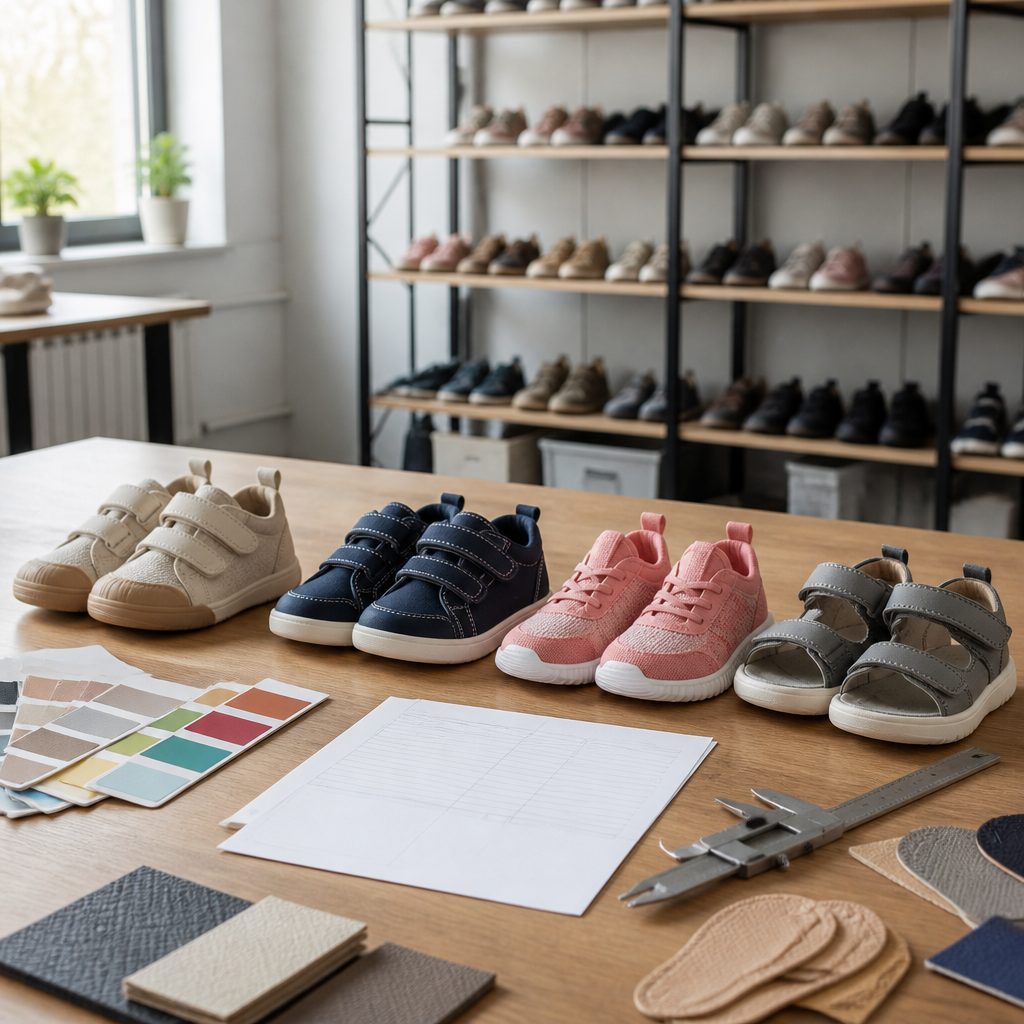
Custom children's shoes material control belongs in the brief before sample look is treated as a production decision. Upper, lining, outsole, and adhesive need confirmed choices first. When those fields stay informal, a team can sign off on color and silhouette while bulk still has room to change lining hand, outsole compound, or adhesive system.
Putting the four fields into a children's shoe material brief turns sample review into a comparison against a fixed base. Fit, logo placement, finish, and closure are then judged on materials that are already locked rather than implied. That sequencing is an editorial recommendation for buyers: lock materials first so the sample is a reference object, not a shared memory of style only.
Four material fields to write into the brief first
On the quality page, material control means confirming upper, lining, outsole, and adhesive choices before the sample stage. Record them as separate fields—not one vague line such as "same as last season" or "standard kids materials."
- Upper: Name the intended upper type and surface intent for the style. Avoid leaving only mood words such as "breathable" or "casual." For a product-family illustration only, the kids' sneakers listing on the products page uses breathable mesh or PU upper as build language; that is style context, not a default for every custom program.
- Lining: State lining type and expected hand feel for the age band. Lining is often assumed rather than specified, which is a common source of post-sample surprise.
- Outsole: Record compound or hardness intent, tread or texture direction, and any stability expectations that belong to the outsole rather than to later construction review.
- Adhesive: Note the bonding system or bond expectation where the program needs it. Adhesive is easy to omit from a style brief and hard to renegotiate after bulk bonding has started.
Incoming materials inspection later aligns upper, lining, outsole, label, and adhesive samples to the brief. That step only works if the brief already contains a material definition those samples can be checked against. If upper options are still open, finish that choice before treating sample review as a formal gate.
As a buyer practice, keep market-specific material notes beside the four fields in one package rather than in a separate email thread. That reduces the chance that packing or logo notes overwrite the material lock.
Why sample look is not a material decision
A sample can look right in photos and still leave the material story open. Color, silhouette, and closure may match the mood board while upper substrate, lining hand, outsole hardness, or adhesive system stay unstated. In that gap, bulk teams fill blanks with available stock, prior program defaults, or substitutions that still pass a casual visual check.
The published quality ladder places material confirmation before the sample stage for a practical reason: once appearance is signed off without a material lock, later disagreements get harder to resolve. Sample review then becomes a later gate for fit, logo placement, finish, and closure once materials are already aligned.
If materials change after sample approval, the approved unit no longer represents the production definition. Material control is the step that keeps the sample honest as a reference object.
Where material control sits on the quality ladder
KidsShoeWorks publishes two related tables for kids' footwear: a practical quality ladder and a set of inspection checkpoints. Material control is the first practical ladder checkpoint. Sample review appears in the inspection sequence after incoming materials are aligned to the brief. The tables below keep each published checkpoint on its own row with its own attribute list and timing. Do not collapse them into one meeting.
Practical quality ladder
| Checkpoint | What gets checked | Buyer benefit (published) |
|---|---|---|
| Material control | Upper, lining, outsole and adhesive choices are confirmed before the sample stage | Fewer surprises after sample approval |
| Fit and comfort | Toddler, little kid and big kid sizing are reviewed for day-to-day wearability | A better chance of matching the target market |
| Construction review | Stitching, bonding, flex point and outsole stability are checked before packing | Problems are caught before the bulk run is finished |
| Packing discipline | Carton counts, labels, stickers and presentation are reviewed for the export run | A cleaner handoff to logistics and receiving teams |
Inspection checkpoints
| Checkpoint | What is checked | Buyer benefit (published) |
|---|---|---|
| Incoming materials | Upper, lining, outsole, label and adhesive samples are aligned to the brief | Fewer surprises after sample approval |
| Sample review | Fit, comfort, logo placement, finish and closure are reviewed together | Better chance that the bulk run matches the approved sample |
| In-line checks | Assembly, stitching, bonding, flex and stability are checked during production | Problems are caught before the order is fully packed |
| Final packing | Carton counts, inner packing, labels and outer cartons are checked before shipment | The buyer receives a cleaner export handover |
Collapsing material control into sample review creates one overloaded conversation. Teams debate look, fit, and materials at once, then approve a sample while material substitutions remain open. Buyer discipline for pre-sample material approval kids shoes work is sequential: materials first, sample second, then construction, in-line, and packing gates as separate steps.
The same quality page notes that inspection starts before bulk production and that checkpoints should align to the product brief and a written inspection plan. Material control is how the brief becomes specific enough for those later checks to work.
Keep product family notes separate from material locks
Product-family language is useful for orientation, not as a substitute for material confirmation. On the products page, kids' sneakers are described as a strong starting point for private-label and retail orders, popular with brands that want casual wear, school use, and a wide color story. Build language there includes a breathable mesh or PU upper. Custom options include colorway, logo, closure, and outsole texture.
That family note helps choose a starting silhouette. It does not by itself lock lining, adhesive, outsole compound, or even which upper substrate will run in bulk. Colorway and closure choices can change the look of a sample without settling material control. Treat family notes as style context; treat the four material fields as the procurement lock.
Channel notes work the same way. Retail and private-label programs are described as branded ranges with controlled look, packaging, and repeat supply. Controlled look and packaging still depend on a material definition that can be repeated. Without that definition, each reorder reopens material choices even when the style name stays constant.
A practical comparison for the brief:
- Product family note: "Kids' sneaker for school and daily wear, private-label color story."
- Material lock: "Upper type, lining type, outsole intent, adhesive expectation recorded and confirmed before sample stage."
Both lines can appear in the same document. Only the second line makes sample approval a stable checkpoint.
What material control does not replace
Material control is a narrow gate. It does not finish fit review by age band, construction review, in-line production checks, packing discipline, final packing, or documentation work. Those remain separate published checkpoints with their own attribute lists.
A locked upper does not also answer comfort and bond questions. A confirmed upper still needs fit review for the target age band. A confirmed adhesive choice still needs construction review before packing and in-line checks during production. Carton presentation remains a separate export concern after product checks.
Keep later topics out of the material section of the brief so each gate stays measurable. Material control answers whether the materials match the intended definition. Fit answers wearability by size band. Construction and in-line checks answer assembly integrity at their published stages. Packing answers handover quality. Mixing those questions in one approval blurs responsibility when something fails later.
Documentation that can support a material-locked brief
The quality page lists documentation topics buyers can align around, and it states a preference for evidence over badges: inspection photos, measured samples, and the test reports a project actually requires rather than certifications unrelated to the order. For a material-locked brief, useful document types from that list include market-specific material notes, inspection photo requests, third-party test coordination, and document requests from an importer or retailer.
Use those tools to support the material definition, not to replace writing the four fields clearly.
- Market-specific material notes: Attach any market language that constrains upper, lining, outsole, or adhesive choices so the lock is not only internal brand language.
- Inspection photo requests: Ask for photos that show the material samples aligned to the brief before or beside sample review, so the visual record includes materials rather than only finished style shots.
- Third-party test coordination: If a retailer or importer requires tests tied to materials, name that need early so testing is planned against the locked definition rather than against a late substitution.
- Importer or retailer document requests: Route retailer templates into the same brief package so packing labels and material notes do not live in separate threads.
These are coordination tools around a material definition you have already written. They do not stand in for the lock itself.
Turn the material lock into a scoped next-step question
Once the four fields are written, the next step is a scoped inquiry rather than a full redesign of the program. The about page describes an opening brief that can include style, size range, target market, quantity, logo, and packing notes. As a buyer recommendation, place the material fields beside those notes so development and sampling conversations start from a complete definition.
- Write the current children's footwear definition: style family, size range, target market, and intended channel.
- Lock upper, lining, outsole, and adhesive as explicit fields, plus any market-specific material notes that apply.
- Separate logo, closure, colorway, packing, and fit expectations so they do not overwrite the material lock.
- Share that package and ask which development, sampling, or quotation options may apply to the project based on the locked material definition.
That last question invites project-specific guidance. It does not claim every option is already a fixed service package. You can also ask which inspection photos or checklist alignment would best support the material gate for your retailer or importer.
If the material fields are still open, pause sample review. Approving look first reopens the bulk run to the post-sample surprises material control is meant to reduce. For a current program definition and a request on which development, sampling, or quotation path may fit, use the request a quote form and point to the material section of the brief first.
Related pages for the same workflow include the full quality control ladder, product family starting points such as kids' sneakers, industry and channel notes for retail and private-label programs, and the about overview of how a brief is received.
Sources and verification
- Quality Control for Children's Shoes | KidsShoeWorks First-party site source
- Children's Footwear Products | KidsShoeWorks First-party site source
- Kids' Footwear by Industry & Channel | KidsShoeWorks First-party site source
- About KidsShoeWorks | Kids' Shoe Manufacturing Partner First-party site source
Share the current children's footwear definition and ask which development, sampling or quotation options may apply to the project.
Send your project brief