Quality Control
Custom Children's Shoes Construction Quality Checks
Appearance-approved samples still leave construction open. Name stitching, bonding, flex point and outsole stability as pre-packing fields, keep them separate from color and logo notes, and turn unresolved points into one scoped inquiry.
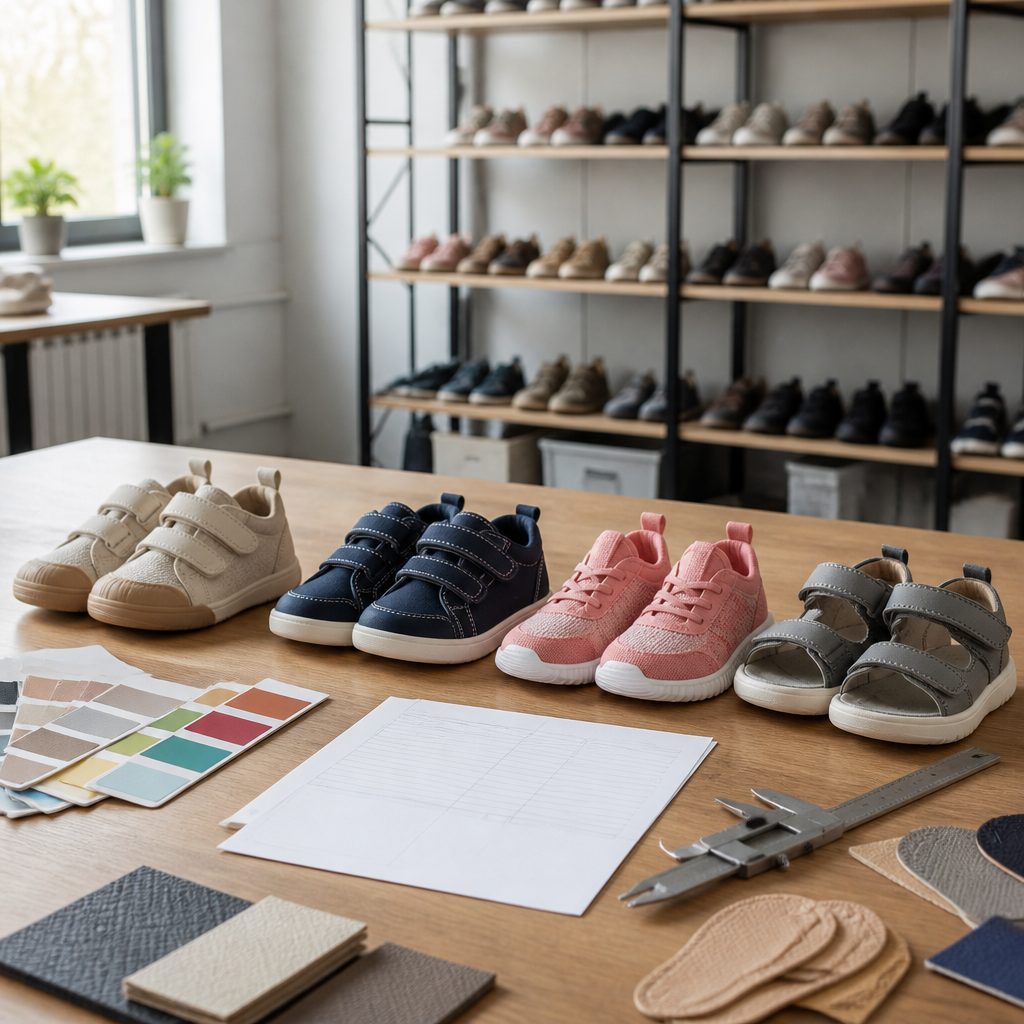
If custom children's shoes construction quality checks are never written into the brief, product teams can lock colorway, logo and sample finish while join quality, flex behavior and outsole hold stay undefined. Defects then appear at packing or after the first weeks of school and playground wear. That gap is expensive: returns and fit complaints usually outrun a corrected bulk run.
A photo-ready sample is not a construction decision
On the KidsShoeWorks quality page, children's shoes are framed as needing more than a nice photo. Fit, bonding, flex, wear and packing all need attention before an order leaves the factory. A sample that photographs well can still leave construction open if the buyer has not defined what acceptable means for join quality, flex behavior and outsole stability.
Treat construction review as a buyer-owned gate after sample appearance is settled and before final packing is accepted. That gate is not a substitute for material control earlier in the program, and it is not the same job as carton counts and export labels at the end. Its job is narrower: decide whether the shoe will hold together in daily wear before packing closes the order.
The four construction fields buyers can name
The published quality ladder lists construction review as stitching, bonding, flex point and outsole stability checked before packing, with the stated benefit that problems are caught before the bulk run is finished. Naming those four fields in the brief keeps construction from dissolving into generic comments such as "looks solid" or "seems fine."
| Construction field | Buyer reason to name it early |
|---|---|
| Stitching | Broken lines, skipped seams and uneven allowances become return drivers once shoes enter daily wear. |
| Bonding | Separation at the upper-outsole join is a classic post-shipment failure mode that photos of a clean sample rarely reveal. |
| Flex point | Flex that sits in the wrong place changes how a child walks and how the upper holds across a size run. |
| Outsole stability | Rocking contact or soft structure shows up on school floors and playgrounds long after packing is complete. |
Those reasons are editorial procurement guidance, not lab methods or pass thresholds. The factory language on the quality page stops at the four fields and the pre-packing timing. Custom children's shoes outsole stability belongs in that same named gate as stitching and bonding. Buyers who need measured tolerances, photo angles or project-required tests should state those as order-specific requirements rather than assume a universal standard.
Where construction sits on the published quality ladder
The same quality page places construction in a practical sequence for kids' footwear. Material control confirms upper, lining, outsole and adhesive choices before the sample stage. Fit and comfort review toddler, little kid and big kid sizing for day-to-day wearability. Construction review then covers stitching, bonding, flex point and outsole stability before packing. Packing discipline covers carton counts, labels, stickers and export presentation for a cleaner handoff to logistics and receiving.
A second table on that page describes where inspection happens from materials to final carton:
- Incoming materials — upper, lining, outsole, label and adhesive samples aligned to the brief.
- Sample review — fit, comfort, logo placement, finish and closure reviewed together.
- In-line checks — assembly, stitching, bonding, flex and stability checked during production so problems are caught before the order is fully packed.
- Final packing — carton counts, inner packing, labels and outer cartons checked before shipment.
Construction therefore appears both as a ladder stage and as in-line production language. It is deliberately separate from sample review (appearance and fit together) and from final packing (export presentation). Buyers who only sign off on sample photos and carton labels leave the middle of that ladder unnamed.
Appearance notes do not replace construction language
Sample review on the quality page groups fit, comfort, logo placement, finish and closure. On the products page, kids' sneakers list colorway, logo, closure and outsole texture as customization scope for private-label and retail programs. Those items matter, and they belong in any custom children's shoes brief. They still do not answer construction questions.
A logo that sits correctly can sit on an upper with weak stitch density. A favored colorway can bond poorly at the outsole join. Outsole texture is a design and grip choice; outsole stability is whether the shoe rocks, collapses or holds a clean contact plane in wear. Closure comments address how the shoe opens and secures; they do not describe flex point location under the ball of the foot.
Keep two comment streams in the file. Appearance and customization notes cover color, branding, finish and closure. Construction notes cover stitching checks children's shoe production teams will actually run, plus bonding, flex and stability. Merging them into one vague "sample OK" line is how construction issues travel into packed cartons.
What proof language actually helps
The quality page prefers evidence over badges: inspection photos, measured samples and the test reports a project actually requires, rather than certifications that have nothing to do with the order. Documentation the page can align around includes buyer-specific packing labels, market-specific material notes, inspection photo requests, third-party test coordination and document requests from an importer or retailer.
For construction specifically, useful buyer requests often look like this:
- Inspection photos that show stitch lines, bond edges, flex crease location and outsole contact under load, not only side-beauty shots.
- Measured samples when the project needs dimensions or flex location recorded against the approved reference.
- Project-required test reports only when the destination market, retailer or importer asks for them, coordinated rather than collected as unrelated badges.
That list is an editorial filter for what to ask for. It does not invent pass rates, wear-lab methods or factory-owned laboratories. Third-party test coordination is the documented language; ownership of external labs is not.
Turning open construction points into one scoped inquiry
Unresolved stitching, bonding, flex and outsole stability for custom children's shoes should travel in one brief, not as scattered chat comments after packing starts. The about page describes a first step in which the buyer sends style, size range, target market, quantity, logo and packing notes. Construction fields sit alongside those context fields; they do not replace them.
When kids footwear bonding and flex inspection still sit open after sample appearance is settled, put those questions in one brief with the rest of the order context:
- Style reference and product family (for example, a sneaker program aimed at daily wear and school retail).
- Size range and target market, so fit language and construction language stay tied to the same wearer group.
- Logo and packing notes as context only, not as a substitute for build checks.
- Open construction questions: which stitch zones matter most, how bonding edges should be photographed, where flex should occur, what outsole stability means for the intended use.
- Evidence requests limited to inspection photos, measured samples or project-required reports.
On the industries page, retail and private-label brands are framed as branded ranges with controlled look, packaging and repeat supply. Construction review supports that control by catching assembly problems before packing finishes the run. Quantity remains a brief field the buyer provides; no commercial minimums or lead times are implied here.
If one hypothetical program helps: a school-use sneaker with a settled color story still needs the buyer to say whether flex should land under the forefoot and whether bond edges at the toe and heel must appear in inspection photos. Without that language, sample beauty shots can pass while construction stays undefined until cartons are sealed.
Confirm construction language on the source pages
Every construction claim in this article stays inside published KidsShoeWorks excerpts. The four construction fields, the pre-packing timing, the quality ladder, the in-line versus final packing split, and the preference for inspection photos, measured samples and project-required reports all come from the quality control page. Appearance customization language for kids' sneakers comes from the products page. Brief context fields come from the about page. Channel framing for retail and private-label programs comes from the industries page. If a claim is not on those pages, treat it as buyer editorial guidance rather than a factory promise.
Share the brief and open construction questions
Share the current children's footwear definition for the project: style direction, size range, target market, logo needs and packing notes, plus any open questions on stitching, bonding, flex point and outsole stability. Then ask which development, sampling or quotation options may apply to that definition. Use the request a quote path when the brief is ready enough to discuss those options without inventing unstated services or standards.
Sources and verification
- Quality Control for Children's Shoes | KidsShoeWorks First-party site source
- Children's Footwear Products | KidsShoeWorks First-party site source
- About KidsShoeWorks | Kids' Shoe Manufacturing Partner First-party site source
- Kids' Footwear by Industry & Channel | KidsShoeWorks First-party site source
Share the current children's footwear definition and ask which development, sampling or quotation options may apply to the project.
Send your project brief