OEM Sourcing
Confirm Materials Before Children's Shoe Sampling
Treat material confirmation as a gate before any sample brief. Name upper, lining, outsole, and adhesive first, keep mesh language inside its published product scope, and ask only what the material-control checkpoint can support.
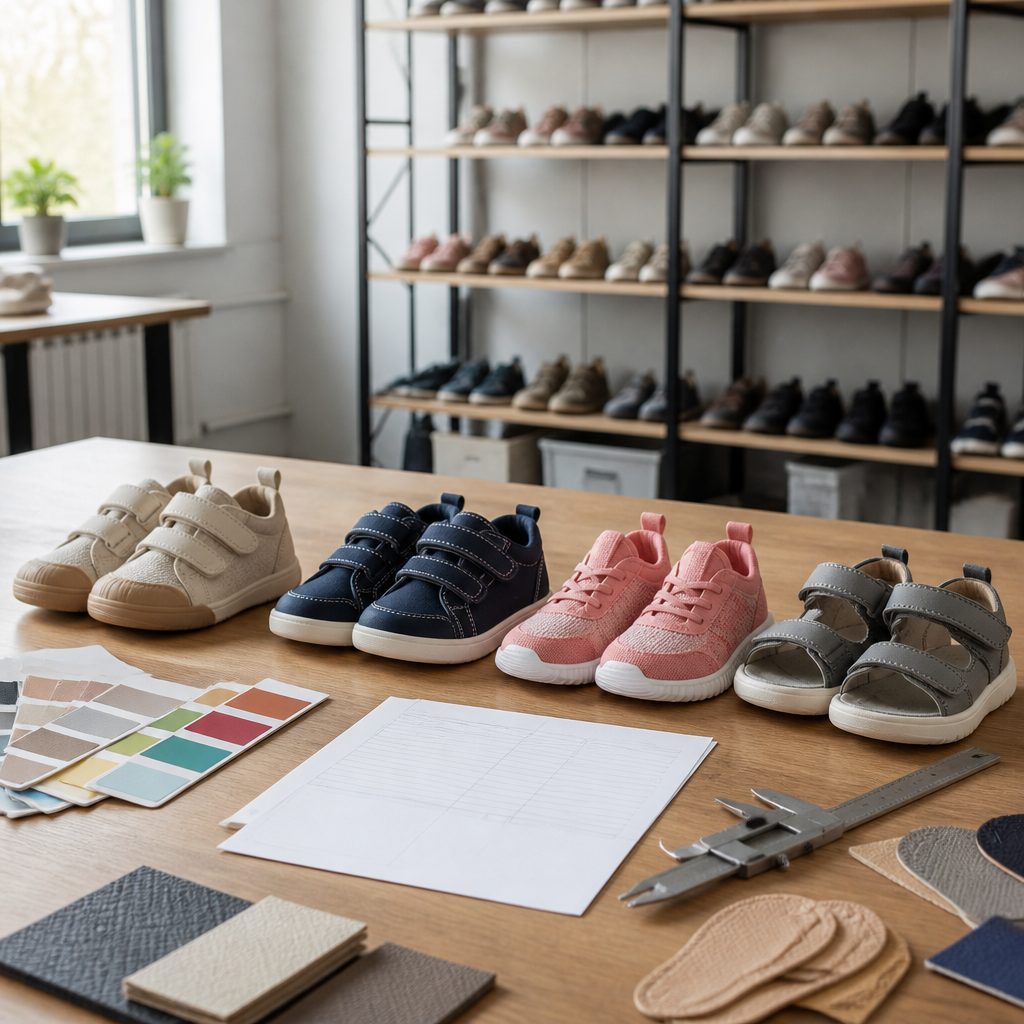
Comparing children's shoes suppliers on silhouette, color, or unit price still leaves bulk risk open when the material stack is undecided. Style boards move first. Sample photos follow. Only later does the team learn that the upper hand, lining type, outsole compound, or adhesive choice in production is not the set they thought they had approved.
The practical move is to confirm materials before children's shoe sampling as a narrow gate that sits ahead of fit review, construction checks, and packing discipline. On the manufacturer's quality control page, material control confirms upper, lining, outsole, and adhesive choices before the sample stage. The stated buyer benefit is fewer surprises after sample approval. That published sequence is the company-specific boundary used here. Sample photos and later inspection steps are not substitutes for the pre-sample decision.
Lock These Four Fields First
For path selection into sampling, name only the material set the quality page places under material control and incoming materials. Leave size-band fit language, logo artwork, carton counts, and commercial terms for other checkpoints. That set is the children's shoe sample material checklist for this gate.
- Upper: article or construction family the program actually uses (for example mesh, PU, canvas, or another type in the brief), color direction, and any hand or weight language the product team will hold.
- Lining: material type and where it appears (full, partial, collar, or insole-facing layers when those matter to the brief).
- Outsole: compound or construction family, color, and any texture or grip language already decided for the style.
- Adhesive: the adhesive choice expected for the construction, stated at the level the factory must match, not as a lab certificate list invented for the email.
If one field is still exploratory, mark it open. A blank adhesive or lining cell is not covered by a strong upper swatch photo.
Material Control Versus Incoming Materials
The quality page separates a practical quality ladder from a later inspection sequence. Material control sits on the ladder as confirmation of upper, lining, outsole, and adhesive before the sample stage. Incoming materials, in the inspection sequence, aligns upper, lining, outsole, label, and adhesive samples to the brief, again with fewer surprises after sample approval as the stated buyer benefit. Use both only as published checkpoints. The table below is buyer sequencing guidance so each field has a pre-sample ask, an incoming-materials alignment question once a definition exists, and a short list of topics that should stay out of the material note so it does not turn into a full quality ownership rewrite.
| Material field | Pre-sample material-control ask | Incoming-materials alignment (after a definition exists) | Keep outside this pre-sample note |
|---|---|---|---|
| Upper | Is the upper family and color direction confirmed before sampling starts? | Do incoming upper samples match the briefed article and color? | Logo placement, finish, and closure (sample-review topics, not material-control fields) |
| Lining | Is lining type and coverage confirmed before sampling? | Do lining samples match the brief? | Toddler / little-kid / big-kid fit bands |
| Outsole | Is outsole family, color, and texture intent confirmed before sampling? | Do outsole samples match the brief? | In-line flex and stability checks during bulk |
| Adhesive | Is the adhesive choice confirmed before sampling? | Do adhesive samples align to the brief? | Carton counts, labels, and export presentation |
The “keep outside” column is not a claim that the quality page assigns those exclusions as ownership of each material row. Label appears in the incoming-materials row alongside upper, lining, outsole, and adhesive samples. Treat label alignment as part of that incoming gate when artwork or care labels are already part of the sellable unit. Do not use label or packing language to replace the four fields material control names before the sample stage.
Why Does an Approved Sample Still Leave Materials Open?
Sample review on the same quality ladder covers fit, comfort, logo placement, finish, and closure together. Those are real sign-off topics. They are not the same job as naming upper, lining, outsole, and adhesive early.
A supplier can build a wearable sample from provisional materials. A brand can like the look. Both can still disagree later about what “the approved sample” meant for the material stack once production lots arrive. Children's footwear material control starts when those four choices are written down and confirmed against the brief, not when a photo is marked approved.
How Far Does Published Mesh Language Go?
Published material descriptions are references, not defaults for every kids' program.
On the materials page, engineered mesh is described as light, breathable, knit-style uppers for warm-weather and active styles, used in kids' sneakers, sports runners, and sandals. That scope does not make mesh the default for every school shoe, rain boot, or toddler style, and mesh alone does not freeze lining, outsole, or adhesive. The products page positions kids' sneakers as a starting point for private-label and retail orders. Build language there includes breathable mesh or PU upper, plus custom colorway, logo, closure, and outsole texture. Read that as product-family scope for sneakers.
When the program is a sneaker or sports runner in a warm-weather or active lane, mesh or PU upper language can sit in the brief as a candidate upper field. Outside that lane, do not drag mesh in as a general children's-shoe default. Scope discipline matters for kids shoe upper lining outsole adhesive decisions: an upper family can be named while lining, outsole, and adhesive remain open. Naming mesh for a sneaker upper still leaves those other three fields to confirm before sampling if pre-sample material control is the standard you are using.
Fit, Construction, and Packing Stay Separate
The same quality ladder lists fit and comfort (toddler, little kid, and big kid sizing for day-to-day wearability), construction review (stitching, bonding, flex point, and outsole stability before packing), and packing discipline (carton counts, labels, stickers, and presentation for the export run) as separate checkpoints. In-line checks and final packing appear later in the inspection sequence. Bonding in that construction and in-line language is a construction check; it is not a substitute for confirming adhesive choice under material control before sampling.
Mixing those topics into one pre-sample email dilutes the material decision. Keep the material note to the four fields plus brief-alignment language. Put size-band, construction, and packing questions in separate threads or later plan sections so each checkpoint keeps a clear job.
What Questions Force a Material Answer?
Open fields help only when they become narrow questions. The quality page's documentation stance prefers evidence over badges: inspection photos, measured samples, and the test reports a project actually requires, rather than certifications unrelated to the order. Use that as a documentation boundary. Do not invent lab names, pass marks, or blanket compliance claims.
- For each open field among upper, lining, outsole, and adhesive, state what the brief currently holds and what is still blank.
- Ask when confirmation is expected relative to sample start: before sampling, at sample submission, or only at incoming materials after a definition is agreed.
- Ask how confirmation will be shown for this project: inspection photos, measured samples, written alignment to the brief, or project-required test reports if the importer or retailer asks for them.
- Ask whether any candidate material language (for example mesh for a warm-weather sneaker upper) sits inside the product family you named, or whether an alternative upper family should be proposed instead.
- Do not request a price, MOQ, or lead time as a proxy for material confirmation. Those commercial numbers are not a material freeze unless your own process ties them after materials are locked.
Hypothetical only: a retail buyer likes a mesh sneaker reference for a warm-weather color story but has not named lining or adhesive. The useful message is not “please sample ASAP.” It is “upper candidate is breathable mesh for a kids' sneaker; lining and adhesive remain open; confirm those two fields and outsole intent before sampling, and say what photo or measured-sample evidence you will use.”
What to Send Next
Send one current children's footwear definition. Include the four material fields with firm or open status. Attach only the product-family scope that matches the program. If the channel is retail or private label, the industries page describes branded ranges with controlled look, packaging, and repeat supply as channel framing. That is channel language, not proof that a specific program already has packaging or material decisions closed.
- Product family and market use (for example school retail sneaker, active sandal, or another family you actually sell).
- Upper, lining, outsole, and adhesive: each marked confirmed or open, with the words you will hold if confirmed.
- Any material reference kept inside published scope (mesh only where warm-weather or active sneakers, sports runners, or sandals apply).
- Documentation preference for this project: inspection photos, measured samples, and any importer- or retailer-required test reports, without inventing certificates.
- One path question: given this definition and these material statuses, which development, sampling, or quotation options may apply next.
Topics that still depend on the project include buyer-specific packing labels, market-specific material notes, inspection photo requests, third-party test coordination, and document requests from an importer or retailer, the documentation themes the quality page lists as items that can be aligned around. They are not automatic inclusions in every sample, and they are not a substitute for naming the four material fields first. Named test methods, if a buyer needs them, are a project requirement the buyer should raise explicitly; they are not listed as a separate published documentation theme on that page.
Hard scope for company-specific claims in this article comes from the published quality, materials, products, and industries pages linked above: material control and incoming materials language; the separation of fit, construction, and packing; the documentation preference for inspection photos, measured samples, and project-required test reports; engineered mesh use in kids' sneakers, sports runners, and sandals; breathable mesh or PU upper language for kids' sneakers; and retail / private-label channel framing. Pre-sample sequencing advice outside those excerpts is buyer-side path selection, not a factory service package.
When the definition is ready, use the request a quote path, share the current children's footwear definition with open material fields marked, and ask which development, sampling, or quotation options may apply to the project. That invitation is a buyer step. It is not a published promise of a fixed service package, MOQ, or timeline.
Sources and verification
- Quality Control for Children's Shoes | KidsShoeWorks First-party site source
- Kids' Shoe Materials | Mesh, PU, Canvas, Rubber & EVA | KidsShoeWorks First-party site source
- Children's Footwear Products | KidsShoeWorks First-party site source
- Kids' Footwear by Industry & Channel | KidsShoeWorks First-party site source
Share the current children's footwear definition and ask which development, sampling or quotation options may apply to the project.
Send your project brief