Sourcing Guides
Childrens Shoes Wholesale UK Sneaker Upper Materials: Mesh or PU
A pre-sample material brief for UK kids sneaker wholesale: name breathable mesh or PU early, reuse only published mesh attributes, and keep sample, in-line, and packing checks from standing in for upper confirmation.
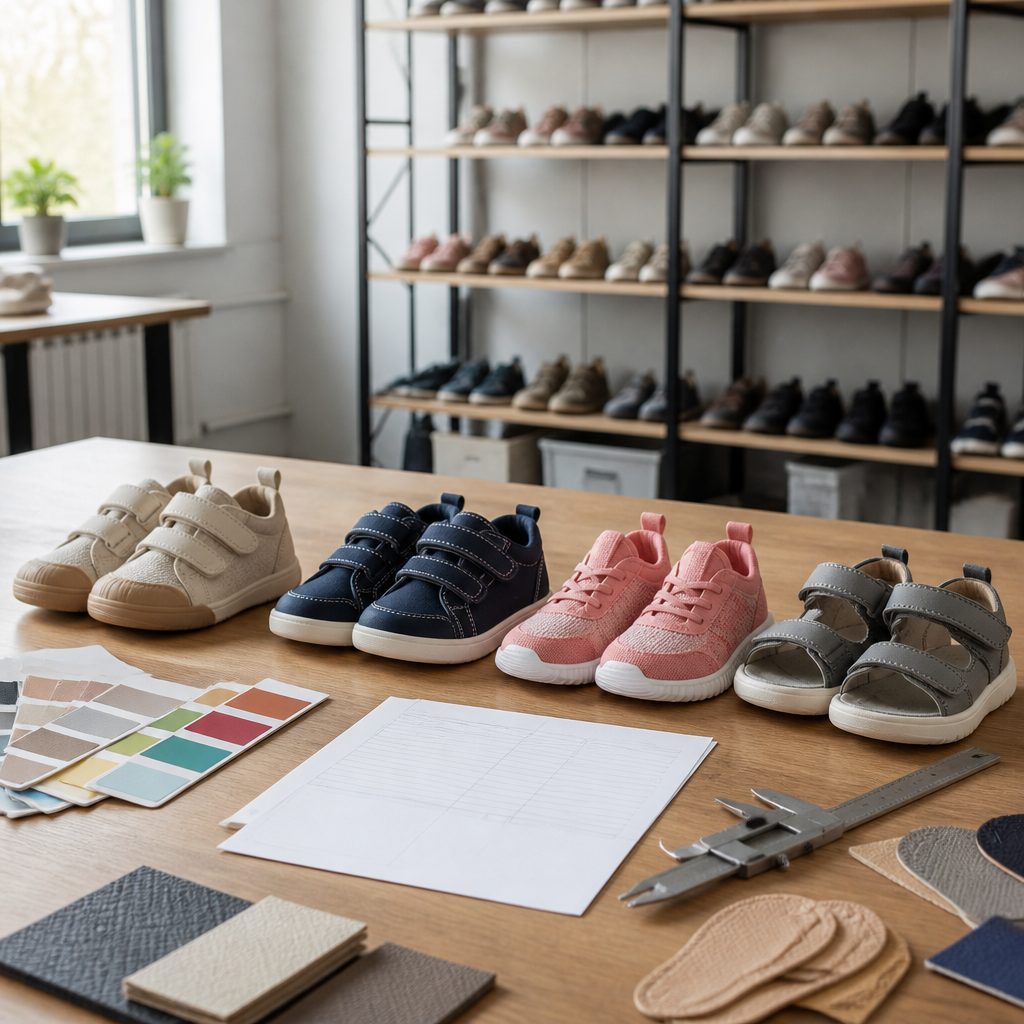
UK importers, kids and family brands, and product teams often treat a wholesale sneaker RFQ as finished once style references, color stories, and price asks are set. The upper construction can still be blank. That is the practical childrens shoes wholesale uk sneaker upper materials failure: mesh versus PU never enters the brief, so the factory has no material target to align against. The mismatch usually appears after sampling or after bulk materials are already committed, and the shoe no longer matches the daily-wear or school-retail use case the buyer assumed.
This brief treats upper selection as a pre-sample material-control field with hard published limits. It inventories only the upper options and mesh attributes the product and materials pages name, maps the decision to quality timing language, walls off sample-review and later checkpoints so they cannot absorb the upper field, and flags where PU performance language is absent from first-party evidence.
What the sneakers product page actually names
On the kids’ sneakers product family, the published build language is narrow: breathable mesh or PU upper. Best-for language on that page points to daily wear and school retail. Custom fields listed alongside the build are colorway, logo, closure, and outsole texture. Those custom fields are not upper materials. Treating a logo, a closure system, or an outsole texture as a substitute for naming mesh or PU leaves the material decision open.
- Named upper builds: breathable mesh, or PU
- Named custom fields (separate from upper material): colorway, logo, closure, outsole texture
- Published use framing: daily wear and school retail
- Not published as sneaker upper constructions on that page: canvas, leather, knit-plus-overlay hybrids, or other fabric systems
Editorial recommendation: put one of the two named uppers into the inquiry text before sampling begins. Do not expand the option set from other product families or from assumptions about school-uniform retail in the UK market.
Engineered mesh: only the published attribute set
The materials page describes engineered mesh with a closed attribute set. Those attributes are the ceiling for what a buyer brief may claim without inventing lab scores or climate performance. When a UK wholesale kids sneaker line needs a mesh upper, reuse only what is published.
| Published mesh attribute | How to use it on a UK wholesale brief | What not to add |
|---|---|---|
| Light, breathable knit-style uppers | State “engineered mesh, knit-style” as the upper construction | GSM, denier, or abrasion ratings |
| Breathable | Note breathability as a named material trait, not a lab result | Air-permeability test numbers |
| Lightweight | Keep weight language qualitative only | Gram targets or comparative weight claims |
| Quick-dry | Use only if warm-weather or active use is part of the line story | Waterproof or weatherproof claims |
| Warm-weather and active styles | Align the style brief to warm-weather or active kids wear | UK winter, rain, or school-uniform durability claims |
| Used in kids’ sneakers, sports runners, sandals | Confirm the product family is sneakers (or a listed adjacent family) | Extending mesh claims to rain boots or canvas-only builds |
PU upper: named option without a performance list
PU appears on the sneakers product page as an alternate upper to breathable mesh. That is the full first-party performance footprint for PU as a sneaker upper in the excerpts used here. The materials page excerpt covers engineered mesh attributes and does not supply a parallel PU attribute list for sneaker uppers.
| Decision field | Breathable / engineered mesh | PU upper |
|---|---|---|
| Named on sneakers product page | Yes (breathable mesh) | Yes (PU upper) |
| Attribute list on materials excerpt | Light knit-style, breathable, lightweight, quick-dry; warm-weather and active; sneakers, sports runners, sandals | No parallel list in the supplied materials excerpt |
| Safe brief language | Copy only the published attributes | State “PU upper” as the construction choice only |
| Unsafe brief language | Invented GSM, abrasion, or lab badges | Invented breathability, abrasion, school-uniform compliance, waterproofing, or UK-climate performance |
A buyer who prefers PU for a school-retail look or a particular finish must still name PU explicitly, then ask for project-level proof (photos, measured samples, or required reports) rather than importing mesh attributes onto PU or inventing market claims the pages do not make.
Where the upper decision belongs: before the sample stage
Many UK wholesale kids sneaker programs start from a reference style and a commercial ask. Buyers request private-label colorways, logos, closures, and outsole texture, then wait for a sample photo to “confirm materials.” That sequence is backward for the upper. If the inquiry never states breathable mesh or PU, any later sample becomes a negotiation about what the buyer meant rather than a check against a locked choice.
The quality page places upper, lining, outsole, and adhesive choices under material control confirmed before the sample stage, with the stated buyer benefit of fewer surprises after sample approval. Incoming-materials language similarly covers upper, lining, outsole, label, and adhesive samples aligned to the brief. That timing is the procurement lever for a kids sneaker upper choice before sample.
- Write the sneaker upper preference (breathable mesh or PU) into the brief before sampling is requested.
- Treat lining, outsole, and adhesive as sibling material fields confirmed in the same pre-sample window, not as later packing topics.
- Use sample review for fit, comfort, logo placement, finish, and closure only after the upper material is already locked.
- Keep in-line assembly checks and final packing checks from becoming the place where upper material is finally decided.
Upper choice is a material-control decision, not a sample-finish preference and not a carton-label check.
Checkpoints that must not replace the upper field
Buyers sometimes treat a clean sample photo or a tidy export carton as proof that materials were correct. The quality ladder separates those jobs from the upper decision.
| Checkpoint | What the page ties to that stage | What it does not confirm |
|---|---|---|
| Material control (before sample) | Upper, lining, outsole, adhesive choices | Fit, logo placement, carton counts |
| Incoming materials | Upper, lining, outsole, label, adhesive samples aligned to the brief | Bulk assembly quality or export presentation |
| Sample review | Fit, comfort, logo placement, finish, closure | A late change of upper material without a new material lock |
| In-line checks | Assembly, stitching, bonding, flex, stability during production | Original mesh-versus-PU selection |
| Final packing | Carton counts, inner packing, labels, outer cartons | Upper construction identity |
If a sample looks right but the upper was never specified, the sample only freezes the open interpretation the factory used. As an editorial recommendation for the buyer, refuse to treat finish photos or packing discipline as upper-material confirmation.
Lining, outsole, adhesive, and label as sibling fields
Upper choice rarely travels alone. The same quality language groups lining, outsole, and adhesive with the upper under pre-sample material control, and incoming materials also lists label alignment. Buyers can ask about those sibling fields without inventing specs the pages do not publish.
- Lining: name the lining preference or ask which lining options apply to the sneaker program.
- Outsole: separate outsole material or texture from the upper decision; texture is also a named custom field on the sneakers page.
- Adhesive: treat adhesive as a pre-sample material field, not a packing topic.
- Label alignment: where incoming materials are in scope, ask how label samples are aligned to the brief.
- Market-specific material notes and importer or retailer document requests: listed as documentation topics the quality page can align around; ask which of those apply rather than assuming a standing certified service package.
Evidence that matches an upper claim
The quality page’s stance on proof is evidence over badges: inspection photos, measured samples, and the test reports a project actually requires, rather than certifications unrelated to the order. For a mesh-versus-PU lock, request proof that matches the claim.
If the brief states engineered mesh with the published knit-style and breathability language, ask for inspection photos of the upper construction and, where the project requires it, measured samples or test reports tied to that order. If the brief states PU upper, ask for the same class of project-level evidence rather than a generic certificate wall. Third-party test coordination appears on the quality page as a documentation alignment topic; a buyer may ask whether coordination applies to the project, without treating it as a pre-approved service promise beyond that framing.
Questions to attach to the first wholesale inquiry
Use a short, scoped question set that states the current children’s footwear definition and asks which development, sampling, or quotation options may apply. Do not treat the question list as a documented service catalog. The block below is a material brief buyers can attach to a first RFQ for children’s sneakers wholesale in the UK.
- Product definition: kids’ sneakers for daily wear / school retail, UK wholesale program.
- Upper preference: breathable mesh (engineered mesh attributes as published) or PU upper; state one.
- Related material fields: lining, outsole, adhesive, and any label-alignment notes the project needs before sample.
- Custom fields already decided or still open: colorway, logo, closure, outsole texture.
- Proof preference: inspection photos, measured samples, and any project-required test reports rather than unrelated badges.
- Open ask: which development, sampling, or quotation options may apply to this sneaker upper brief.
A hypothetical importer might attach that block to a first RFQ so mesh-versus-PU is not left for sample review. Share the definition above through the site’s request-a-quote path, and keep commercial quantities, MOQs, and lead times as project-specific asks rather than assumed published figures.
Name mesh or PU early. Keep mesh claims inside the published attribute set. Refuse invented PU performance language. Hold the decision in the pre-sample material window so fit, finish, and carton checks can do the jobs they are written for.
Sources and verification
- Quality Control for Children's Shoes | KidsShoeWorks First-party site source
- Children's Footwear Products | KidsShoeWorks First-party site source
- Kids' Shoe Materials | Mesh, PU, Canvas, Rubber & EVA | KidsShoeWorks First-party site source
Share the current children's footwear definition and ask which development, sampling or quotation options may apply to the project.
Send your project brief