Quality Control
Children's Shoes Wholesale UK Quality Checkpoints
UK wholesale buyers who settle quality after sample photos often find material, fit and construction issues only after bulk is finished. Sequence published checkpoints so inspection timing is part of the offer.
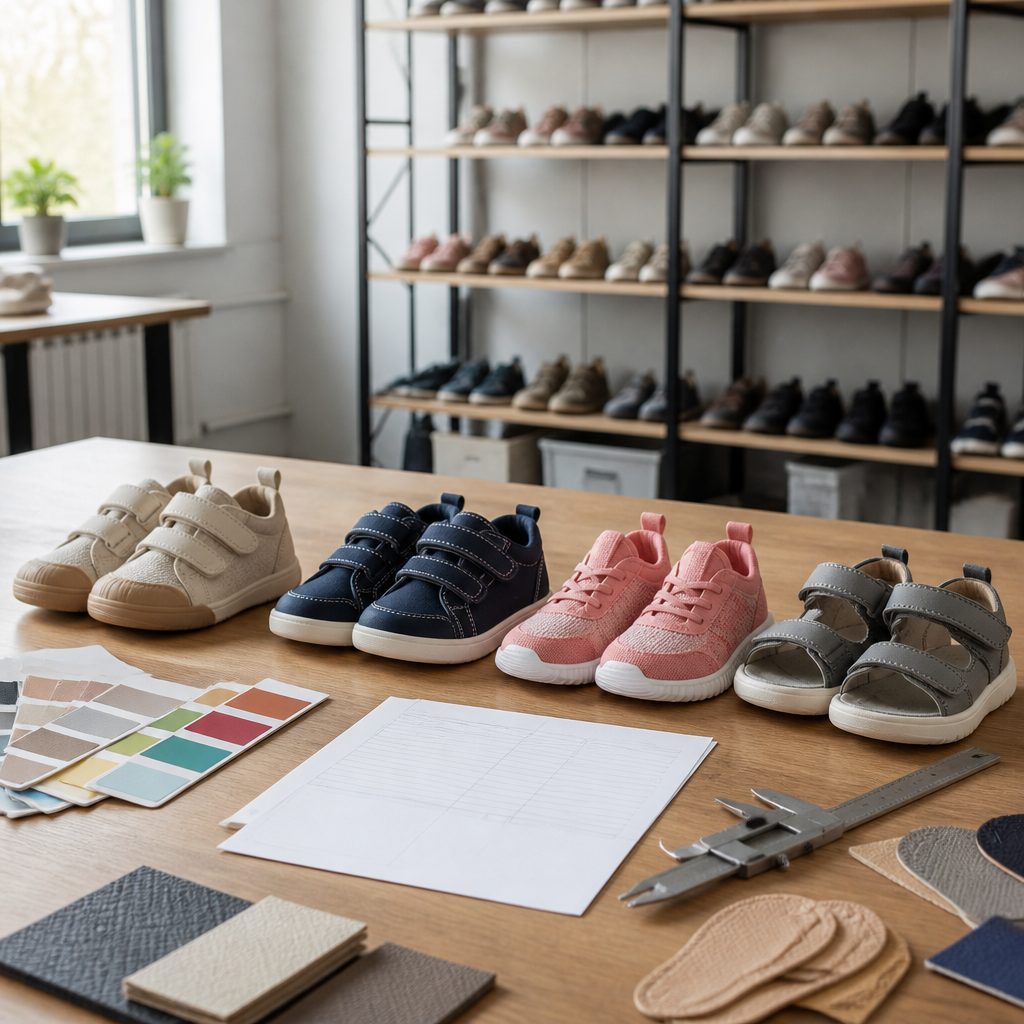
UK importers, retailers and product teams often compare children's shoes wholesale UK quality checkpoints too late. Price and sample photos can look aligned across factories while material, fit, construction and packing timing stay undefined. When those gaps stay open until after bulk is finished, correction cost and delivery risk peak at the worst moment.
This guide sequences the quality ladder published on KidsShoeWorks' quality page as pre-bulk locks. The practical aim is to make wholesale offers comparable on what gets checked, when it gets checked, and what proof the order needs, not on badges or images alone.
Why sample approval alone does not protect a UK wholesale run
A photo-approved sample can still leave upper, lining, outsole, adhesive, fit and assembly unaligned if those choices were never locked against a written brief. On the quality page, KidsShoeWorks states that children's shoes need more than a nice photo, and that fit, bonding, flex, wear and packing all need to be checked before the order leaves the factory. Inspection, in that framing, starts before bulk production and should align to the product brief and a written inspection plan.
For a UK wholesale program, sample sign-off is often treated as the commercial green light. In practice it is only one gate. If material confirmation is deferred until after sampling, or construction review waits until cartons are sealed, problems surface when change is slowest. Treat children's footwear wholesale UK sample approval as necessary, not sufficient, and schedule the earlier gates explicitly in the inquiry.
Four timed decision gates, not one vague promise
The same quality page presents a practical quality ladder for kids' footwear: sequential checks that decide whether a shoe holds up in daily wear. Buyers can schedule those gates against their own brief without expanding beyond the published checkpoints.
- Material control (before sample stage): upper, lining, outsole and adhesive choices are confirmed so fewer surprises appear after sample approval.
- Fit and comfort: toddler, little kid and big kid sizing are reviewed for day-to-day wearability, improving the chance of matching the target market.
- Construction review (before packing): stitching, bonding, flex point and outsole stability are checked so problems are caught before the bulk run is finished.
- Packing discipline: carton counts, labels, stickers and presentation are reviewed for the export run, supporting a cleaner handoff to logistics and receiving teams.
A parallel inspection sequence on the same page maps where work is checked: incoming materials, sample review, in-line checks during production, and final packing before shipment. Use both views together. The ladder defines what must hold; the inspection sequence defines when each gate runs relative to sampling and bulk.
Material control before the sample stage
Material control is the first published gate, and its timing is explicit: upper, lining, outsole and adhesive choices are confirmed before the sample stage. Incoming-materials inspection also aligns upper, lining, outsole, label and adhesive samples to the brief. That sequence is the buyer's best lever against post-approval material swaps that still look close in a photo.
| Decision area | What the quality page frames as checked | Why lock it early for UK wholesale |
|---|---|---|
| Upper and lining | Choices confirmed before sampling; samples aligned to the brief | Limits bulk drift after the approved sample |
| Outsole | Outsole choice confirmed with other materials before sample stage | Keeps wear expectations tied to the sample you signed |
| Adhesive | Adhesive choices and samples aligned to the brief | Bonding risk is harder to fix after assembly volume ramps |
| Labels (incoming) | Label samples aligned to the brief at incoming materials | Reduces last-minute packing conflicts that are not construction defects |
When a program leans on specific upper constructions, keep material notes at the level the factory publishes. The materials page describes engineered mesh as light, breathable knit-style uppers for warm-weather and active styles, used in kids' sneakers, sports runners and sandals. The products page positions kids' sneakers as a starting point for private-label and retail orders for casual wear and school use, with breathable mesh or PU upper options and custom colourway, logo, closure and outsole texture. Those are family-level options, not a promise that every combination applies to every wholesale program. Ask which material path applies to your brief rather than assuming a full catalogue is open for every order.
Fit review across toddler, little kid and big kid sizing
Fit is a separate published checkpoint, not a side note under construction. The quality page states that toddler, little kid and big kid sizing are reviewed for day-to-day wearability. Sample review covers fit, comfort, logo placement, finish and closure together, with the stated buyer benefit of a better chance that the bulk run matches the approved sample.
For UK wholesale ranges that span age bands, that separation matters: a sample that looks correct in one size can still miss wearability in another band if fit is never called out as its own approval item. Name the size bands you will stock, state which sample sizes represent the run, and require fit and comfort to be reviewed with logo placement, finish and closure rather than after them. Stay with the factory's stated scope: toddler, little kid and big kid, reviewed for daily wearability against the target market you define. Do not invent UK sizing rules or age bands outside that list.
Construction review before packing starts
Construction failure modes rarely improve at carton stage. The quality page places construction review before packing and lists stitching, bonding, flex point and outsole stability as the checks that decide whether the shoe holds up. In-line checks during production cover assembly, stitching, bonding, flex and stability so problems can be caught before the order is fully packed. Those two lists are the full published construction scope for kids shoe bulk production quality checks.
- Stitching (construction review and in-line)
- Bonding (construction review and in-line)
- Flex point / flex (construction review and in-line)
- Outsole stability / stability (construction review and in-line)
- Assembly (in-line during production)
Lock these criteria in the written inspection plan before bulk starts. If a supplier's offer only mentions "QC" without naming construction checkpoints or in-line timing, the offers are not yet comparable for a wholesale kids shoes UK inspection plan. Sample-match language belongs with sample review (fit, comfort, logo placement, finish and closure), not as an expanded construction method.
Final packing is a logistics handoff, not a substitute for earlier gates
Packing discipline is the last gate on the published ladder: carton counts, labels, stickers and presentation for the export run. Final packing also covers carton counts, inner packing, labels and outer cartons before shipment. The buyer benefit stated on the quality page is a cleaner handoff to logistics and receiving teams.
That is a real control, but it cannot replace material confirmation, fit review or construction checks. If packing is the first serious inspection point, the factory and the buyer are only discovering upstream defects after volume is complete. Keep packing fields tight for handover, and keep the earlier gates explicit in the same plan. A fuller receiving-field brief is a separate procurement document; this section only establishes why packing is necessary and late, not comprehensive.
Documentation topics versus order-specific proof
The quality page lists documentation topics the factory can align around: buyer-specific packing labels, market-specific material notes, inspection photo requests, third-party test coordination, and document requests from the importer or retailer. The stated proof approach is evidence over badges: the preference is to send inspection photos, measured samples and the test reports a project actually requires, rather than certifications unrelated to the order.
| Published alignment topic | Buyer use in a wholesale inquiry |
|---|---|
| Buyer-specific packing labels | State label fields and placement rules that receiving will enforce |
| Market-specific material notes | Call out material constraints that apply to this UK program |
| Inspection photo requests | Define which gates need photo evidence and when |
| Third-party test coordination | Ask whether coordination is available for the tests this order needs; do not treat it as a guaranteed outcome |
| Importer or retailer document requests | List documents your channel partners will require at receiving |
No certifications, lab accreditations or compliance badges are claimed here beyond that evidence-over-badges stance. If a retailer or importer needs a specific test report, name the report in the brief and request order-specific proof. That keeps documentation commercial and scoped, instead of turning unrelated badges into a substitute for inspection photos and measured samples.
One pre-bulk quality brief for the wholesale inquiry
Before requesting development, sampling or quotation options, compress the gates into a single note the supplier can answer against. One controlled structure is enough; parallel mini-submissions usually add noise.
- Product family context: if relevant, name the family (for example kids' sneakers for school or daily wear) using language consistent with the products page, without treating every custom option as open for every program.
- Gates already locked: materials confirmed before sampling; size bands and fit review method; construction criteria that must pass before packing; packing rules for export presentation.
- Gates still open: any material path not yet chosen, size coverage still incomplete, or packing label fields waiting on the retailer.
- Proof wanted for this order: inspection photos at which checkpoints, measured samples if needed, market-specific material notes, and any importer or retailer documents.
- Inspection timing: state that inspection should start before bulk and follow a written plan aligned to the brief, matching the quality page framing.
The case-study page presents an example of how a private-label sneaker program can be scoped, sampled and run. Treat that page as example format for program structure, not as a completed customer result or performance claim. When the quality brief is clear, share the children's footwear definition you are using and ask which development, sampling or quotation options may apply to the project via the request a quote path. Do not invent MOQs, prices or lead times in that note; ask which commercial parameters apply once the checkpoints are agreed.
Sources and verification
Material claims about checkpoints, inspection timing, documentation topics and the evidence-over-badges approach map to the quality control page. Upper and mesh context maps to the materials page. Kids' sneakers as a private-label and retail starting point maps to the products page. Program-structure language maps to the case study page as example format only. Verify each claim against those pages before treating any checkpoint as a general guarantee beyond the published scope.
Sources and verification
- Quality Control for Children's Shoes | KidsShoeWorks First-party site source
- Kids' Shoe Materials | Mesh, PU, Canvas, Rubber & EVA | KidsShoeWorks First-party site source
- Children's Footwear Products | KidsShoeWorks First-party site source
- Kids' Shoe Programs: Case Study Format | KidsShoeWorks First-party site source
Share the current children's footwear definition and ask which development, sampling or quotation options may apply to the project.
Send your project brief