Sourcing Guides
Childrens Shoes Wholesale Canada School Retail Before Quotes
Canada RFQs often label kids sneakers without school-day wear. State upper, fit and construction language first so wholesale offers share one build baseline.
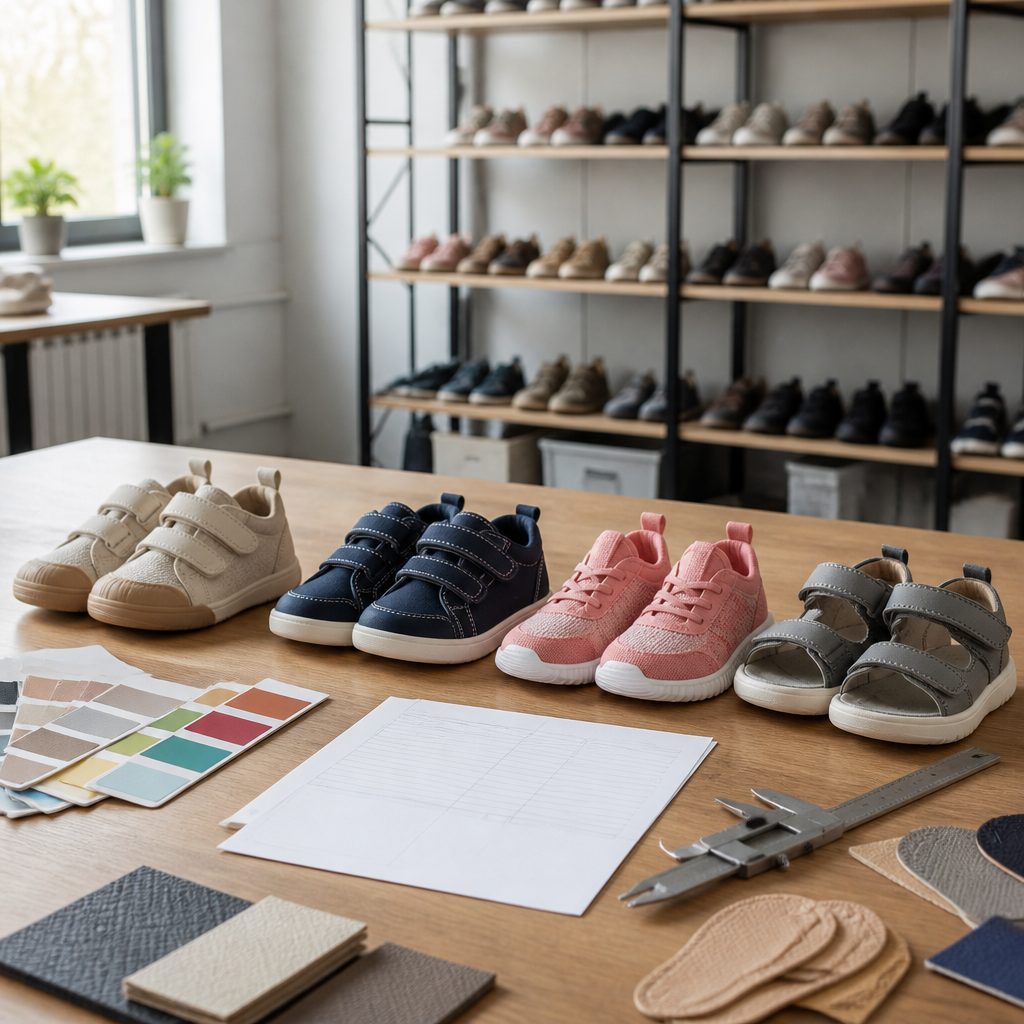
Canadian school-uniform programs, family retailers and importers often open a childrens shoes wholesale Canada school retail conversation with a two-word label: kids sneakers. That phrase names a product family. It does not name classroom hours, playground wear, age bands or upper systems. Until those details appear, suppliers fill gaps with their own defaults, and two offers that look close on price may rest on different builds.
For the buyer, the practical fix is to write school retail as the wear role on the RFQ, freeze the material and fit language that role implies, then ask which development, sampling or quotation options may apply. The sections below stay inside first-party product and quality language so your team can put real fields on the brief rather than shopping an undefined sneaker SKU.
What Canada RFQs lose when they only say kids sneakers
Many Canada requests still read like a catalog line: kids sneakers, mixed sizes, private label welcome. School retail is a wear context. When the brief never states daily classroom and playground use, upper materials, closures and outsole textures default to whatever each factory already samples.
Comparable price lines can hide different upper systems, different age-band lasts and different construction review depth. The expensive failure is timing. Material and fit language arrives after a sample photo is already approved, or after packing counts are already on the table. Changing the upper or reopening size-band fit then restarts the commercial conversation. Naming the school-retail role early is buyer-owned language on the RFQ, not a factory promise.
Keep the SKU inside published school-use kids sneakers
On the KidsShoeWorks product family page, kids sneakers are a starting point for private-label and retail orders, popular with brands that want casual wear, school use and a wide color story. The same family is positioned as best for daily wear and school retail. The published build is a breathable mesh or PU upper. Custom options listed there are colorway, logo, closure and outsole texture.
That published statement is the ceiling for this guide. Do not expand the RFQ into undocumented school-uniform construction standards, dress shoes or other families outside that product language. If the program is school retail day wear, keep the SKU inside kids sneakers and write the role in plain words: casual and school use, sold through school retail or family retail channels that need durable daily wear rather than fashion-only looks. For a wider assortment view, use the children's footwear products page before you attach logo files or size runs. Anything beyond the published custom set is a separate development question, not an assumed capability from the school-retail line alone.
Pre-sample material fields for mesh or PU builds
The products page lists breathable mesh or PU as the upper build for kids sneakers. Separately, the materials page describes engineered mesh as light, breathable knit-style uppers used in kids sneakers, sports runners and sandals. Quality language treats upper, lining, outsole and adhesive as material-control fields confirmed before the sample stage so fewer surprises follow sample approval.
Keep those statements separate. Mesh-or-PU is the published upper choice for the sneaker family. Engineered mesh is one upper type with a defined use list. Material control is a pre-sample checkpoint, not a guarantee of a specific mesh grade. For Canada school retail, turn that into fields your team completes before anyone cuts a sample, especially when comparing kids sneakers wholesale Canada offers that must share one build baseline.
| Field to set | Buyer decision | Why it belongs pre-sample |
|---|---|---|
| Upper | Breathable mesh, PU, or a stated mix by colorway | School-day breathability and wipe-down needs differ; late upper swaps reset samples |
| Lining | Comfort and wear target for full school days | Lining is part of material control before sample stage |
| Outsole | Texture and stability intent for indoor floors and playground use | Outsole sits in material control and as a custom texture on the sneaker family |
| Adhesive | Bonding approach aligned to the chosen upper and sole stack | Adhesive is confirmed with other materials before samples, not after bulk packing |
Use the kids shoe materials overview when you need to name engineered mesh versus other upper systems without inventing grades. If the program mixes warm classrooms and wet outdoor transitions, state that wear pattern in the brief so mesh versus PU is deliberate, not a silent default.
Fit brackets for mixed school-age runs
Quality guidance on the site reviews toddler, little kid and big kid sizing for day-to-day wearability, with the buyer benefit framed as a better chance of matching the target market. That is a fit-review checkpoint, not proof of a finished size chart for every Canadian school channel.
School retail almost always spans more than one age band. Approving a single sample photo as if it represented the full run is a common error. Treat fit as a multi-bracket decision:
- State which of toddler, little kid and big kid brackets the program will sell, even if the first sample is only one size.
- Require fit and comfort review against day-to-day wearability, not only logo placement and color.
- Record which closure the sample used, because the sneaker family lists closure as a custom field and school-age independence often depends on it.
- Refuse to treat one approved photo as a full size-run decision until each sold bracket has been named in the brief.
A hypothetical Canada importer serving both early-years and elementary school retail could name little-kid and big-kid brackets in the RFQ while holding toddler as a later phase. That illustration is not a customer case; it only shows how naming brackets early keeps quotes comparable on school retail kids shoes wholesale programs.
Construction checks before packing handoff
Construction review and packing discipline sit on different rungs of the quality ladder. Construction review checks stitching, bonding, flex point and outsole stability before packing so problems are caught before the bulk run is finished. Packing discipline covers carton counts, labels, stickers and presentation for the export run, aiming at a cleaner handoff to logistics and receiving teams.
For school retail, construction is what parents and teachers feel across a school week. Packing is what the warehouse scans. Mixing the two creates false confidence: clean cartons do not prove flex points or bonding were reviewed in time.
| Topic | What gets checked | When it helps the school-retail buyer | What it cannot replace |
|---|---|---|---|
| Construction review | Stitching, bonding, flex point, outsole stability | Before packing, while bulk can still be corrected | Carton counts or label accuracy |
| Packing discipline | Carton counts, labels, stickers, export presentation | At export handoff to logistics and receiving | Stitching, bonding or flex performance in daily wear |
In-line checks described on the quality page cover assembly, stitching, bonding, flex and stability during production so issues surface before the order is fully packed. Final packing then covers carton counts, inner packing, labels and outer cartons before shipment. Keep those stages in order on the Canada brief so packing never substitutes for construction review. More detail sits on the quality control page if your team wants the full checkpoint ladder.
Documentation topics that stay buyer-owned
Documentation language on the quality page lists topics that can be aligned around: buyer-specific packing labels, market-specific material notes, inspection photo requests, third-party test coordination, and document requests from your importer or retailer. The same page stresses evidence over badges: inspection photos, measured samples and the test reports a project actually requires, rather than unrelated certifications.
That list is a menu of request topics, not a Canada regulation wall and not a certificate package invented for this article. Canadian buyers should still own market compliance research for their channel. Use the published topics as fields you may ask about, scoped to the project:
- Buyer-specific packing labels for your retail or school program handoff.
- Market-specific material notes you need written into the brief.
- Inspection photo requests tied to material, fit or construction stages.
- Third-party test coordination when your importer or retailer names a test scope.
- Document requests that your importer or retailer already requires for receiving.
Do not paste generic Canadian safety claims into the RFQ without a named requirement from your own compliance team. Ask which of the documentation topics above apply, then attach only those that your channel truly needs for wholesale children's sneakers school use.
Put the school-retail definition into one inquiry
Once the fields exist, the inquiry can stay short. Share the current children's footwear definition and ask which development, sampling or quotation options may apply. Avoid inventing quantities, lead times or program outcomes that the public pages do not state.
- Role: kids sneakers for casual wear and school use, sold as school retail / daily wear (not an undefined fashion sneaker SKU).
- Upper build: mesh, PU, or a stated mix by colorway, plus lining, outsole and adhesive fields named for pre-sample material control.
- Custom fields you care about: colorway, logo, closure and outsole texture, only as far as the published sneaker family supports.
- Fit brackets: which of toddler, little kid and big kid sizes will be sold, with day-to-day wearability review expected before a full size-run decision.
- Construction before packing: stitching, bonding, flex point and outsole stability as pre-packing checks; carton counts and labels as a separate export handoff.
- Documentation: only the packing-label, material-note, inspection-photo, third-party test or importer/retailer document topics your channel actually needs.
- Question to the factory: which development, sampling or quotation options may apply to this definition. If packing detail or MOQ matters for your project, ask those as optional buyer questions and treat any answer as unconfirmed until the factory states it in writing.
Send that package through the request a quote path when you are ready. One clear school-retail definition beats a stack of open-ended kids-sneaker RFQs that force every Canada supplier to guess the wear context. Write the role first, and wholesale offers become comparable before samples and cartons start to move.
Sources and verification
- Children's Footwear Products | KidsShoeWorks First-party site source
- Kids' Shoe Materials | Mesh, PU, Canvas, Rubber & EVA | KidsShoeWorks First-party site source
- Quality Control for Children's Shoes | KidsShoeWorks First-party site source
Share the current children's footwear definition and ask which development, sampling or quotation options may apply to the project.
Send your project brief