Sourcing Guides
Five Checks in Children's Shoes Wholesale Canada Sample Review
Canada wholesale teams often clear kids shoe samples on photos alone. Use the five published sample fields as one pre-bulk gate before production.
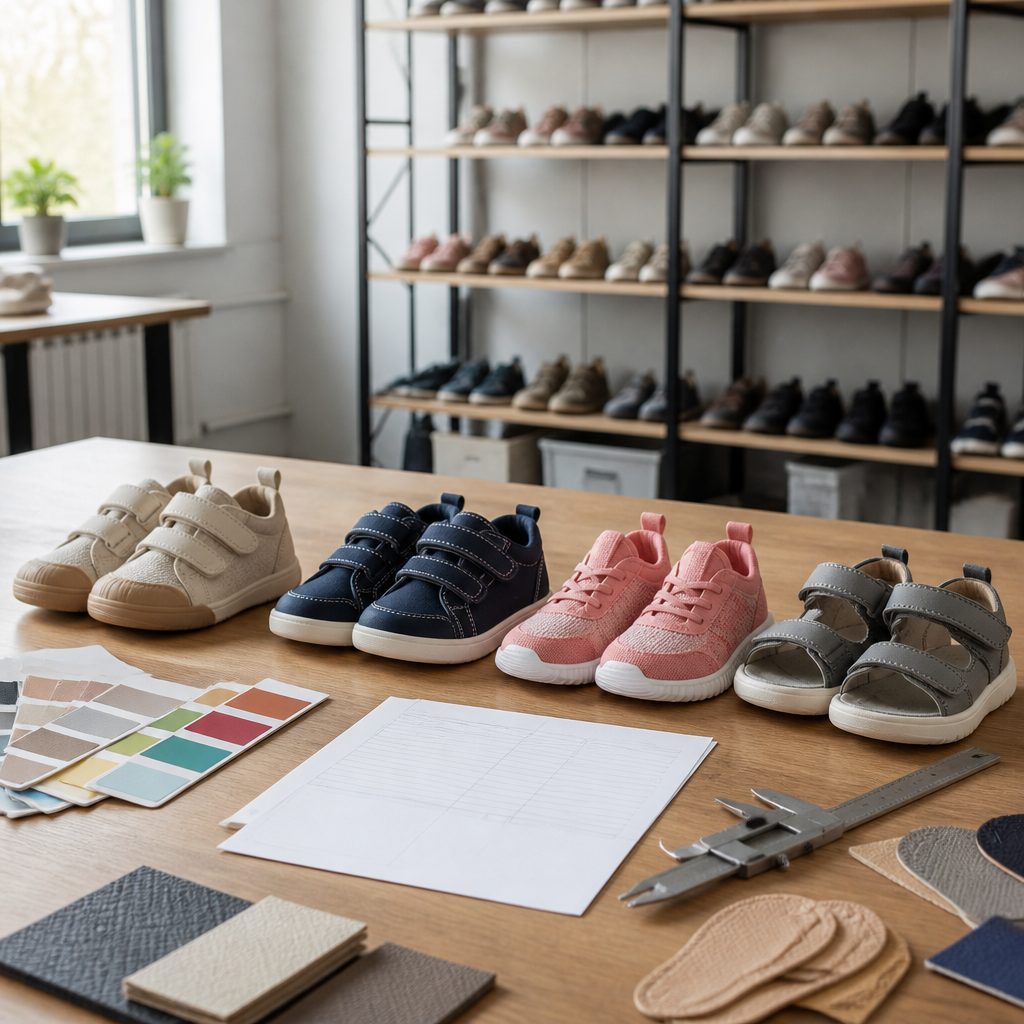
Canadian importers and kids-brand product teams often treat children's shoes wholesale Canada sample review as a color or studio-photo pass. Fit, comfort, logo placement, finish, and closure stay informal while the commercial conversation moves on. On the KidsShoeWorks quality page, sample review is the checkpoint that reviews those five fields together so the bulk run has a better chance of matching the approved sample.
This article treats that multi-field gate as a commercial reference for Canada wholesale programs. It covers which fields belong in one sign-off, which material choices should already be fixed, how the sample gate differs from later in-line checks, and how to phrase a scoped inquiry. It is not a full factory inspection plan.
When sample photos still leave bulk exposed
A sample can look right under studio light and still fail once size runs, school-day wear, brand marks, and closures enter the same conversation. Appearance approval answers only part of the brief.
If logo height, tongue finish, strap or lace function, and day-to-day wearability stay informal, bulk teams have no single approved reference for private-label or retail kids footwear. For Canada wholesale programs, that gap often shows up later as size complaints, inconsistent branding across colorways, and receiving disputes that a photo sign-off never anticipated. The practical fix is not more photography. It is a written multi-field sample decision that production and packing stages can still reference.
Five fields that form one sample gate
KidsShoeWorks defines sample review as reviewing fit, comfort, logo placement, finish, and closure together. Those five fields sit between incoming material alignment and in-line production checks. Treat them as co-equal, not as a hierarchy that ends once color looks acceptable. The published buyer benefit of that gate is a better chance that the bulk run matches the approved sample.
| Published sample field | Buyer guidance: what to lock on the unit | Buyer guidance: bulk-protection intent |
|---|---|---|
| Fit | Wearability for the intended size band and market use | Reduce size-run surprises after approval |
| Comfort | Day-to-day wear feel for the target age group | Support school, casual, and retail expectations |
| Logo placement | Position, method, and visual weight on the upper | Keep private-label branding consistent across bulk |
| Finish | Surface, edge, and trim appearance on the approved unit | Limit cosmetic drift between sample and production |
| Closure | Lace, strap, or other closure function and appearance | Confirm the shoe works the way the brief requires |
As an editorial recommendation for buyers: require one signed sample record that covers all five published fields, even when photography is part of the handoff. A single image cannot carry logo placement, closure function, and wearability at once.
Fit and comfort as wearability checks
The same quality page frames fit and comfort around toddler, little kid, and big kid sizing reviewed for day-to-day wearability. The stated buyer benefit is a better chance of matching the target market. That language belongs inside sample review, not only on a size chart attached after bulk is already running.
Canada wholesale programs often mix school retail, casual daily wear, and multi-age assortments. A sample that passes only as looking like a given kids size does not answer whether the shoe feels right for the intended age band. As an editorial recommendation for buyers, review notes may include last feel, collar contact, and volume, but those are purchaser checklist items, not published factory checkpoint names. Keep infant-only fit questions out of this gate unless the program is actually infant-scoped. For general children's footwear, use the sample to confirm wearability for the size bands you intend to sell, then carry those notes into bulk measurement checks.
Logo, finish, and closure beside color
Private-label and retail kids sneakers are a common starting point on the products page. That family is described as popular with brands that want casual wear, school use, and a wide color story. Published build language for kids sneakers includes a breathable mesh or PU upper. Published custom options for that family are colorway, logo, closure, and outsole texture. Color is only one of those decisions. If logo and closure stay verbal while color is photographed, bulk branding and function drift are predictable.
- Mark logo placement on the approved sample (position relative to eyestay, tongue, or side panel as your brief requires).
- Record finish expectations that matter on camera and on shelf: edge clean-up, print or embroidery clarity, and any trim contrast.
- Exercise the closure on the sample: lace run, hook-and-loop bite, buckle action, or other specified system.
- Note outsole texture only if the sneaker brief calls for a custom or specified pattern, and keep that note separate from upper material choices.
- As an editorial recommendation for buyers, refuse a "color OK, rest later" sample email when logo, finish, or closure are still open for a private-label program.
Map each open row back to the five-field sample checkpoint rather than inventing a separate branding inspection stage. That keeps private label kids shoes bulk match questions tied to one approval moment.
Material choices that belong before sampling
Sample review is a poor place to invent materials. KidsShoeWorks lists material control as confirming upper, lining, outsole, and adhesive choices before the sample stage, with the buyer benefit of fewer surprises after sample approval. Incoming materials checks also align upper, lining, outsole, label, and adhesive samples to the brief. Fix those choices first so sample review can evaluate wear and presentation on a stable build.
- Write upper, lining, outsole, and adhesive targets into the product brief before samples are cut.
- If the program is a kids sneaker private-label or retail build, choose mesh or PU upper language deliberately; do not leave "whatever looks light" as a late sample comment.
- When engineered mesh is in scope, use the materials page attributes only as published: light, breathable knit-style uppers for warm-weather and active styles, with breathable, lightweight, and quick-dry attributes, used in kids' sneakers, sports runners, and sandals. Do not expand that list into unstated performance claims.
- Align label samples with the brief at the materials stage so logo placement review is not delayed by missing brand components.
- Only then open the five-field sample review. If a material still changes after sample approval, treat the sample as obsolete rather than partially reusable.
How sample review differs from in-line checks
Sequence matters. Sample review sits before in-line checks and final packing on the published quality ladder. In-line checks cover assembly, stitching, bonding, flex, and stability during production so problems are caught before the order is fully packed. Construction review on the same page covers stitching, bonding, flex point, and outsole stability before packing. Those are production-time gates, not substitutes for the sample decision.
| Gate | Primary job | What it does not finish |
|---|---|---|
| Sample review | Approve fit, comfort, logo placement, finish, and closure together | Does not prove bulk stitching or bonding consistency |
| In-line checks | Catch assembly, stitching, bonding, flex, and stability issues during production | Does not re-decide brand placement or closure type |
| Final packing | Check carton counts, inner packing, labels, and outer cartons before shipment | Does not repair an unapproved sample reference |
Lock the sample first, then use in-line and packing stages to protect that reference. Collapsing the entire quality ladder into one photo pass or one late carton audit leaves bulk unprotected.
Proof that belongs with the sample record
The quality page prefers evidence over badges: inspection photos, measured samples, and the test reports a project actually requires, rather than certifications unrelated to the order. Documentation topics listed for alignment include buyer-specific packing labels, market-specific material notes, inspection photo requests, third-party test coordination, and document requests from an importer or retailer.
For a Canada wholesale sample gate, keep proof tight. As an editorial recommendation for buyers, ask for order-specific inspection photos of the five sample fields, measured notes on the size you care about, and only those test reports your importer or retailer already requires. Treat third-party testing as project-scoped coordination, not as a standing included service. Unrelated certificate walls do not repair a weak sample record.
Inquiry language for Canada wholesale programs
When you open a children's footwear conversation, share the current product definition and the sample fields still open. KidsShoeWorks invites buyers to request a quote and review product families. A case-study page shows an example of how a private-label sneaker program can be scoped, sampled, and run. That case-study page is an example format, not a named customer win. Use it only as a structural reference for how you describe your own program.
- State the footwear family and use case (for example, kids sneakers wholesale Canada for school and daily retail).
- List upper direction if known (mesh or PU) and any outsole texture expectation, without inventing unstated options.
- Name the five sample-review fields and mark which are still open: fit, comfort, logo placement, finish, closure.
- Attach or summarize pre-sample material choices for upper, lining, outsole, and adhesive when you already have them.
- Ask which development, sampling, or quotation options may apply to the project, and which proof items (inspection photos, measured samples, required test reports) the team can align around for that order.
That inquiry structure keeps children's shoe sample approval wholesale work commercial and concrete. It also leaves room for packing labels and importer documents later without confusing those topics with the sample gate itself. If you are ready to move from internal notes to a supplier conversation, share the current children's footwear definition and ask which sampling or quotation options may apply.
For deeper checkpoint language, see the quality control page. For sneaker family scope, see children's footwear products. For mesh attribute language when that upper is in play, see kids' shoe materials. For a private-label sneaker program example of scope and sampling structure, see the case study format page.
Sources and verification
- Quality Control for Children's Shoes | KidsShoeWorks First-party site source
- Children's Footwear Products | KidsShoeWorks First-party site source
- Kids' Shoe Materials | Mesh, PU, Canvas, Rubber & EVA | KidsShoeWorks First-party site source
- Kids' Shoe Programs: Case Study Format | KidsShoeWorks First-party site source
Share the current children's footwear definition and ask which development, sampling or quotation options may apply to the project.
Send your project brief