Sourcing Guides
Children's Shoes Suppliers Fit Review by Age Band
A single sample approval is not a fit brief for three age markets. Use toddler, little-kid, and big-kid wearability questions against published checkpoints before you compare children's shoes suppliers.
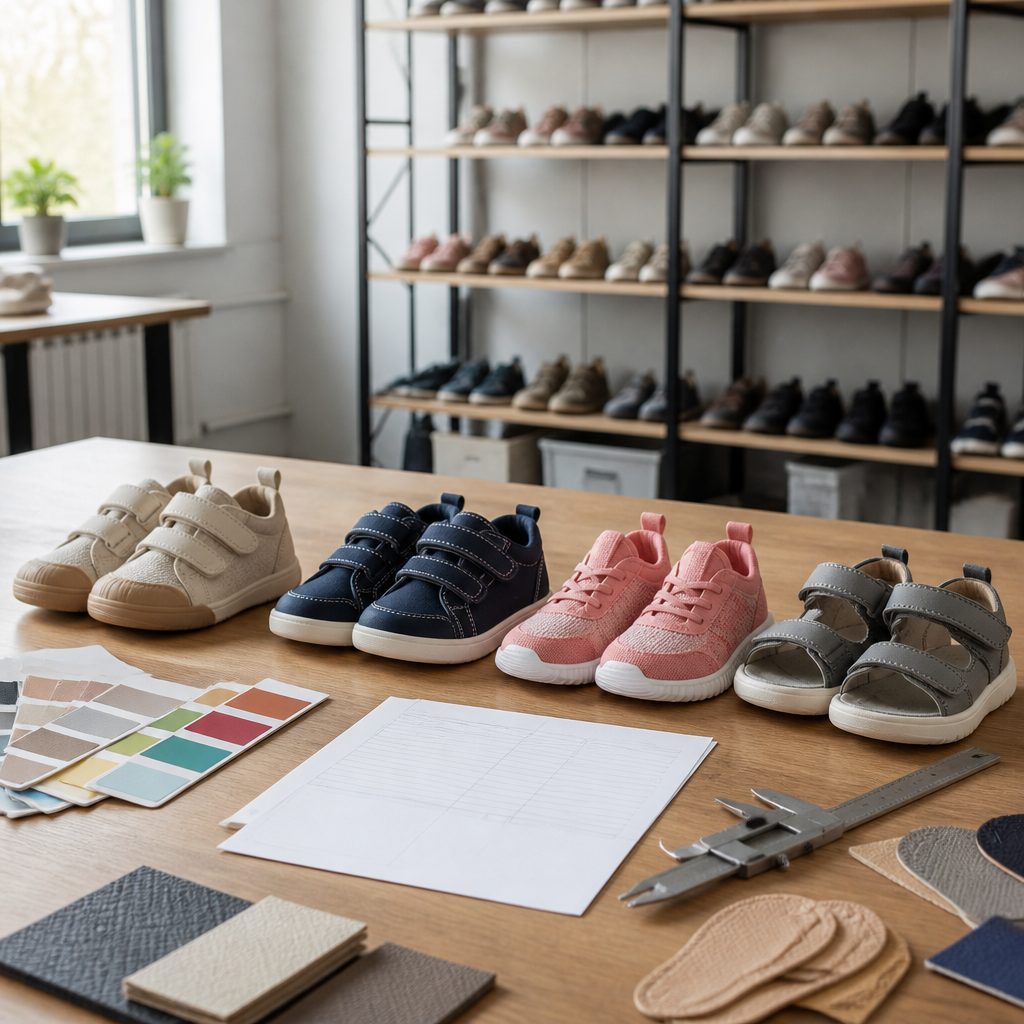
Product and wholesale teams often collapse a children's shoes suppliers fit review into one yes-or-no sample line. Toddler, little-kid, and big-kid wearability then never reach the brief. One approved pair can look clean in photos or on a single foot, then fail when the same style must serve three daily-use age bands. Settle three age-band questions against published quality checkpoints before bulk instead of relying on a longer comfort claim after shipment.
One approved sample is not three age markets
Children's footwear programs rarely stop at one age cohort. A private-label or school-adjacent range may list the same silhouette across toddler, little-kid, and big-kid sizes, especially when the style is meant for daily wear or school retail. Approving one sample without writing those bands into the review leaves the supplier free to interpret fit as a single bulk last or a single size run that happens to look clean.
On KidsShoeWorks product pages, kids' sneakers are positioned as a starting point for private-label and retail orders. They are popular for casual wear, school use, and wide color stories, with build options noted as breathable mesh or PU upper and custom options for colorway, logo, closure, and outsole texture. That framing helps define intended use. It does not prove one sample covers every age market. Fit still has to be stated as wearability criteria for each band you plan to sell.
From a procurement standpoint, multi-age coverage is a specification problem, not a post-shipment return problem. If your assortment will ship more than one age band, the sample sign-off should name which bands were reviewed and what daily-wear conditions each band must meet. Leaving that blank is how a good sample becomes three different failure modes in market.
What the published fit review actually names
KidsShoeWorks quality materials frame fit review in plain terms: toddler, little kid, and big kid sizing are reviewed for day-to-day wearability, with the stated buyer benefit of a better chance of matching the target market. That is the published ceiling. The same quality ladder does not publish size charts, last geometry, millimeter tolerances, or lab fit methods. Absence of those details is an evidence gap, not an invitation to invent them in the brief or assume they exist behind the language.
| Published fit element | What is named | What is not named |
|---|---|---|
| Age bands | Toddler, little kid, big kid sizing | Numeric size runs, growth intervals, or regional size standards |
| Review purpose | Day-to-day wearability | Sport-specific performance claims or lab gait analysis |
| Sample stage items reviewed together | Fit, comfort, logo placement, finish, and closure | Guaranteed bulk outcomes or automatic multi-band coverage |
| Timing context | Checkpoints aligned to the product brief and written inspection plan before bulk | Unscoped comfort language after shipment |
Use that table as a boundary when you write RFQ language. You can require the three age bands to be reviewed for daily wearability against your brief. You cannot honestly claim a factory publishes last drawings or a fixed US size grid if those items are not on the page. If your brand needs charts or measured last notes, state them as buyer-supplied requirements and ask how sample review will align, rather than treating them as already documented supplier standards.
Fit questions that belong before sample approval
Kids footwear age band sizing is not a single comfort checkbox. Attach short, age-specific questions to the current shoe definition before you approve a sample. Keep them inside wearability and intended use. Do not treat the questions as guaranteed outcomes. A children's shoe sample fit review should sit in the same document as colorway, logo, and closure choices when you are building a retail or private-label range with controlled look and repeat supply.
- Which age bands will this style actually ship: toddler, little kid, big kid, or a subset?
- What daily context applies for each band (for example school use versus casual daily wear), and does the brief state that context separately when needs differ?
- Which closure is specified for each band, and is the sample review expected to cover that closure together with fit and comfort?
- What day-to-day wearability means for your target market in practical terms: easy on/off for caregivers, stability for active little kids, or longer wear cycles for bigger kids?
- If only one size is sampled first, which age band does it represent, and which other bands remain open until additional samples or notes exist?
Questions on toddler little kid big kid shoe fit stay editorial until the supplier responds against a written brief. KidsShoeWorks describes sample review as reviewing fit, comfort, logo placement, finish, and closure together. Fit and comfort are described as toddler, little kid, and big kid sizing reviewed for day-to-day wearability. That supports asking for a joint review of those fields. It does not prove that every project automatically receives three fully validated age runs without you naming them.
Material control and construction review as fit protectors
Fit decisions fail when materials and construction drift after the sample. The published quality ladder places material control and construction review next to fit for that reason, without turning either checkpoint into a broader manufacturing claim.
Material control, as stated on the quality page, means upper, lining, outsole, and adhesive choices are confirmed before the sample stage, with the buyer benefit of fewer surprises after sample approval. Construction review means stitching, bonding, flex point, and outsole stability are checked before packing, so problems are caught before the bulk run is finished. Incoming materials inspection also aligns upper, lining, outsole, label, and adhesive samples to the brief. In-line checks cover assembly, stitching, bonding, flex, and stability during production.
For a buyer, the decision value is sequencing:
- Lock material choices that affect volume, stiffness, and foot contact before you treat a sample as the bulk reference.
- Require construction checks that protect how the shoe bends and sits, especially flex point and outsole stability, before packing becomes the conversation.
- Keep sample review of fit and comfort on the same timeline as finish and closure so you are not approving aesthetics alone.
None of that expands into unstated capabilities. It uses the published checkpoints as fit protectors: if materials change after approval, or bonding and flex are left unchecked, age-band wearability you thought you bought can shift even when the silhouette looks the same.
Keep packing, labels, and badges out of the fit decision
Packing discipline matters for logistics, not as a substitute for fit. The quality materials list carton counts, labels, stickers, and export presentation as packing checks for a cleaner handoff to logistics and receiving teams. Final packing reviews carton counts, inner packing, labels, and outer cartons before shipment. Those items protect handover. They do not prove toddler, little-kid, or big-kid wearability.
The same page prefers evidence over badges: inspection photos, measured samples, and the test reports a project actually requires, rather than certifications unrelated to the order. Documentation topics named there include buyer-specific packing labels, market-specific material notes, inspection photo requests, third-party test coordination, and document requests from an importer or retailer. Coordination language is not a standing claim that every order includes every document type.
Editorial guidance for the brief: keep packing and label fields in a separate section from age-band fit. Use packing for receiving readiness. Use fit review for wearability. If a supplier package leads with generic certification talk, ask for the inspection photos, measured samples, or order-specific reports that map to your written plan instead of treating a badge as age-band proof.
Turn open age-band fields into one supplier inquiry
Once design direction is clear, unresolved fit fields should become a single, bounded inquiry rather than a scatter of informal chats. Share one current children's footwear definition, then ask which development, sampling, or quotation options may apply to the project. Do not invent services the evidence does not document, and do not treat inquiry topics as bulk guarantees.
- State the product family and intended use in plain language (for example a kids' sneaker for daily wear and school retail), including closure and any logo or colorway constraints you already know.
- List the age bands in scope: toddler, little kid, big kid, or the subset you will actually buy.
- Write what day-to-day wearability means for each band in operational terms your team can check on sample.
- Note material and construction fields that must stay locked with the sample (upper, lining, outsole, adhesive; stitching, bonding, flex point, outsole stability) so fit is not reviewed in isolation.
- Separate packing and label requirements so they do not dilute the fit questions.
- Ask which sampling path, quotation path, or development options apply to that definition, and which age bands can be reviewed together on the first sample set.
A hypothetical illustration: a buyer planning little-kid and big-kid sizes of one school-oriented sneaker, while still undecided on toddler, would mark toddler as out of scope for the first sample, state wearability needs for the two included bands, and ask only which sampling and quotation options apply to that narrower definition. The illustration is not a customer case and does not imply a fixed MOQ or lead time.
When those fields are written once, a request for quote becomes a fit-specification decision rather than a vague comfort request. For checkpoint detail, start from the published quality control ladder. For product family context, review the children's footwear products overview. For channel framing on branded ranges, see industry and channel notes. Keep the inquiry focused on the definition you can actually approve, and leave packing, badges, and unstated size systems outside the fit gate until evidence supports them.
Sources and verification
- Quality Control for Children's Shoes | KidsShoeWorks First-party site source
- Children's Footwear Products | KidsShoeWorks First-party site source
- Kids' Footwear by Industry & Channel | KidsShoeWorks First-party site source
Share the current children's footwear definition and ask which development, sampling or quotation options may apply to the project.
Send your project brief