Sourcing
Children's Shoes Pre-Sample Material Checklist
A pre-sample material checklist for children's footwear programs: lock upper, lining, outsole, and adhesive first so sample approval is limited to fit, comfort, logo, finish, and closure.
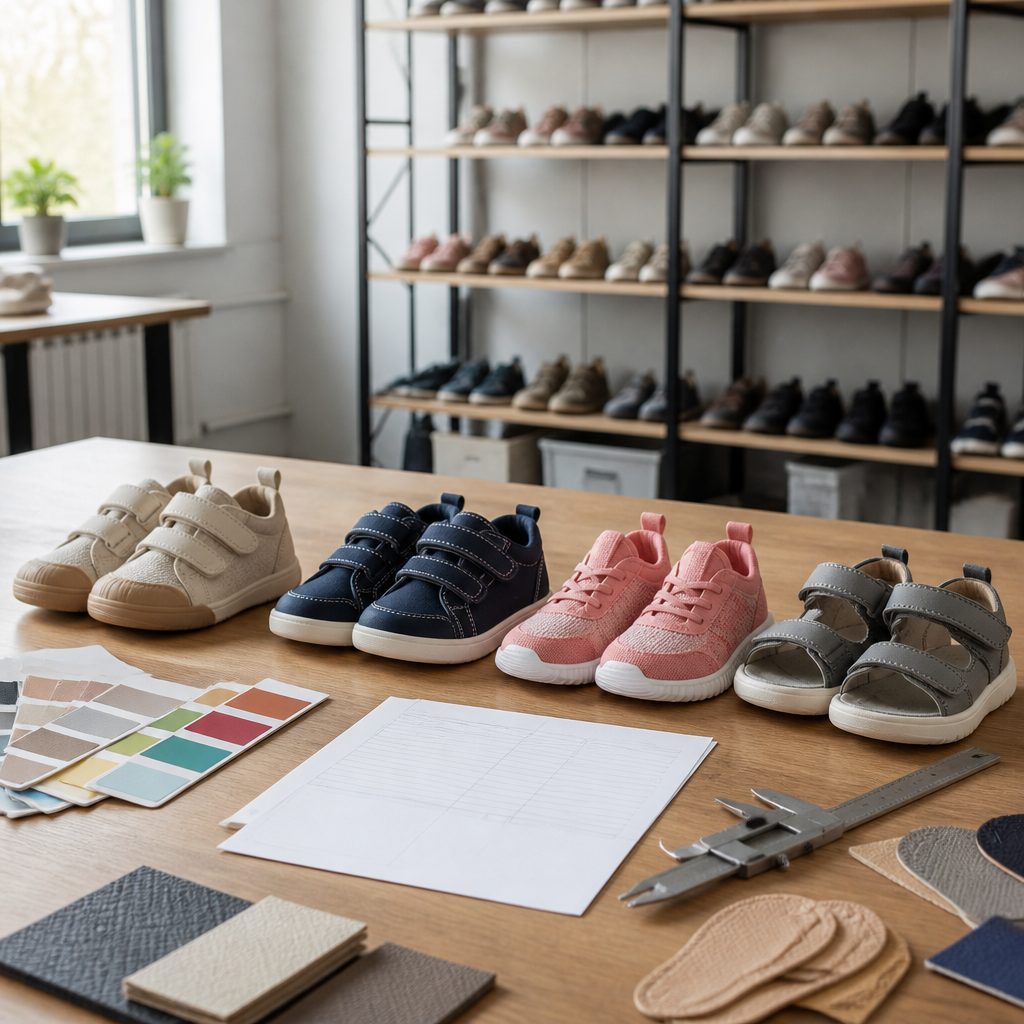
A children's shoes pre-sample material checklist exists for one practical reason: bulk variance that sample approval never controlled. Buyers still send children's footwear into sampling while upper, lining, outsole, and adhesive stay open. The physical sample then freezes look and wear feel, not the material stack that will drive the bulk run.
Treat pre-sample material confirmation as its own stage, not a footnote on the sample form. On the quality control page, material control is framed as upper, lining, outsole, and adhesive choices confirmed before the sample stage, with fewer surprises after sample approval as the stated buyer benefit. When those four fields are already locked to the brief, sample review can stay limited to fit, comfort, logo placement, finish, and closure.
Stop treating the sample as the first hard gate
Sample-first work feels efficient. The team wants something to hold, photograph, and circulate before the brief is fully written. Later, the approved sample is treated as a full material reference even though the material set was never locked. Incoming bulk can then differ in hand feel, bond behavior, outsole compound, or lining hand without anyone breaking a written material decision, because none existed.
The failure is one of timing. Material confirmation belongs before sampling so the sample is judged against a fixed stack, not used as a stand-in for defining that stack. Do not treat a sample request as permission to leave materials open until the team has seen a pair. That is an editorial recommendation for the buyer, not a documented factory rule.
Four material fields that must precede any sample request
Confirm upper, lining, outsole, and adhesive for kids footwear as four separate fields rather than one vague materials line. The quality ladder lists them together as the pre-sample control set. Keeping them separate in the brief makes gaps visible before anyone cuts a sample.
| Field | What the buyer should lock | Why it belongs before sampling |
|---|---|---|
| Upper | Construction family and surface character the program will run (for example mesh or PU on a sneaker brief, stated as a named choice rather than "similar to reference photo"). | Upper swaps after sample approval change breathability, stiffness, logo adhesion, and color behavior even when the last is unchanged. |
| Lining | Contact surface and intended wear role, not only a color note. | Lining changes alter comfort reading at sample stage and bulk wear feel without changing exterior photos. |
| Outsole | Compound family, texture direction, and the wear role the outsole must serve. | Outsole substitutions alter flex, grip, weight, and logo-to-sole balance after the sample already "passed." |
| Adhesive | Bond intent for the construction path, tied to the upper and outsole pair already named. | Adhesive left open is a common source of post-sample variance that sample photos never show. |
These four fields do not require a full construction review yet. They only need enough definition that the sample cannot be read as permission to reinterpret materials later. If one field is still "TBD," the program is not ready for a sample that will be used as a bulk reference.
Keep material language inside published product scope
Material wording should stay inside what is already documented for the product family. That keeps the brief honest and stops the sample request from inventing a capability the published range does not state.
On the materials page, engineered mesh is described as light, breathable, knit-style uppers for warm-weather and active styles, and is listed as used in kids' sneakers, sports runners, and sandals. Do not stretch that line into a general upper claim for every children's category. If the program is a sneaker, sports runner, or sandal and mesh is the intended upper path, say that explicitly and stop there.
On the products page, kids' sneakers are positioned as a starting point for private-label and retail orders for daily wear and school retail. Build language names breathable mesh or PU upper. Custom language names colorway, logo, closure, and outsole texture. Keep those statements separate. Mesh-or-PU is a build choice for that sneaker family; colorway, logo, closure, and outsole texture are custom axes. They are not a free pass to rewrite lining or adhesive after the sample ships. OEM children's sneakers material confirmation should therefore name the four fields in the current brief even when the silhouette is familiar. "Same as last season" without those fields only freezes whatever the last physical pair happened to be.
Re-scope sample review after materials are locked
After materials are confirmed, sample review has a narrower job. The same quality page separates sample review from material control: fit, comfort, logo placement, finish, and closure are reviewed together so the bulk run has a better chance of matching the approved sample. Use these children's shoe sample review checkpoints only against materials already locked.
- Fit against the size story the program intends to sell, without reopening upper or outsole chemistry.
- Comfort in day-to-day wear terms the target age band will actually feel.
- Logo placement relative to panels and closure hardware already defined.
- Finish quality on surfaces that the locked materials can realistically deliver.
- Closure function and alignment once the upper path is fixed.
Fit language on that page covers toddler, little kid, and big kid sizing as a review scope for day-to-day wearability. Use those bands only as fit-review categories, not as a claim that one sample covers every age market. If the brief spans more than one band, say which band the sample represents and which bands still need their own fit pass later.
If a comment would change upper, lining, outsole, or adhesive, send it back to the pre-sample material gate. Mixing those decisions on the sample form is how "approved sample" and "approved materials" stop meaning the same thing.
Hold construction, packing, and proof topics for later gates
Once materials and sample review are sequenced, resist loading the pre-sample brief with every later checkpoint. Construction review on the quality ladder covers stitching, bonding, flex point, and outsole stability before packing. Those checks matter, but they are not substitutes for locking materials. A buyer who only asks about flex or stitch neatness while leaving adhesive open has not closed the earlier gate.
Packing discipline covers carton counts, labels, stickers, and presentation for the export run. That is a logistics and receiving handoff topic. It does not tell a factory which lining or outsole to run. Keep packing notes for a later brief, not as cover for missing material fields.
Documentation topics listed for alignment include buyer-specific packing labels, market-specific material notes, inspection photo requests, third-party test coordination, and document requests from an importer or retailer. The same page prefers evidence such as inspection photos, measured samples, and the test reports a project actually requires over certifications unrelated to the order. Ask for those proof items when the program needs them. Do not treat third-party testing language as an in-house lab claim, and do not use document lists to delay naming upper, lining, outsole, and adhesive.
Channel fit stays separate from material readiness
Retail and private-label work often adds packaging, look control, and repeat-supply expectations. The industries page describes retail and private-label brands as branded ranges with controlled look, packaging, and repeat supply. Those are channel requirements. They sit beside the product definition; they do not replace it.
A controlled look still needs a locked upper and outsole. Private-label packaging still needs a lining and adhesive decision before the sample becomes a bulk reference. Channel fit answers who will sell the shoe and how it should present. Material readiness answers what the shoe is made of before anyone samples it. Keep those questions on separate lines of the brief so packaging ambition does not hide an open material stack.
Send one material-locked definition with the next inquiry
When the four fields are still open, do not send a vague sample request and hope the first pair will decide materials. Send one current footwear definition that already states them, then ask which development, sampling, or quotation path may apply to that definition. That invitation is a buyer question about routing, not a promise that every path is available for every brief.
- Name the product family in published terms (for example kids' sneakers for daily wear or school retail) and the age band the first sample should represent.
- State upper, lining, outsole, and adhesive as four closed fields, using only material language that fits the published scope for that family.
- List the sample-stage decisions you will accept later: fit, comfort, logo placement, finish, and closure against those locked materials.
- Park construction, packing, inspection photos, and any third-party report coordination as later checkpoint questions rather than pre-sample substitutes.
- Share that single definition through the request a quote path and ask which development, sampling, or quotation options may apply to the project as written.
If a field cannot be closed yet, say so and delay the sample request. A partial brief that forces sampling early only recreates the failure mode this checklist is meant to prevent: sample approval without material control, followed by bulk surprises the sample never governed.
Sources and verification
- Quality Control for Children's Shoes | KidsShoeWorks First-party site source
- Kids' Shoe Materials | Mesh, PU, Canvas, Rubber & EVA | KidsShoeWorks First-party site source
- Children's Footwear Products | KidsShoeWorks First-party site source
- Kids' Footwear by Industry & Channel | KidsShoeWorks First-party site source
Share the current children's footwear definition and ask which development, sampling or quotation options may apply to the project.
Send your project brief