Quality and Production
Children's Shoes In-Line Production Checks
After sample approval, construction issues still surface in bulk. Isolate the in-line window for stitching, bonding, flex, and stability so buyers can act before cartons close.
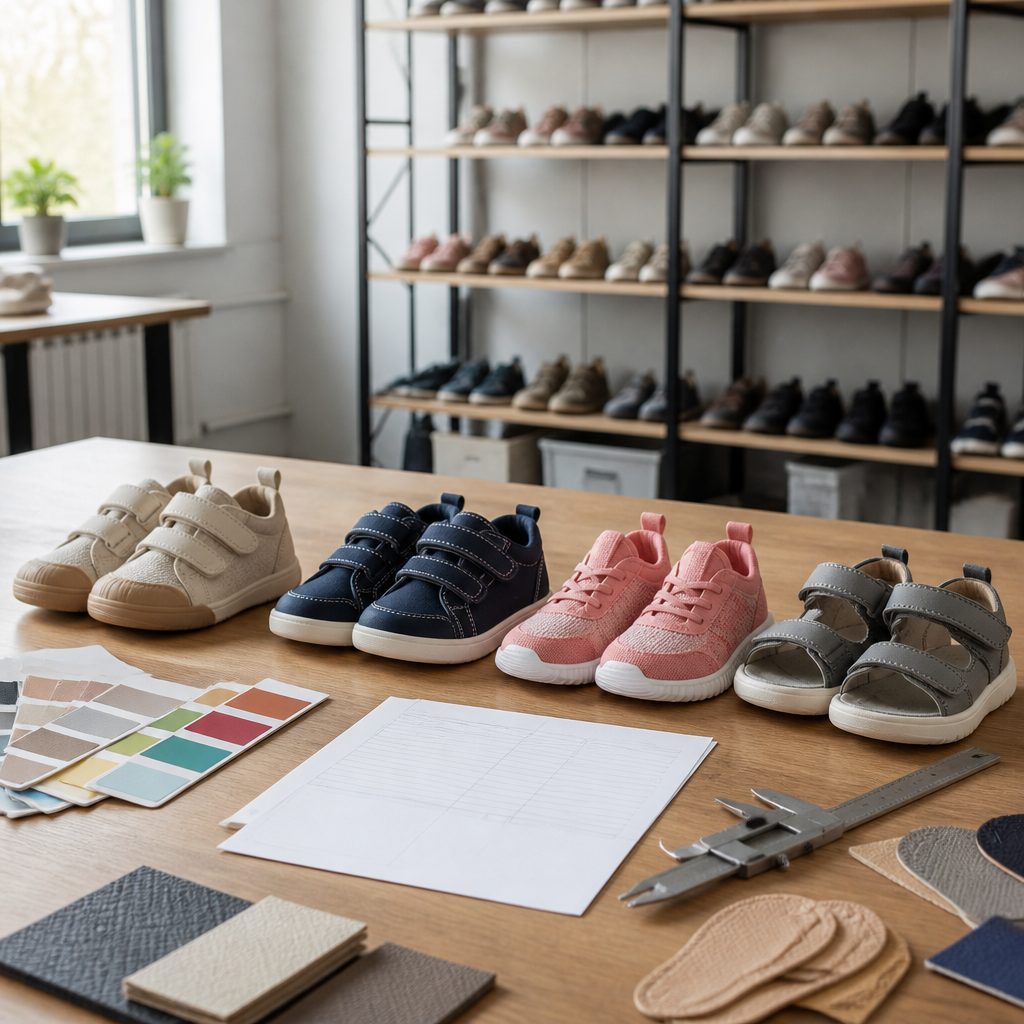
After a sample is approved, product and procurement teams often lose a clear view of the bulk run. Bonding, flex, stitching, and outsole stability problems surface only when cartons are already closed. Children's shoes in-line production checks fill that mid-run gap: a decision window while assembly is still open, separate from sample approval and from final packing review.
The buyer task is to name which construction and fit questions must still be settled while the line is running, so finished goods are not the first serious look at bulk quality. KidsShoeWorks publishes two related structures on its quality page: a quality ladder (material control, fit and comfort, construction review, packing discipline) and a set of inspection checkpoints (incoming materials, sample review, in-line checks, final packing). This article stays inside the mid-run slice—construction review and in-line checks—so suppliers can be briefed without reworking receiving or packing content covered elsewhere.
The problem starts after sample approval, not at packing
Sample approval closes visual and fit questions for a controlled unit. It does not keep assembly open for debate once bulk sewing and bonding begin. When packing is treated as the next real checkpoint, seam failure, weak bonding, stiff flex points, or unstable outsoles appear only after units are boxed. Rework is then costly, and schedule pressure often overrides construction fixes.
The period between sample sign-off and carton discipline is its own decision window. On the published quality page, construction review checks stitching, bonding, flex point, and outsole stability before packing, with the stated buyer benefit that problems are caught before the bulk run is finished. In-line checks are listed among the inspection checkpoints as assembly, stitching, bonding, flex, and stability during production, again with the benefit of catching issues before the order is fully packed. Together those statements define the mid-run job: verify how the shoe is being built while correction is still possible.
Mid-run photos or checklists do not guarantee bulk will match the sample. They give procurement a practical chance to keep construction fields open long enough to act, then close packing as a later stage.
Separate three windows: materials, sample, in-line
KidsShoeWorks frames inspection as starting before bulk production, with checkpoints aligned to the product brief and a written inspection plan. For children's footwear bulk production inspection, keep three early windows distinct rather than collapsing them into one vague QC step.
- Incoming materials. Upper, lining, outsole, label, and adhesive samples are aligned to the brief so fewer surprises appear after sample approval. Material control on the quality ladder confirms upper, lining, outsole, and adhesive choices before the sample stage.
- Sample review. Fit, comfort, logo placement, finish, and closure are reviewed together, with the stated aim of improving the chance that the bulk run matches the approved sample.
- In-line checks. Assembly, stitching, bonding, flex, and stability are checked during production so problems can be caught before the order is fully packed.
Material and sample windows answer different questions than in-line work. Materials settle what enters the build. Sample review settles whether the approved unit is acceptable for look, fit, and finish. In-line work asks whether open bulk assembly still follows that intent while units are being made. If those stages blur, teams either reopen settled material choices too late or skip assembly scrutiny until packing photos arrive.
For programs aimed at retail and private-label ranges with controlled look, packaging, and repeat supply, this separation also protects brand consistency: construction drift during the first bulk run is harder to reverse after cartons leave the factory. Keep the in-line brief focused on assembly behavior, not on re-selecting materials that should already have been locked.
Construction fields that still belong to the mid-run window
Only the construction items published for in-line checks and construction review belong in this window. The table maps those fields to the buyer decision they support. Nothing here invents lab methods, pass rates, or a guarantee of sample match.
| Field | Published mid-run scope | Buyer decision while assembly is open |
|---|---|---|
| Stitching | Checked during in-line production and in construction review before packing | Is stitching still consistent with the approved construction, or does the line need a stop and rework instruction? |
| Bonding | Checked during in-line production and in construction review before packing | Are bonds holding as intended before volume is complete? |
| Flex point | Named in construction review before packing | Does flex still land where the design intends for daily wear, or is bulk feel stiff or off-point? |
| Outsole stability | Named in construction review before packing | Is outsole stability still acceptable on mid-run units, or are stability issues showing before packing? |
| Assembly (overall) | Named among in-line checks during production | Are components assembling correctly before packing discipline begins? |
These fields form a practical children's shoe construction review during production. They are useful because packing has not yet frozen the order. Once final packing starts, carton counts, labels, and export presentation take over, and construction correction becomes a different commercial conversation.
Fit bands after sample: what remains a review question
Fit does not disappear after sample approval, but its scope must stay inside what is published. The quality ladder lists fit and comfort as a review of toddler, little kid, and big kid sizing for day-to-day wearability, with the buyer benefit framed as a better chance of matching the target market. Sample review also groups fit and comfort with logo placement, finish, and closure.
During production, a buyer can still ask whether mid-run units in the same size bands feel consistent with the approved sample for the intended age group. That remains a review question. Keep language tied to the three published bands (toddler, little kid, big kid) and to wearability, then ask the supplier how fit will be sampled or photographed during the run if that matters for your channel. Do not invent sizing standards, last measurements, or test results the source does not provide.
When a school or retail program spans more than one band, note which bands are in the current bulk release and agree a mid-run sample plan. Without that plan, fit drift can go unnoticed until later market feedback—buyers should treat that risk as a procurement planning issue, not as a published factory metric.
Material statements stay at their published scope
In-line checks are not a second materials selection meeting. Material language should stay where the sources put it: confirmed before sample, and described only within published product and material notes.
- Pre-sample material control. Upper, lining, outsole, and adhesive choices are confirmed before the sample stage so fewer surprises follow sample approval. Incoming materials also cover upper, lining, outsole, label, and adhesive samples aligned to the brief.
- Kids' sneaker build options. On the products page, kids' sneakers are described as a starting point for private-label and retail orders, with a build that may use a breathable mesh or PU upper, and customization called out for colorway, logo, closure, and outsole texture.
- Engineered mesh scope. Materials copy describes engineered mesh as light, breathable knit-style uppers for warm-weather and active styles, with breathable, lightweight, and quick-dry attributes, used in kids' sneakers, sports runners, and sandals. Do not expand that into unstated durability, waterproofing, or performance claims.
If a mid-run unit shows a material mismatch, the buyer question is alignment to the brief already agreed, not a fresh open-ended materials redesign. For mesh programs, keep the brief inside warm-weather and active styles already named for those product families. Link material intent back to your materials notes and product family on products before the line starts, then use in-line time for assembly behavior.
Turn open mid-run fields into supplier questions
Unresolved assembly and construction cells become useful only when they turn into discrete inquiry topics. KidsShoeWorks lists documentation topics buyers can align around, including inspection photo requests, third-party test coordination, market-specific material notes, buyer-specific packing labels, and document requests from an importer or retailer. Treat those as alignment options a project may request, not as standing service promises or proof of every order outcome. The same page prefers evidence such as inspection photos, measured samples, and the test reports a project actually requires over unrelated certifications.
A practical mid-run checklist for sample to bulk children's shoes checks can look like this:
- Which assembly, stitching, bonding, flex, and stability photos will be shared while the bulk run is still open?
- Which checklist items map to the approved sample construction, and who signs off if mid-run units diverge?
- If third-party testing is required by your importer or retailer, which reports does this project actually need, and when should samples be pulled relative to packing?
- Are measured samples part of the evidence set for this run, consistent with an evidence-over-badges approach rather than unrelated certificates?
- Which fit bands (toddler, little kid, big kid) will be photographed or measured mid-run for wearability checks?
One bounded supplier note is enough. List the open fields, attach the current shoe definition, and ask how the factory will sequence in-line evidence before packing. Avoid turning the note into a parallel mini-submission for every size colorway unless the project truly needs that volume of documentation.
What packing is not: a boundary before the handover brief
Final packing is a later stage. Packing discipline on the quality ladder reviews carton counts, labels, stickers, and presentation for the export run, with a cleaner handoff to logistics and receiving teams as the buyer benefit. Final packing among the inspection checkpoints covers carton counts, inner packing, labels, and outer cartons before shipment.
That work matters, but it is not a substitute for children's shoes in-line production checks. If packing is the first time construction is scrutinized, the bulk run is already finished. Keep this article's scope on assembly openness. Carton and label detail belongs in a separate receiving or packing brief so mid-run construction questions do not get buried under export presentation fields.
Send one mid-run definition with the current shoe brief
Use a single handoff rather than a long chain of partial emails. Share the current children's footwear definition (product family, size bands, materials already locked, construction intent). List the open in-line fields: assembly, stitching, bonding, flex, stability, and any fit-band review still required. Then ask which development, sampling, or quotation options may apply to the project. That invitation is a buyer request, not a documented service menu beyond what the site already publishes.
- Reference the approved sample and the written inspection plan you expect the run to follow.
- Call out the construction fields that need evidence while assembly is still open—assembly, stitching, bonding, flex, and stability.
- Flag only the documentation alignments this project needs (for example inspection photos or third-party test coordination); do not assume they run automatically on every order.
- Hold packing labels and carton rules for the handover stage after construction is settled.
- When that definition is ready, share it through the quote path and ask what applies next.
For a deeper view of the full quality ladder and inspection checkpoints, see the site's quality control page. Channel context for retail and private-label programs sits under industries. When the mid-run definition is ready, request a quote and include the open in-line fields with the current shoe brief so the conversation starts on construction timing, not only on finished photos after packing.
Sources and verification
- Quality Control for Children's Shoes | KidsShoeWorks First-party site source
- Children's Footwear Products | KidsShoeWorks First-party site source
- Kids' Shoe Materials | Mesh, PU, Canvas, Rubber & EVA | KidsShoeWorks First-party site source
- Kids' Footwear by Industry & Channel | KidsShoeWorks First-party site source
Share the current children's footwear definition and ask which development, sampling or quotation options may apply to the project.
Send your project brief