Quality & Sampling
Bulk Gate: Infant Shoes Wholesale Sample Approval Checklist
Partial sample sign-off leaves bulk without a full comparison package. Use the five sample-review fields as one gate, place them on the quality ladder, and keep infant-specific rows open until the brief defines them.
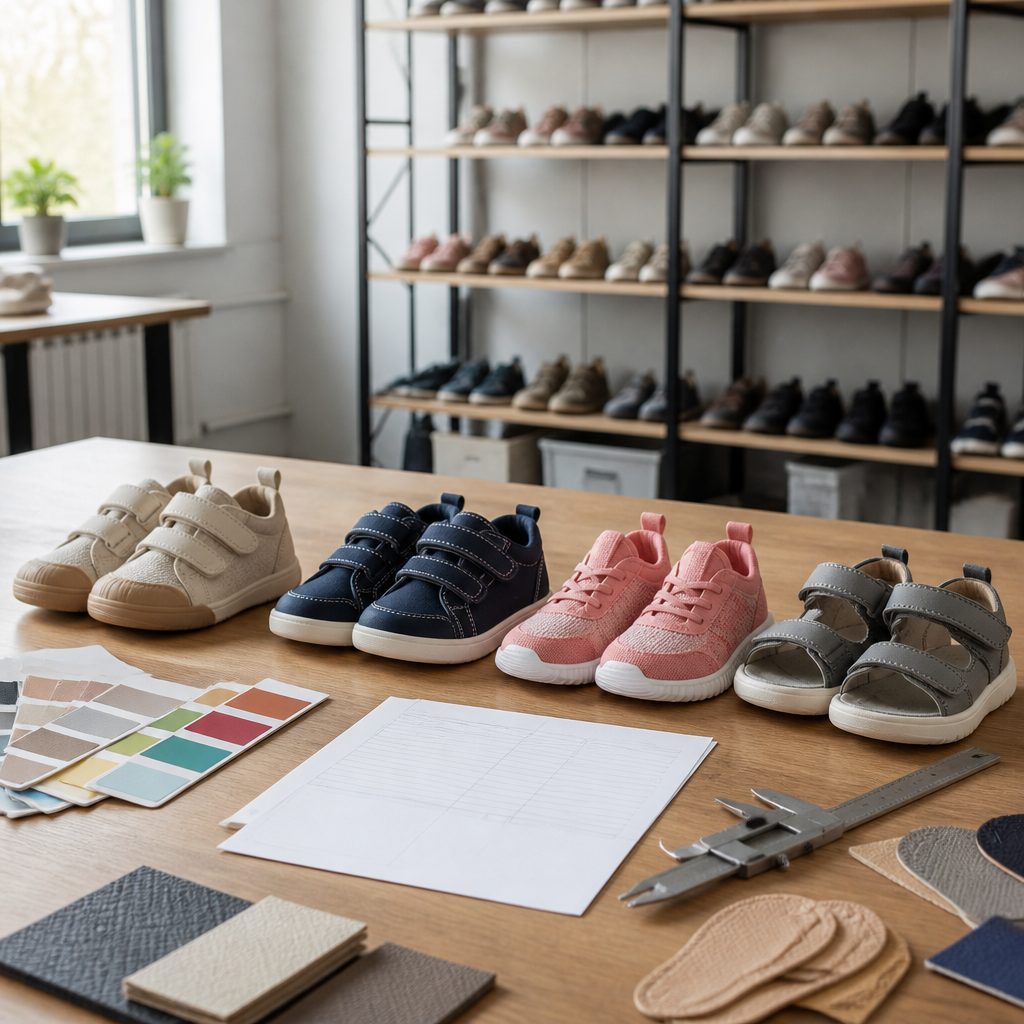
Cartons can look acceptable on a desk and still fail once the shoes are worn. That bulk mismatch often starts when an infant shoes wholesale sample approval checklist is reduced to a color chip, a logo photo, or one polished image. Those narrow OKs do not lock fit, comfort, logo placement, finish, and closure as one comparison package. Production then has no complete standard to match. The cost shows up as mismatched bulk, not as a missing badge on a quality page.
Treat sample review as a multi-field gate on the children's footwear quality ladder: material choices and incoming materials first, sample review as the comparison package, then in-line checks and final packing. Stay inside the field list on the quality page. Do not invent an infant product family, size run, or measurement protocol. Where infant detail is still undefined, leave the row open in the buyer brief and raise it when you discuss development, sampling, or quotation options.
What still goes wrong after a partial sample OK?
Under schedule pressure, a visual OK on color, logo art, or a single product photo can feel decisive enough to release an infant shoes wholesale order. It is not. The rest of the comparison package remains unsettled. Without a locked sample for fit, comfort, logo placement, finish, and closure reviewed together, the factory and the buyer do not share one standard for what bulk must match.
The failure mode is operational. Cartons can pass a photo review and still deliver shoes that feel wrong on the foot, open poorly, or show finish that drifts from the approved piece. For wholesale programs, that mismatch arrives late, after materials, tooling, and line time are committed. Treat any single-attribute sign-off as provisional until the full sample-review set is written into the project record and confirmed against physical samples.
Five sample-review fields as one comparison package
On the quality page, sample review covers fit, comfort, logo placement, finish, and closure together. The stated buyer benefit is a better chance that the bulk run matches the approved sample. No single field substitutes for the package. Approving logo placement alone does not settle comfort. Approving finish alone does not settle closure or fit.
| Sample-review field | Buyer action in the gate |
|---|---|
| Fit | Confirm size intent on the physical sample, then hold that result until the other four fields are also locked |
| Comfort | Record day-to-day wear feel on the same sample set used for fit; never release bulk on comfort alone |
| Logo placement | Verify position and method on the approved piece, not only on artwork, and keep it inside the full package |
| Finish | Capture surface and assembly appearance so bulk has a visual match target beyond a single photo |
| Closure | Test open-and-close action on the sample before bulk; logo or finish OKs do not replace this check |
Use the five infant shoes wholesale sample review fields as one gate, not five optional add-ons. If one field remains unreviewed, the bulk comparison standard is incomplete. That is the practical core of an infant shoes wholesale bulk sample match problem: partial paperwork cannot stand in for a full sample package.
Where sample review sits on the quality ladder
Sample review is neither the first nor the last control. Sequence matters because each checkpoint answers a different question. Keep material-related rows separate rather than merging lists and timing from adjacent quality-page tables.
- Material control. Upper, lining, outsole, and adhesive choices are confirmed before the sample stage. The stated benefit is fewer surprises after sample approval.
- Incoming materials. Upper, lining, outsole, label, and adhesive samples are aligned to the brief. The stated benefit is fewer surprises after sample approval. This is its own checkpoint; it is not the same row as material control.
- Sample review. Fit, comfort, logo placement, finish, and closure are reviewed together so bulk has a better chance of matching the approved sample. This is the comparison-package gate for production intent.
- In-line checks. Assembly, stitching, bonding, flex, and stability are checked during production so problems are caught before the order is fully packed. These checks assume a sample standard already exists; they do not replace it.
- Final packing. Carton counts, inner packing, labels, and outer cartons are checked before shipment for a cleaner export handover. Packing quality cannot repair an unapproved fit or closure decision made upstream.
Write the brief so material confirmation and incoming-material alignment precede sample sign-off, and so in-line and packing work against the locked sample rather than against loose photos. That ladder language is what the quality page publishes. It is not a claim that every infant field is pre-specified by the factory.
Can sneaker or mesh copy set infant sample criteria?
Product and material pages describe kids' sneakers and engineered mesh at their own scopes. They are useful for construction vocabulary. They do not document infant as a product family or as a default sample template.
On the products page, kids' sneakers are positioned as a starting point for private-label and retail orders, with breathable mesh or PU upper builds and custom options for colorway, logo, closure, and outsole texture. That language applies to kids' sneakers as presented there. It does not define infant sample criteria or an infant wholesale size run.
On the materials page, engineered mesh is described as light, breathable, knit-style uppers for warm-weather and active styles, used in kids' sneakers, sports runners, and sandals. Those use cases are the boundary. They do not expand mesh into a confirmed infant sample default, and they do not make sneaker custom options automatic infant fields.
Keep sneaker build notes and mesh attributes as optional inquiry topics when an infant program needs them. Do not paste them into the sample approval checklist as if infant defaults already existed on those pages.
Fit brackets that stop short of infant sizing
The quality page names fit-review brackets as toddler, little kid, and big kid sizing, reviewed for day-to-day wearability. Those are the only fit brackets in the evidence set. The page does not publish an infant size chart, an infant grade run, or a measurement protocol beyond the sample-review field list.
If a project uses the word infant, the buyer brief must define what that means for this order: size intent, foot-shape assumptions, and the comparison method on samples. Do not infer a factory infant size run from toddler or little-kid language. Keeping the labels separate protects both sides and forces infant-specific intent into writing before bulk is released.
When comparing samples, state whether fit review is against the toddler bracket, another listed bracket, or a project-defined infant intent that the brief owns. Ambiguity here is a common path to bulk that matches a photo and still fails the commercial fit expectation.
Sample-stage proof versus later documentation
Time proof requests. The quality page prefers inspection photos, measured samples, and the test reports a project actually requires over certifications that have nothing to do with the order. That stance belongs at sample and inspection stages, when the comparison standard is still being set.
Documentation topics listed for alignment include buyer-specific packing labels, market-specific material notes, inspection photo requests, third-party test coordination, and document requests from an importer or retailer. Those are alignment topics, not a guarantee that every item is included on every order. Keep them distinct from the sample-review field package.
- At sample stage (comparison package): request inspection photos and measured samples tied to fit, comfort, logo placement, finish, and closure; add project-required test reports only when the brief names them.
- Later or parallel documentation topics: packing labels, market material notes, third-party test coordination, and importer or retailer document packs. Time these so they do not substitute for sample sign-off.
- What not to assume: a standing library of badges, always-included third-party tests, or a wear-test protocol more detailed than the quality-page language. If the project needs a specific report, write it into the brief as a project requirement.
This split keeps infant shoe sample approval before production focused on the comparison package, while still allowing buyers to ask about channel documents when the route requires them.
Program-format notes without an infant sample result
The case-study format page shows an example of how a private-label sneaker program can be scoped, sampled, and run. Use it only as a structure reference for process questions. It is not a completed infant case, not a quantity record, and not proof of infant bulk outcomes.
If a mental model helps, a hypothetical buyer might map their own infant brief onto a similar scope–sample–run sequence, then fill every undefined infant row themselves. That illustration is hypothetical; it is not a customer result and should not be read as evidence of infant program volumes or sample pass rates.
Link product-family and quality pages for shared vocabulary (the children's footwear product families, materials notes, and quality control ladder), then return to the infant brief for anything those pages do not specify.
Questions that keep open sample rows visible
When infant detail is undefined, keep the row visible rather than filling it with borrowed sneaker copy. A short inquiry set can preserve those unknowns and invite a concrete conversation about development, sampling, or quotation options without treating those topics as confirmed service packages.
- Which of the five sample-review fields (fit, comfort, logo placement, finish, closure) are already locked on physical samples, and which remain open?
- How does this project define infant for size intent, and how should that definition relate to the toddler, little-kid, and big-kid fit brackets?
- Are upper, lining, outsole, and adhesive choices already confirmed before sample sign-off, and are upper, lining, outsole, label, and adhesive samples aligned to the brief?
- Which sample-stage proofs does the project require (inspection photos, measured samples, named test reports), and which documentation topics (packing labels, market material notes, third-party test coordination, importer or retailer documents) belong later?
- Which development, sampling, or quotation options may apply to this project, based on the current definition rather than on assumptions from kids' sneaker or mesh pages?
Share the current children's footwear definition, list the open sample rows, and ask which development, sampling, or quotation options may apply. That keeps the infant shoes wholesale sample approval checklist honest: the comparison package is locked where the quality page supports it, and every undefined infant field stays a brief row until the project writes it down. Start from the request a quote path when the brief is ready for that conversation, and keep the program format example as structure only, not as an infant outcome claim.
Sources and verification
- Quality Control for Children's Shoes | KidsShoeWorks First-party site source
- Children's Footwear Products | KidsShoeWorks First-party site source
- Kids' Shoe Materials | Mesh, PU, Canvas, Rubber & EVA | KidsShoeWorks First-party site source
- Kids' Shoe Programs: Case Study Format | KidsShoeWorks First-party site source
Share the current children's footwear definition and ask which development, sampling or quotation options may apply to the project.
Send your project brief