Sourcing Guides
Breathable Mesh Wholesale Children's Sneakers Spec Guide
Warm-weather kids sneaker briefs often skip mesh performance language. Bound engineered mesh to published properties, place it in the sneaker family, and confirm materials before any sample photo.
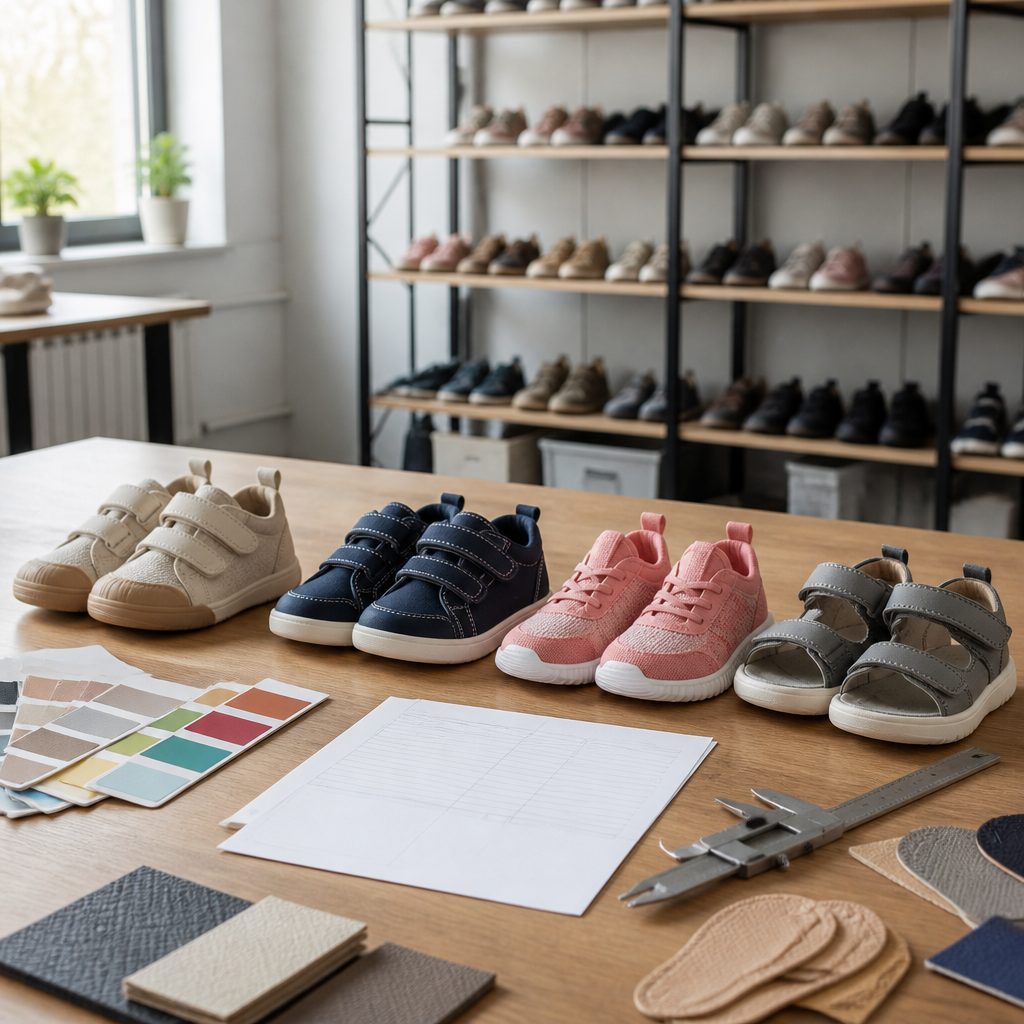
For breathable mesh wholesale children's sneakers, engineered mesh is a product decision that belongs in the brief before sampling. Colorways and logos often arrive first, while breathability, weight, and warm-weather or active use stay unwritten. When those upper notes never enter material control or sample review, later checks have little to protect. Bound mesh only by published properties and the kids-sneaker family so custom colorway, logo, closure, and outsole texture work cannot quietly replace the upper brief.
Why warm-weather sneaker briefs fail before sampling
The gap is practical. A buyer sends retail look notes for casual or active kids sneakers and treats “mesh” as shorthand for light, breathable, and quick-drying once production starts.
Without a written upper-performance brief, sample photos can still look right while material choice, weight intent, and use climate remain open. Construction and packing reviews then measure what was built, not what the warm-weather story required. On the KidsShoeWorks product family page, kids' sneakers are a starting point for private-label and retail orders aimed at casual wear, school use, and a wide color story, with daily wear and school retail as the stated best-fit roles. That commercial frame does not define mesh performance by itself. If breathability and climate intent never appear in the brief, a later dispute over the upper has no shared reference.
Editorial recommendation for procurement teams: put climate and activity intent in the same document as colorway and logo notes, before anyone treats a sample image as approval of the upper system.
Published mesh claims you can put in a buyer brief
The materials page describes engineered mesh with a fixed set of phrases. Use only those phrases when you define the upper for warm-weather or active kids sneakers. Expanding beyond them invents performance language the source does not support.
- Light, breathable, knit-style uppers
- Positioned for warm-weather and active styles
- Labeled breathable, lightweight, and quick-dry
- Listed as used in kids' sneakers, sports runners, and sandals
Those claims are the only mesh performance language supported for a wholesale brief. They do not prove lab ratings, wear-test hours, or category performance outside the listed uses. If your program needs market-specific material notes or project test reports, treat those as separate documentation topics rather than as properties already stated for engineered mesh. A buyer drafting an engineered mesh kids sneakers wholesale upper line can paste the published attributes and stop there. Adding unlisted claims such as waterproofing, insulation, or school-uniform durability would change the product definition without source support.
Where mesh sits inside the kids sneaker product family
Mesh is one published build option inside the kids' sneaker family, not a free-standing category. The product page places kids' sneakers as a strong starting point for private-label and retail orders, popular where brands want casual wear, school use, and a wide color story. Best-fit roles listed there are daily wear and school retail. Build options listed for that family are breathable mesh or PU upper.
| Decision field | Published scope for kids' sneakers |
|---|---|
| Program role | Private-label and retail starting point; casual wear, school use, wide color story |
| Best-fit retail roles | Daily wear and school retail |
| Upper build options | Breathable mesh or PU upper |
| Custom fields listed with the family | Colorway, logo, closure, and outsole texture |
Keep the mesh choice inside that published family. A wholesale kids sneakers warm weather upper still sits under the sneaker family. It does not automatically extend to unlisted styles, infant categories, or markets not named in the excerpts. When you select breathable mesh rather than PU, you are choosing one of the two published upper builds for that family, then carrying the mesh performance phrases from the materials page into material control.
Material control must precede the sample photo
Kids sneaker material control before sample is the checkpoint that keeps a mesh-led brief from being renegotiated after appearance approval. The quality page states that upper, lining, outsole, and adhesive choices are confirmed before the sample stage, with the buyer benefit described as fewer surprises after sample approval. Incoming materials checks align upper, lining, outsole, label, and adhesive samples to the brief for the same reason.
- Write the upper as engineered mesh using only the published light, breathable, knit-style, warm-weather/active, lightweight, and quick-dry language.
- Confirm lining, outsole, and adhesive choices in the same material-control pass so the mesh upper is not isolated from the rest of the stack.
- Do not treat a sample photo as material approval if those choices were never set.
- Carry the same upper and stack language into sample review so fit, logo, finish, and closure are judged against the mesh brief, not against a silent substitute.
This sequence is buyer discipline aligned to the published ladder, not a claim that any single factory step is automatic. The quality page also notes that children's shoes need more than a nice photo and that fit, bonding, flex, wear, and packing all need checking before an order leaves the factory. Mesh programs fail when the photo arrives first and the upper stack is debated afterward.
Custom fields that still need answers beside mesh
Mesh defines the upper build. It does not answer the custom fields published for the kids' sneaker family. Those fields remain open until you fill them, and filling them is not a substitute for material definition.
| Field still open after mesh choice | Why it stays separate |
|---|---|
| Colorway | Retail story and assortment width; does not set breathability or weight |
| Logo | Brand placement and finish work; reviewed with fit and closure at sample stage |
| Closure | Wearability and security across size bands; not implied by mesh alone |
| Outsole texture | Tread and grip language for the outsole; independent of upper knit style |
Write answers for each field next to the mesh upper line. If a team only sends logo art and color chips, the manufacturer still lacks a complete sneaker definition even when “mesh” appears somewhere in the email. Keep the custom list and the mesh performance list side by side so neither erases the other.
Sample and construction checks that protect a mesh sneaker
Once materials are controlled, sample and construction review keep the mesh brief intact through approval and into bulk. The quality page lists the following checks without expanding them into unstated lab methods or guarantees.
- Fit and comfort: toddler, little kid, and big kid sizing reviewed for day-to-day wearability.
- Sample review together: fit, comfort, logo placement, finish, and closure reviewed as one set so bulk has a better chance of matching the approved sample.
- Construction review before packing: stitching, bonding, flex point, and outsole stability checked so problems are caught before the bulk run is finished.
- In-line checks during production: assembly, stitching, bonding, flex, and stability watched so issues are found before the order is fully packed.
For a mesh upper, these checks do not invent new mesh metrics. They protect whatever mesh language you already set. If the brief said light, breathable, and quick-dry for warm-weather and active use, sample review should reject a heavier or closed substitute even when the logo looks correct. Construction review should still cover bonding and flex at the same rigor as any other kids sneaker, because mesh does not remove those failure modes.
Documentation topics versus order-specific proof
Documentation on the quality page is framed as alignment topics, not as a standing package of certificates. Topics listed for alignment include buyer-specific packing labels, market-specific material notes, inspection photo requests, third-party test coordination, and document requests from an importer or retailer. The same page states a preference for evidence over badges: inspection photos, measured samples, and the test reports a project actually requires, rather than certifications unrelated to the order.
For mesh warm-weather sneakers, that distinction matters. Market-specific material notes may be relevant to your retail channel, but they are topics to align, not properties already claimed for engineered mesh. Third-party testing is coordination requested per project, not an included standing service described in the excerpt. Ask for the photos, measured samples, and reports your importer or retailer needs, and avoid treating unrelated badges as substitutes for those artifacts. Inspection starts before bulk production when checkpoints are aligned to the product brief and a written inspection plan. Your mesh upper language belongs in that brief so material and sample checkpoints have something concrete to enforce.
Mesh-led inquiry fields before development or quotation
Close with a compact inquiry block rather than an open-ended mood board. The case-study page offers only a short example framing for how a private-label sneaker program can be scoped, sampled, and run; it does not publish step lists, quantities, or timelines. Use the fields below as editorial structure for your own request, then ask which development, sampling, or quotation options may apply to the project.
- Intended use: warm-weather, active, daily wear, school retail, or another role you can name without inventing category claims.
- Upper language: engineered mesh limited to light, breathable, knit-style, lightweight, and quick-dry phrases from the materials page.
- Size bands: toddler, little kid, and big kid ranges you expect to review for fit and comfort.
- Custom fields still open: colorway, logo, closure, and outsole texture answers, or a clear note that they remain undecided.
- Stack companions: lining, outsole, and adhesive choices you want confirmed before sample stage.
- Proof preferences: inspection photos, measured samples, market-specific material notes, or third-party test coordination if the project requires them.
- Next step to discuss: which development, sampling, or quotation options may apply, without treating any of those as promised until confirmed for the project.
Hypothetical illustration only: a product team writing a spring active assortment might list “engineered mesh upper, light and quick-dry, little-kid and big-kid bands, two colorways, hook-and-loop closure, textured outsole” and then ask which sampling path fits that brief. That sentence is a template for clarity, not a customer case.
When the mesh definition, sneaker-family role, material control, and open custom fields are written together, a wholesale program has a shared reference that sample photos cannot overwrite. Share that definition through the request a quote path, and ask which development, sampling, or quotation options may apply. For broader family context see the children's footwear products overview, for mesh property language see kids' shoe materials, for checkpoint language see quality control, and for the short private-label sneaker program example format see the case study page.
Sources and verification
- Children's Footwear Products | KidsShoeWorks First-party site source
- Kids' Shoe Materials | Mesh, PU, Canvas, Rubber & EVA | KidsShoeWorks First-party site source
- Quality Control for Children's Shoes | KidsShoeWorks First-party site source
- Kids' Shoe Programs: Case Study Format | KidsShoeWorks First-party site source
Share the current children's footwear definition and ask which development, sampling or quotation options may apply to the project.
Send your project brief